E-junkie Shopping Cart and Digital Delivery
Tagged with " iPhone"

In Defense of the Weird

Just a short a reflection on the nature of weirdness, today, from the jumping off point off…

Photography.

(You thought I was going to say Vice Presidential debates, right?)

It’s occurred to me that with copious current technology (like iPhones, and Instagram, etc) all of us can be photographers.

Not good ones, necessarily, but we can all attempt to capture a real life image to keep for later.
Photos are plentiful. So, what rises up above the noise?

Two things:

1. A unique or usual perspective

2. Weirdness

What is meant by the word “weird” anyway?

It’s something that catches off-gaurd or seems “not quite right”. Weird can be interesting or ghastly.

Most of all, weirdness provokes thought or response. It engages us somehow.

We need it. As people and as artists. Otherwise we somehow fall asleep…in all the wrong ways.

At the Story conference in Chicago, Erwin McManus said poignantly,

You don’t have to have hope to create art, but you have to have hope to create beauty.

Art can be both weird and beautiful.
Sometimes art needs to be ugly. It serves an important purpose. But in “ugly” themes we shouldn’t stay put, because then we arrive at inaccuracy. Lasting and excellent art (and creative expression) is where beauty and accuracy intersect. Not asethetic beauty, mind you. Something more. Something deeper that exposes underlying ideals of goodness or truth in its many facets.

Tell me…What was the last WEIRD thing you created or found?

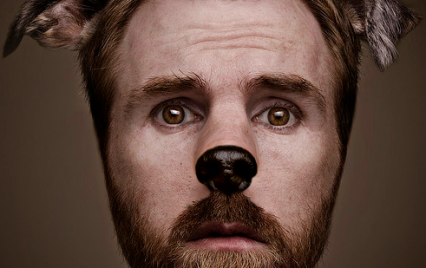
Also…what do you think about the featured man-dog photo? weird? cute? funny? creepy?

(photo source)

My traveling Adventure & 36 Social Media Rules

Starting very early Wednesday I’ll be traveling several thousand miles and going to the conference of a lifetime. #STORYchicago.

I’ll update everyone following along with many ensuing adventures which also include solo navigating my way several hours to BWI airport (Baltimore) and around Chicago on public transportation (yes, there’s STILL 30,000 public school teachers striking and over 350,000 school-aged city kids on the loose….hum. Things could get interesting).

PLUS I’ll be staying at a commune with hippies….seriously, the Original so-called “Jesus Freaks” (Jesus Movement) of the early 1970s, and obviously absorbing good vibes. I’ll be finding good coffee whenever possible, eating Chicago style pizza, and meeting and cavorting with lots of cool friends who are writers, artists, filmmakers, creators, and creative types, some of whom you’ve likely heard of… but I’ll skip the name dropping, at least for now.

I’ll include videos and photos too mostly on my twitter, the special youtube channel and Facebook outlets.
Click and link up.
So I hope you’ll follow along and see how things go… Trying circumstances, good laughs, bonding…it’ll be great.

Another thing I’m planning to do goes against popular convention…Especially for writing types. I’m only taking a carryon (no checked baggage), and I’m leaving my laptop at home. This will be a test of my smart phone skills and iPhone 3GS battery life. This means I will try to post here too if time allows and the technology gods smile upon me.

OKay! More on that tomorrow… For now, How about some nifty tips?

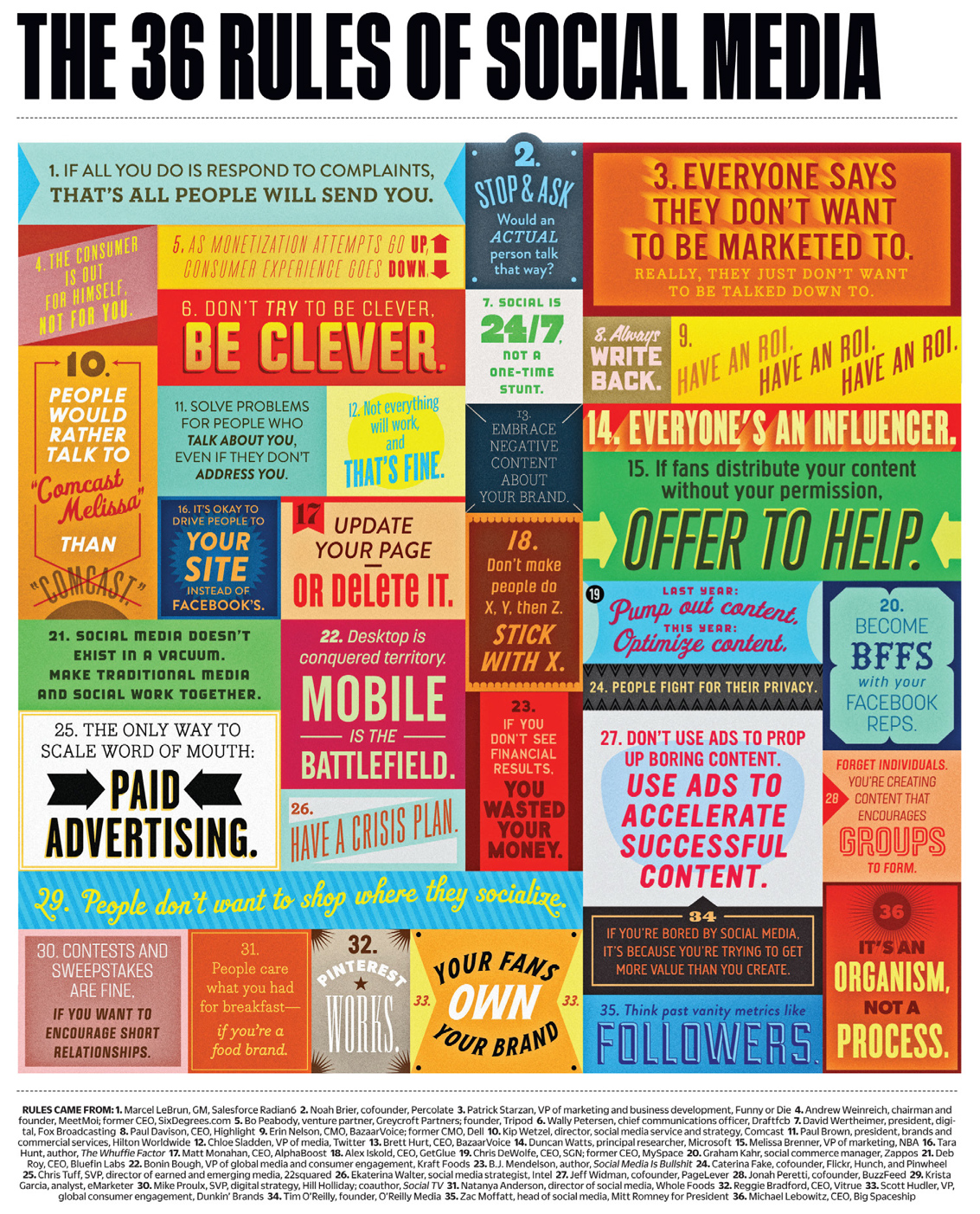
Want to get better at using Social Media?
If you Learn the Rules you’ll do better.

I found this gem at Fast Company. They made these rules from some great input. Those sources are referenced at the bottom.

Please let me know if you liked them!


Rolf Potts leaves baggage behind

By way of a recap, I’m suspending my blogging for a while, but I’m still going to post a few more interviews. I hope you enjoy them.

The bio of Rolf Potts reads like a who’s-who of celebrated travel writers. His NO BAGGAGE Challenge last year highlighted the idea that travel can be much simpler than we tend to think. He trekked over 30,000 miles without a single bag to weigh him down.

The same mentality can be helpful in life too, according to Rolf. Enjoy watching this short chat we had, (and subscribe to the youtube channel for more great stuff).

Besides his website that contains some great articles, blog posts, and case studies in vagabonding–here are 2 of Rolf’s book that make great reading:

9/11; and the Interview & Confessions of a Funeral Director…

The 10th Anniversary of the 9/11 tragedy a week from this Sunday. We will once again see images and recount the horrors of that day, and try in memorial to accept the reality of this world. Most of us don’t encounter death and our own mortality too often. Most of us don’t constantly see suffering, and witness grief and loss.

Please take some time today, or this weekend to remember that the events of 9/11 still bring pain to many. Loved ones are missed, and we can’t gloss over the national tragedy that left a collective hole in our hearts, even ten years later.

This seems a fitting time to discuss an author who is very acquainted with death. It’s his job to be, and his perspective can be very helpful to us. As promised a couple of weeks earlier, the following is my personal interview with blogger and upcoming author Caleb Wilde, a 6th generation Funeral Director, seminary student, husband, and expectant adoptive dad.

My Questions for Caleb:

1. Being a 6th generation funeral director, you have quite a unique vantage point on life, loss, and mortality. How do you think you live life differently than other Christians because of where God has placed you?

Caleb: In traditional religious calendars, the day in-between “Good Friday” and “Easter” is called “Holy Saturday”.  “Holy Saturday” is the day the disciples’ hopes and beliefs were engulfed in death and silence, as they viewed their Messiah’s death without the knowledge of the resurrection.

In some sense, I live the life of Holy Saturday.

As funeral directors, we’re paid by families to be a human shield to death, whereby we make death somewhat easier, less real and more proper.  As this human shield, I’m affected.  I’m affected by the brokenness, by the grief, by the hopelessness I see in faces, by the newly fatherless/motherless children, the tragic deaths and the accidents.

All this has made my personal faith more sensitive to questions of God’s goodness and justice.  It’s not easy for me to understand ideas of “eternal hell”, or ideas of “meticulous divine providence” or even “absolute foreknowledge” or “omnipotence”.

Sometimes I wonder if I’m still a Christian.

2. What do people misunderstand most about your work?

Caleb: We’re a lot like pastors.  Our jobs are really quite similar, except that one is recognized as “ministry” while the other is “business.”  That’s probably the largest misconception … there’s no way funeral directors can meet with grieving families through the most difficult time of their lives and come out on the other side as “business people.”

Everything else is true, though … we are dark and we are odd people.

In ancient times, death practitioners were ostracized from normal society by rule.  Today, we’re partly ostracized from the norm of society by practice.

3. The constant stream of customers (people dying, and their families burying them) can make one grow numb or cold toward the concept and process of death and burial. Do things still surprise you or impact you? What kind of things?

Caleb: There’s something so unnatural about death that (save the very old) it’s difficult to become numb.

4. You’ve probably thought about what you’d want your own funeral to look and sound like. Can you tell us about that?

Caleb: About two years ago, I started taking one minute video clips of myself, so that by the time I’m 70, I should have a montage of age progression videos that can be used for my funeral.

I’ve also talked about recording a message from myself to my family and friends that could be shown at my funeral as the eulogy.  But, by the time I’m ready to die, I figure they’ll have holographic projections, so I’ll wait for that tech until I record my final goodbye.

5. The saddest funeral I ever went to was for a 13 year old boy who took his own life. What have you learned about people during the time of more tragic circumstances that you’ve been a part of?

Caleb: Funerals/death are a perfect storm: you have death, the inheritance money, high emotions and family you might not like too much who are around you all the time.

Funerals intensify people’s real character.  You see the best in people and you see the worst.  The bad people will do horrendous things at funerals, like start fights, curse out their family members over money.  And you can see Jesus in the good ones.

6. Do you find your work mostly depressing, hopeful, profound, mundane, etc.? Would you recommend this vantage point to others?

Caleb: It’s a tough ministry that has little boundaries.  Many funeral homes are also generational, so many of us work with our dads, grandfathers, uncles and cousins, which can make this at-need work that much more difficult to set up healthy boundaries.

Similar to any ministry, I think there should be a passion for death work … a calling of sorts, whereby you know this is what you’re supposed to do.  And being a “calling”, few have witnessed this vantage point.

It’s unique.

7. Do you want to stay in the family business? Why or why not?

Caleb: Next question : )

8. Tell us a bit about how you view suffering, pain, and death from your unique perspective…which probably has a lot to do with the message in your book.

Caleb: I’ve built my understanding of God around suffering, pain and death.  It’s a local theology.  And my understanding of God, suffering, pain and death in light of my faith is the content of my upcoming book, “Confessions of a Funeral Director.”  Hopefully, it will be out in less than a year.  You can get an idea of how death has affected my view of God at my blog, www.calebwilde.com.  My book, though, will contain much more narrative than my blog.

9. What’s your best idea for a Smart Phone app.?

Caleb: I live near Lancaster County (PA), home of the Amish and Mennonites, so there’s a lot of intermarrying in these parts.  Not to mention, most of the towns in the rural areas of Pennsylvania have families that have lived there for centuries, so many of them are related.

I have an idea to partner with Ancestry.com and create an app the lets you bump smart phones with another person and it will tell you how you’re related to them.  My theory is that this will greatly help the evolution of humans by creating a purer gene pool.   The apps name is “Bump it before you Hump it”.
 THANK YOU, Caleb, and best wishes on your book. I’m really excited to get a copy. 

The working title for Caleb’s book is Confessions of  Funeral Director. A bit more on that here.

So, my reader friends, what are you curious about? Ask Caleb your deep, dark, or even silly questions!

Thoughts on my 20 years of Internet Experiences

First internet browser: Mosaic

In a few months, I’ll be using the internet for 20 years. In college, I used something called GOPHER. I got email which consisted mainly of correspondence with other college students, and scientists sharing information. This was text based internet use. That’s right; this was pre-internet browser. (YIKES! I could have lost a whole bunch of you just now. You thought your browser was the internet, right?) 

A whole generation knows nothing of staring at a small monitor with green LED text for connecting with others on their computers.

I had the opportunity to frequent the campus of Carnegie-Mellon University, and enjoyed playing around in computer labs in the summers, and on my holiday breaks. This was especially, delightful when the first Apple computer came out in 1984. Hello, MacPaint! The school was (and likely is) 10-15 years ahead of the curve, technology-wise, compared to other institutions. It’s said that M.I.T. wishes it could be CMU when it grows up. Things like identity cards encoded with meal plan and student account information, campus ATM machines, direct deposit of paychecks, among other things were well in place in the early and mid 1980s.

WIKI tid bit: In the fall of 1990, there were just 313,000 computers on the Internet; by 1996, there were close to 10 million.

Then came a big breakthrough for the world Wide Web: Mosaic (Early 1990s). This was 15 years before more common browsers were created: Internet ExplorerMozilla Firefox, Safari (which I use) and later Google Chrome.

I took a field trip to NYC, and a design agency was helping the New York Times have a web presence, using Mosiac. Most companies scoffed at the internet at this time. It was merely a passing fancy, with no real practical purpose. Very few companies would put aside money to have a web presence. Netscape Navigator effectively broke the back of Mosiac in 1994, and like TV, the internet (which was not created by Al Gore, more here,) proved itself to be an invaluable innovation, not just a mere tech trend. The internet starting getting attention, and acceptance.

By 1995, I had my own email address on a home computer, and penned a local article predicting that in 10 years, everyone would be online, in the same way everyone had a home telephone at the time. Plenty of people thought that was absurd. I actually over shot that one. It was 7-10 years, probably.

Then, mobile phones were just gaining ground in the lives of ordinary people. Until that time, had been mostly a beeper market (pagers,), and those users were mostly doctors, firefighters, workaholics, and people who wanted to seem important or rich. They still make pagers, believe it or not. I’m not sure why. Security issues?

Now many of us have smart phones. Direct access to unfathomable amounts of information and connectivity from around the world. Governments, and long-standing dictatorships have been toppled as a result of shared news and information that the internet offers. And participation in internet social media is the rule, not the exception. (Case in point: Social Media just surpassed pornography as the most utilized form of internet use. Now, if that doesn’t say something, nothing does!)

We’ve emerged from the internet stone age (probably), and I cannot even imagine what is to come. You know what else? The predictions that we would be paperless, and book-less by now, were wrong. But, they were wrong about television and home movies/cable/etc. They said movie theaters would be obsolete, and shut down; and that couldn’t be further from the truth. We make room for useful technology, don’t we?

SO! What year did you get email, or start using the internet?

HEY! Remember the America Online (aol) sent out computer disks that would offer 15 free minutes if you signed up with them? I probably had 150 of them sent to me, and I never went for their offer. They would up the minutes in their promotion until it came to several hours worth.

Ahhh, the olden days. Apple won’t even be making computers with CD/DVD drives anymore. How about them apples? Even if you’re 16, you can feel old, when technology adapts so speedily.

5 (Poor) Reasons to Fast

Some of us don’t fast. Some of us fast for the wrong reason. This is the first of a few posts on FASTING. Bring your thoughts to the table, and stick with us until the end. I promise, you’ll see Fasting in a new light.

Here are 5 Poor Reasons to Fast, and the “inner monologue” that may follow one’s rationale. Can you see yourself or someone you know in the following?

1. To lose weight.

(inner monologue) Oh, if I could only lose these last 8 pounds. I know, I’ll kill two birds with stone, and fast. It’ll be like a diet, only it’ll make God happy, and me feel better about myself at the same time.

2. Because other people are fasting.

(inner monologue) I’m going to look like such an pathetic loser if I don’t join in this fast with my group. There’s going to be an awkward silence if or when I don’t have something to say amazing to say about my fast.

3. To prove something to yourself.

(inner monologue) It’s just time for a change. I’m ready for God to do something BIG. Really Big. There’s nothing like fasting to give God the signal that I’m ready to follow his lead. This time I’ll try for 5 days.

4. To attract positive attention.

(inner monologue) I like to tell my friends when I fast…to keep me accountable. But it makes me feel encouraged to just tell them about it, I must admit. Hopefully, it encourages them.

5. To feel more spiritual.

(inner monologue) Sometimes when I’m going through a dry period spiritually, I like to crank it up a notch, and give food the boot for a while. I want it to sort of give me a boost, and start a fire for God in my heart.

Have you ever thought any of these things? What has been your inner monologue, or dubious reasons you’ve heard for fasting?

I’ll be address each one of these, and your comments, in the next post.
Can you think of a bad reason to fast?

TO BE CONTINUED…
So-Don’t miss the important conclusions on this topic in the upcoming post. Sign up to get an update notice as soon as it’s posted.


Jan 15, 2011 - Christianity, coffee    No Comments

7 Things You Might Believe during the Playoffs

SO, it’s the the season of the NFL Playoffs. I’ve noticed myself bending toward some folksy theology. Maybe you’ve noticed this for yourself. Or…just let me remind you. :)

Bring on the comments, friends! Can you think of any items I missed?

1. Caffeine is somehow linked to the Holy Spirit.

2. People who use the words “Demon Alcohol” don’t use the words “Demon Lactose”, but really, which one seems more demonic on a regular basis?

3. Gluttony of anything [but food] seems sinful, but eating until it almost hurts is a worthy epicurean goal, and probably some sort of “listening to God thing” or even a gifting of the Spirit.

4. Lack of a TV makes you more spiritual, but the possession of an iPhone helps you help God.

5. Twinkle lights in December and January help show the Light of God’s Love, but by March they are tacky, and used by Satan to distract people from the blessing of Spring and rebirth.

6. The ability to host a kickin’ NFL Playoff party with great food is called “the Gift of Hospitality” and it makes God proud when when use our gifts. [I'll be over @ 4p.m.]

7. Routing for teams like the Cowboys, the Eagles, the Browns, the Lions, (and so on) develops the Fruit of the Spirit we call Patience. So, it’s a good thing, but like many spiritual lessons, it is learned through pain and struggle. Watching such teams fail each year helps those fans grow spiritually…more than Patriot or Steeler fans, let’s say.

So…That’s 7 nutty beliefs that can happen in January. Have you noticed anything weird lately? If so, please share.

Dec 18, 2010 - Humor    4 Comments

Tech = Baal (Re: Idol worship)

Personal Handy-phone System mobiles and modems...

Baal worship…new skool

Baal worship…old school

TECH = Baal. True or false?

We’d like to think idol worship isn’t something we practice. We don’t bow down to manmade gods like the foolish people of old we read of in the Bible, right?

Not so fast. (I think we do)

Probably, if we can’t live without something invented in the last 150 years, it qualifies as an idol–Yes. A full-tilt false god.

If we have a trust and loyalty to something we assume is a necessity, I think we should challenge this devotion.

Here’s the ugly truth. You probably worship your computer, your Apple product, your GPS, your phone, or your car. (Our association with technology is the modern equivalent of Old Testament style idolatry.)

A “long ago” 2007 British study of 1,256 people showed that 1/3 of those asked would pass on $2 million to keep their cell phone. 85 percent of those studied said that having a mobile phone was “vital to maintaining their quality of life.” The statistics are likely far higher now, almost 4 years later.

So, it’s simple. Tech = Baal.
Now, will you give up your false god?

At first we rebuff this allegation of idol worship. We’ll think of ways that the things we adore are for safety, common sense practicality, or we’ll come up with a rationalization for why our devotion isn’t really so bad.

The prevailing idea is that if the technology is available, there’s a kind of moral imperative to utilize it. “If it’s possible–it should been done.” Hence, things like octoplets, an artist being fitted with digital camera skull implant, and decades-long life support situations happen. (Can you think of another gross abuse of technology?)

What of ourselves is lost because of these unnatural loyalties?
Probably, a basic part of our humanity.
Sound overblown?
Let’s be serious: We become what we serve. We are enslaved to what we worship. What are the repercussions for serving technology?

Here’s a case in point:

It seems no one (especially under a certain age[?]) can image going without a mobile phone, or internet capabilities for a few hours, let alone a few days. Could you give up technology that’s been created within the last fifty years for a full week? Would it cramp your style, and make you grouchy? (Signs say yes…that’s old school tech…the 8 Ball.)

281 million youth have cell phones. I admit I have withdrawal symptoms without access to the internet for more than a day. I get twitchy. It’s uncomfortable. And no, I don’t like it.

So, I think we have to be honest and address this. What do you think about it? When have you worshiped technology? What do you think you do about it?

Is there a Christian spiritual practice that can help us?

Absolutely. It’s called fasting. Prayer, fasting, and giving to the poor are the pinnacle of Kingdom of God living, according to Jesus in the Sermon on the Mount. Without these things, we are not living as a follower of Christ as he laid it out.

A Tech Fast should be part of your spiritual practice, because it will get your attention better than most things will. This will create growth and maturity.

Fasting challenges our loyalties.
(Read that again)
When we desire the thing we fast from, it creates a space to concentrate and reflect. It re-proritizes our habits, calls them into question, and helps us sift through the what we we should hold dear versus what should be leashed and subdued. When the pang to digitally connect, shout out our thoughts to the masses, or get instant information strikes, we can train our hearts as we place prayer and worship in that void that feels like need. The point isn’t to prove our righteousness by going without, but rather to create time and space for heightened refocus and Christian spiritual practice. God has us engage in fasting for our benefit, not his. It’s a training method…a.k.a. a disciplineIt’s a command to fast. (Sorry to break this to you.)

BUT GOOD NEWS: The effect is refreshment, and quite likely a more informed outlook on our lives.

Will you take the TECH CHALLENGE? Is the next 2 weeks fast 3 times from technology. Start off with a few hours, or half of a day (if you’re ready for THAT-gulp), and try to build up to 2-3 days by the end.

Feedback appreciated on this. Thanks.

God Bless you.
Lisa

Oct 26, 2010 - #fail, Authors    No Comments

Is technology changing YOUR brain? short fun test

Texting on a keyboard phone

Image via Wikipedia

10 Signs your brain is changing because of technology (computer, internet, twitter, facebook, texting, iPhone, iPad, DS, etc.)

The ones with “*” are  just made up for the sake of humor. (Let’s just say, I like to insert humor, and yet be an insightful resource for you. Your welcome people of earth.)

THE TEST

Answer yes or no:

1. You spend more than two hours a day interacting with/using technology.

2. You have extraordinarily strong thumbs compared to an Amish person.*

3. You have a short attention span, which has gotten shorter. (Finishing this self-test even seems like a challenge at this point.)

4. You have trouble sleeping at few times per week.

5. Your short term memory seems to be suffering. (Like right now, for instance, you might even have to concentrate to remember why you wanted to take this self-test in the first place).

6. You like to change channels on the tv a lot, and you bounce from thing to thing online, at work, and at home.

7. If you set out to do something, and get online, or start texting, you tend to get distracted from your original task or objective. (Maybe-just now-you were checking on the news, email, or something, and whoops here you are taking this test, ’cause, “heck, it’ll only take a minute!”)

8. You get more than 1 headache a week.

9. You’d contemplate enhancing your brain with extra RAM or flash memory, (if it were possible.)*

10. 48 hours with no technology seems quite unlikely, or basically a bad idea.

HOW DID YOU DO?

1 or more YES answers mean your thought patterns (and your actual physical grey matter) is being altered by the “cooperation with technology.”  So, basically you could be “less human” than you were just a short while ago. Okay, I just made all that up about the test answers. It’s not scientific. Nevertheless, beyond the silliness, the point stands: What we do and think thoroughly (mentally, emotionally, spiritually, and physically) changes us. For real.

Please post your results, out of 10. Let’s see how we all stack up.

(My number is 10 of 10…usually)

From studying the brain, scientists have found that repeated thoughts and mental or physcial actions (like texting, reading, speaking, running, etc.)  actually create physical grooves in the brain, not just faster neuron pathways. When we practice a skill, learn a sport, or study facts, a little trench is carved into our brain tissue. This is also another reason it is hard to break a habit. A habit is physical. One must make a new brain groove to break a habit. By 21 days, a habit is well-formed.

This natural condition of the function of the brain helps us to learn–in the best-case scenario. In a worst-case scenario these thoughts become ditches of obsessive thoughts, vices, bad habits, sin, and worse. We learn to be bad, better. And, with all the technological interaction, we become more ill-at-ease, tired, nervous, restless, and unhappy, in fact.  There is a physical change detectable on brain imaging equipment because of it. (So, you could say, it’s not just “in your head”. ha. groan. sorry.)

Food for thought? YES. Think about all the negative chatter that goes on in the mind, for instance, everyday, or even every hour. A person thinks about sixty thousand thoughts each day. Many are random thoughts and many are negative. Have you ever taken an hour and made a hatch mark for each non constructive or obsessive thought that comes to your mind? You could get a hand cramp!

There’s that song, “Be careful little eyes what you see…and little hands what you do…and little ears what you hear…” Well, yeah. Be careful. It matters.

We must watch our thoughts and actions, because they actually make up who we are.

Also if you feel a specific pattern occurring in your life, or notice habitual unhelpful thoughts afflicting you, you can know for certain they are creating an actual trench in your mind. So, take it as your own “red flag”.

See if you can “get a new groove” going. Consciously fasting from technology, even for a short bit, can give your groove-producing brain a well-needed break.

My friend Ed, recommends a needed 5 minute retreat, here. Good stuff!

The expression “a one track mind” is truer than we ever believed!

Any other ideas?

Power Source Problems: iPhone! & you?

It’s hard for me to let a good analogy go to waste.

Our relatives in Cleveland, OH recently experienced a blaze in their truck. They left their iPhone car charger plugged in while in was parked in their garage. At about 11p.m. that night, it got quite hot and caught the dashboard on fire. Thankfully, they noticed the fire before it spread to the rest of the garage and house, even though their fire detectors were non operational.

There are really a few insights here.

The obvious ones are:

1. Unplug items from car outlets when they are not in use.

2. Check fire detectors routinely to be sure that they work.

I think we’re a lot like this situation at times. We are all spiritual beings having an important physical experience in this world. Like it, or not, we are in some way connected to the Ultimate Source of power, (our Creator.) But, things get dangerous, for ourselves and others, when we are not used (read: living) for our purposes, and yet still–by our fundamental nature–remain plugged in, somehow unawares. We can come to ruin.

Simplicity and enjoying another Apple project

Isn’t simplicity nice? Why not take the things we use all the time, and merge them properly?

mac-tablet-conceptHere’s a link to the new project from Apple. This light weight computing instrument “erases the line between mobile phone and laptop.” With this wholly different machine, Apple is likely to reinvent computing, like the ipod, reinvented/developed mp3 music. 

Read article:

Any comments?

Related Posts Plugin for WordPress, Blogger...
UA-25751574-1 UA-25751574-1