
E-junkie Shopping Cart and Digital Delivery
Tagged with " mental health"

Demi Moore as a mirror to the human condition

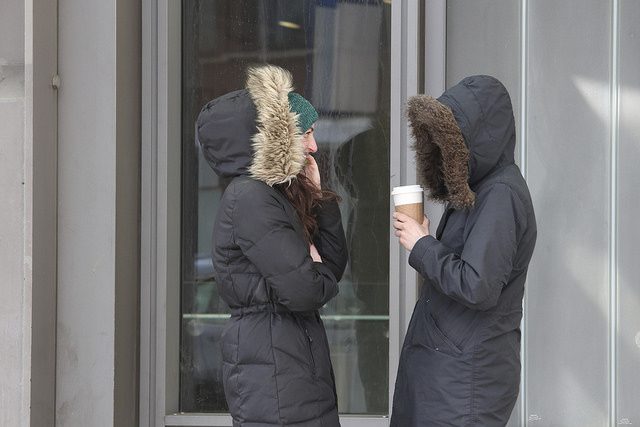
click for photo source


In the latest issue of Harper’s Bazaar, actress Demi Moore replies to the question, “What scares you?” by saying,

“If I were to answer it just kind of bold-faced, I would say what scares me is that I’m going to ultimately find out at the end of my life that I’m really not lovable, that I’m not worthy of being loved. That there’s something fundamentally wrong with me … What scares me the most is not knowing and accepting that just about everything is not in my control. That makes me feel unsafe.”

Some people may claim the Hollywood starlet is speaking of a “God-shaped void” as Blaise Pascal once referred to it. But wait just a minute…

Not everybody will admit to this sort of thing. Some never gaze inward long enough to see it. But there it is. While many won’t realize what what the jilted Moore is talking about for themselves, I think this women has hit on a fundamentally human frailty fraught with universal relevancy. (And it has virtually nothing to do, in fact, with a certain shaggy-headed addition to the Two And A Half Man sitcom.) This frailty, I might add, is not actually negative, as we might first imagine, but rather part of the vulnerability that is the stuff of being human.

It’s these same underlying and exquisitely human fears that we mask, medicate, bury, avoid, deflect, or anesthetize, that cause all manner of destructive behaviors and coping mechanisms. For Demi, who was just hospitalized for stress-related health issues (namely exhaustion…and likely malnutrition), it can create potent consequences. It’s something wealth, influence, fame, accolades, and beauty doesn’t seem to ameliorate. Curious, no?

For many religion or spiritual practice helps to blunt the reality of our human predicament, but clearly that alone doesn’t seem to actually mend the situation. I refer not to just the situation of being mortal, but of being fundamentally impotent. Rarely is this gnawing sense placated for long. Demi, for one, is connected to the practice of Kabblah, but it hasn’t helped this core need.

Though her vulnerability and frailties are up for public scrutiny, many possess the same sorts of fears and maladies, and even despair, but go unnoticed.

To me, our condition seems unmendable…purposefully, that is.

Christians may argue they are the exception; they feel a great sense of hope because of belief in Jesus Christ, arriving to our world as the incarnation of God to make a pathway back to God. Alas, Redemption! Closure, right? Yet a cursory survey of believers (even 3 minutes scanning twitter feeds) show they too are rife with the same sorts of problems as Moore, and Jesus hasn’t seemed to fix that for them.

(The particulars of why are widely speculated and even hotly contested. Some call for more faith and prayer, while others osmotically move into greater embracing of “the mysteries”.)

The funny things is, I get Demi. I feel those things too. I wrestle with them, and I’ve taken up the journey to walk through all the rough patches, which are aplenty.

I think it’s high time to bring what it means to be human out it the open.

A kind of unlearning happens as we grow wiser, and the sort of acceptance of our weaknesses may take hold as we become more acquainted with our human condition. Maturity I think it’s called. The “Will we ever get there?” question lingers.

What do you think about Demi’s quote?

Do you relate to her, or do you see things differently?

“Not Alone”: Autumn and Mental Illness (Part III)

In our darkest moments it’s difficult to shake the feeling of aloneness. God may seem so hidden.

In those worst times several things have helped me devotionally and/or spiritually. One of them is the power of community. I use the strength and prayers of others as my own. I may read (and pray) the lamenting scriptures (like Psalms) when I feel too spiritually dry or weary to pray. I agree with the prayers of others for me and hold those prayers in my heart. When I can’t find the words, or feel the feelings I’d like to I share in the source and inheritance of the community of Believers for strength that is beyond grasp for me alone.

Today, I am listing two resources that are very helpful for this. Maybe you know someone in the middle of a dark, weary, or dry time. Maybe you are there yourself. You may feel quite alone. Strangely, that feeling itself can teach us. Since God’s presence is everywhere, that potent sense of alienation that overtakes our heart can refine in us the faith that does not come through our senses. We can have a “knowing place” even if we feel otherwise numb.

The first resource book is a collection of stories from people who have felt alone in the throes of depression. Together, they harmonize in a chorus of hope, and in the reality of the provision of our Creator. I think you will appreciate their entires.

The second resource is one I’m reading now. I’ll include a few quotes, I’ve read recently, to give you a sense of the power of this book–both for understanding or ministering to those suffering from the pain of mental illness, or for a tether of grace sustaining your hope for a brighter day in recovery from your present darkness.

Forgetfulness deprives our consciousness of great solace…my memories give me hope.  p 90

Any coherence in the midst of chaos, any sense in the midst of nonsense, in the work of God. p110

…[W]e really have to admit that all our love and all our hopes are ultimately borrowed for God anyway. p116

Please share your thoughts.

Do you have a song of lament today in your heart? You have permission to share it here.

Psalm 10

1 O Lord, why do you stand so far away?
Why do you hide when I am in trouble?
2 The wicked arrogantly hunt down the poor.
Let them be caught in the evil they plan for others.
3 For they brag about their evil desires;
they praise the greedy and curse the Lord.

4 The wicked are too proud to seek God.
They seem to think that God is dead.
5 Yet they succeed in everything they do.
They do not see your punishment awaiting them.
They sneer at all their enemies.
6 They think, “Nothing bad will ever happen to us!
We will be free of trouble forever!”

7 Their mouths are full of cursing, lies, and threats.[a]
Trouble and evil are on the tips of their tongues.
8 They lurk in ambush in the villages,
waiting to murder innocent people.
They are always searching for helpless victims.
9 Like lions crouched in hiding,
they wait to pounce on the helpless.
Like hunters they capture the helpless
and drag them away in nets.
10 Their helpless victims are crushed;
they fall beneath the strength of the wicked.
11 The wicked think, “God isn’t watching us!
He has closed his eyes and won’t even see what we do!”

12 Arise, O Lord!
Punish the wicked, O God!
Do not ignore the helpless!
13 Why do the wicked get away with despising God?
They think, “God will never call us to account.”
14 But you see the trouble and grief they cause.
You take note of it and punish them.
The helpless put their trust in you.
You defend the orphans.

Oct 5, 2011 - Authors, blogging series    No Comments

“Mad as a Hatter” (Autumn & Mental Illness Part II)

Crazy? (Well, it was the cat's idea.)

Think of all the words we have for people who suffer mental illness.

Mad, insane, out of one’s mind, deranged,demented, not in one’s right mind, crazed, lunatic, non compos mentis, unhinged,mad as a hatter, mad as a March hare; informal: mental, nutty, nutty as a fruitcake, luny, nuts, whacko, off one’s rocker, not right in the head, round/around the bend, raving mad, batty,bonkers, cuckoo, loopy, ditzy, loony, bananas, loco, with a screw loose, touched,gaga, not all there, out to lunch, crackers, nutso, out of one’s tree, wacko, gonzo…

What did I miss?

Stigma maybe? Uhm. yep.

For some reason, in Autumn it seems like more pronounced incidents of mental illness symptoms surface. Maybe it’s just that I notice it more because I start to hunker down for winter.

Who is “mental”? The unexplainable is quickly isolated as “not good enough”. It’s easier to plug in a label or term, than to empathize.

In truth, any one of us may be”diagnosable” for some period of time in a given month. We may not persist with symptoms long enough to need intervening treatment, but if we are human, we are prone, at some point, to have an unhealthy mind. For some, a lack of noticeable symptoms can make it harder to get help.

For example:
Take a person addicted to pornography: Addiction is unhealthy in the mental/psychic capacity. Through this or any addiction, a person may become attached to unhealthy behaviors, thoughts, and actions, and then digress to mental instability and illness without anybody really knowing until the problem is truly unmanageable, or it has reaped awful consequences. On the other hand, a person having a schizophrenic episode and enduring auditory hallucinations, may quickly signal to others that medical assistance and support is needed. Stat.

The bigger question is which kinds of mental illness do we prefer?

We know much more about the brain, in 2011. We don’t assume someone with epilepsy has demons we should exorcise, or that some one who is hallucinating needs to be discipled and punished so they will stop at once. Many more people understand that if a person has a sick brain, they aren’t trying to. Though a proper diet and exercise can be helpful, they can’t think or will their illness away…otherwise they would. Just like a person with a broken leg cannot un-break his leg by thinking, “This disfunction and pain is fiction, so I think I’ll take a jog!”

Medications create the chemistry needed so many people can feel well again both mentally and physically. Without help, the pain–both physical pain and inner psychic pain–can be thoroughly unbearable. Something like brushing tea or getting up from bed may be too enervating, because it all truly hurts that badly. Too many take their lives because of feeling that there is no help or remedy. The illness simply is–and there is no escape, but one most terrible.

Bi-Polar Disorder (formerly called Manic-Depressive Disorder) is a brain chemistry condition in which the person endures major shifts (or polar opposite shifts) in mentality, mood, and behavior. The high end is termed “Mania” and the low end is termed “Depression”. I covered the symptoms of Depression in the last post.

Here are the Symptoms of Mania

(3 or more of these following symptoms for 14 days or more, or if the symptoms interfere with a person’s regular life, constitute Mania)

• Increased physical and mental activity and energy

• Extreme optimism and self-confidence

• Exalted self-importance

• Irritability, aggressiveness

• Decreased need for sleep

• Pressure speech and thoughts

• Impulsiveness and reckless behavior (spending money, risking behavior, driving, sex, substance abuse, etc.)

• Delusions (thinking things that aren’t real or true) and hallucinations (seeing or hearing things that aren’t there)

As I read the lists of symptoms and mental sicknesses in Kathryn Green-McCreight’s book (See the Book here.)…friends, acquaintances, family members, neighbors, and so forth, came to mind. Some have mental illness mildly; others endure it severely. Some self-medicate with various substances in order to cope. Nearly all of them are misunderstood, unaided…and (formally) undiagnosed. Imagine, if they could feel comfortable enough to get help, emotional support, and medicine, to feel better…

Is there anyone you wish would get help?

In the next part of this series, I’ll go over the symptoms of Schizophrenia, and helpful options for support, pastoral care, and aid for people with mental illnesses.

I appreciate your comments. And as always, you can post anonymously, if you’d like.

Autumn & Mental Illness (Part 1)

bi-polar MacBeth art (by Wiktor Sadowski)

Is Autumn ‘Mental Illness Season’?
It seems like Autumn and Mental Illness come as a pair, sometimes. From what I’ve been able to observe, if one’s going to suffer with something mentally, it’ll usually be between September-Februrary. Seriously, have you noticed this? Think back. Let me know. Is it not enough sunlight? Too many emotionally taxing holidays? Too chilly? Something with barometric pressures? I don’t know. But, let’s get on the same page.

What is Good Health vs. Normal Health?
If you’re healthy and you get a cold once in a while, you’re normal. If you get colds more frequently, you’re “a bit sickly”…but still, mostly, normal. What about if instead of a headache, sore throat, breathing troubles, and cough, it is your brain that “gets a cold”?

There is no reason to believe that the brain (with regards to chemistry, function, nutrition, environmental influences, etc) won’t be susceptible to maladies too, just like other parts of the body are. Science shows us clear indicators of genetic components. So, one can be prone to bad knees, or tendonitis, or sympathetic nervous system brain issues that make one prone to panic attacks, etc.

Of course, when one’s brain is ill, things can go badly quickly. For instance, one may be one’s worst advocate to resume health or find healing, if it is thinking which is impaired. Somehow, the brain (or we could say the “mind”: feelings/emotions + reason/intellect) gets tossed to another category when we think of the frailties of human illness. Saying you “sprained your brain” isn’t met with the same sympathy as saying you sprained your back, am I right?

Do We Love the Mentally Ill?
It’s an “untouchable,” or at least uncomfortable, category where someone’s inherent worth, inclusion in community, or spiritual devotion can be called into question. “Aw, uncle Boss? Sure he did that, he’s been more nuts ever since his time in the military…”

It’s a category we may fear or avoid talking about. Lines separating sane and insane get drawn. Such determinations sideline love, undermine grace, and even harm the true gospel message. Being “crazy” means that some one is alone in a special way. The numbers of Homeless who have a history of severe mental illness is about 25% (2009 National Coalition for the Homeless study).

So, if someone has brittle bones, falls, and breaks both legs? He’ll probably get more compassion or understanding than someone prone to mental illness who undergoes a bout with mania ending in a spending spree. Am I right?

The facts tell us that mental illnesses happen, more “normally” than we may care to imagine. Yet, it is those who are ill in the brain who feel so isolated and rejected during their tough times, compared to people who suffer in other ways.

For my Disability Studies class, I’m reading and learning not just about physical, and mental development impairments (wheelchairs and special education folks), but also of brain illness (mental illness). These are all people of the margins. Truly.

Darkness is My Only Companion: A Christian Response to Mental Illness, by Kathryn Greene-McCreight (Brazos Press 2006), is one of my course texts. I highly recommend it. Kathryn manages her Bipolar disorder, is theologian (Yale), an associate Episcopal priest, and a captivating writer.

See the Book.

Depression is one of the most common brain chemistry issues. By the year 2020, depression will be the 2nd most common health problem in the world. Read the rest of the Fast Fact Statistics here.

Here are the Symptoms of Depression from Greene-McCreight’s book, page 170.

5 or more of these 13 symptoms over a 14 day period, or if these symptoms interfere with a person’s normal life is considered Mental Illness or in this case, specifically, Depression.

• Major changes in appetite or sleep patterns

• Uncharacteristic irritability, anger

• Feeling sad, crying more than usual

• Worries, anxieties

• Pessimism, feelings of failure

• Loss of energy, libido

• Unexplained physical aches and pains

• Hopelessness, guilt

• Inability to concentrate or make decisions

• Inability to carry out or care about personal hygiene (showering, brushing teeth, etc.)

• Lack of enjoyment in things formerly enjoyed

• No desire to socalize

• Recuring thoughts of death or suicide

Has this ever been you, or someone you know?

Probably.
See, it’s fairly “normal”.

What are some ideas for helping those with mental illness? Your input is vital for this conversation. Thank you for your contributions, and spreading the word.

Here’s a Resource: Depression and Bipolar Support Alliance 
800-826-3632 

In Part II of this series, I’ll cover the symptoms of Mania and Schizophrenia…and more is to come.

Man Cave: Of sanctuaries and retreats

(A Room Decoration and Demarcation)

It’s been said that the adult male human regularly needs some “down time” after a work day (a.k.a. Cave Time) to rejuvenate, find refreshment, recharge, gain clarity, and so on.

BUT-I doubt–a LOT–that “cave time” is truly a need reserved for the masculine of the species.

As many men will attest, females also enjoy and feel the need to retreat, and find refreshment. For some women it looks like taking a walk alone, reading a book while soaking in a bubble bath, or even not being alone–such as, sharing emotions with a trusted friend or ally.

Whatever this time looks like, it is a demarcated boundary of sanctuary, and vitally important to good mental health, and a balanced life–notwithstanding the spiritual benefits.

My husband doesn’t feel he needs a “den” or a man gym set up in the basement to get his man cave time in. He most enjoys a vigorous bike ride through the beautiful countryside on his road bike. I most like a variety of sanctuaries and refreshing conduits–both with others and without.

It’s not a weakness or a shame to realize you need space, and find your own space routinely (be it physical space, quite down time, mental respite, or beneficial time of social interaction). It is part of how we [all] live out our humanity fully, and how we are better able to best rejoin to loved ones, and others in our work or social lives in the most healthy way. If you don’t alreadly, encourage your loved ones to carve out demarcated time for this human need, as well as maintain your own. Seriously. Put in on the calendar or in your planner. It’s really that important. Be systematic so you stick with it, and keep your appointments with yourself. You will be surprised how much everyone will benefit.

Do you get the “cave time” you feel you need?

What does cave time look, or sound like for you?

Any body know Scripture that encourages ‘cave time’?

I look forward to your responses. Thanks.

Innocence and Purity


My diagram for a "System" of Purity


Our freedom allows us to make choices that determine our purity and our innocence. So, freedom always includes responsibility, and purity can be regained. It is innocence that is untried.

In the cases were guilt may plague us, we may seek healing in the spiritual discipline of life confession, and then find it our acceptance of love and forgiveness. This happens best in Community, with the support of siblings in Christ.

This is also an act of worship.

Please share you thoughts on this, or a related theme.

Or you may tackle one of the following. Thanks.

• What have been your influencers with regards to purity?

• How has the media impacted your view of purity?

• What is the biggest struggle regarding your faith and your purity?

Resource used: Pages 126-8. Spiritual Disciplines Handbook: Practices That Transform Us (Adele Ahlberg Calhoun -IVP Books ©2005)
For further reading: “Real Sex” -Lauren Winner
Related Posts Plugin for WordPress, Blogger...
UA-25751574-1 UA-25751574-1