E-junkie Shopping Cart and Digital Delivery
Tagged with " mystic"

Everything Happens for a Reason?…probably not

Part of my journey, spiritually, has been to move from a fundamentalist upbringing, to an Evangelical / post-conservative theological formal training, and then toward “the mysteries” (i.e. mystic tendencies). What brought me there? Tremendous pain. I usually don’t talk of it for too long. Maybe there’s a memoir in me that should come to light, but the progression is palpable.

In “the mysteries” this means that I don’t think of suffering as a problem, sorrow as un-wellness, or bouts of profound unhappiness as a sign that I have too little faith. In fact, most of the biblical characters were kind of tortured souls. It’s a more recent construct that we should think the life of faith has a “Sunshine Mountain” feel to it.

So, I wanted to write out a few thoughts about what Mark Lepper posed out there on the Twitter-verse (see lower image).

My initial Twitter response (you see below) was less than 140 characters, so I thought I’d add a bit more.

@thelepper Nah. That notion helps us cope, but we can’t possibly verify it. It’s part of “the mysteries”

For just a moment…

Imagine your child kills himself. The most horrid thought (you needn’t linger there).

In the first few days, probably 20 people will tell you, “Everything happens for a reason.” Or, they’ll say, “All things work together for good…” You know the verse, right?

Rubbish.

(Probably most people don’t realize how out of context that verse is used that way. Erroneously they utilize just a part of it as a “band-aid platitude” to offer kindness.)

There are a great many things that have no good explanations and will not. The reasons won’t be revealed later either. On earth or in heaven. It really doesn’t work that way. And it really shouldn’t. Otherwise movement toward maturity would be at stake.

Really, it would be too confusing for us that God would answer these questions, so don’t count on an inquiry at the “ask the author” line in heaven, my dear friends.

When the pain of suffering wallops you and you can’t shelve your doubts long enough to work through the real hardship of it, one temptation is to consider that God must be malevolent or AWOL, instead of considering that we can’t possibly know the answer.

It is in the unknowing that we become enlightened to the ways of God.

It seems the two most common tactics (ways of coping) in tragedy are…

1. Try to believe that something horrible or evil has some sort of good redemptive reason, or will eventually come to something good because of it.

(Though it is true that God makes it his business to redeem everything…eventually….somehow…. we can’t think of this backward when we come into pain, and try jumping ahead. Pain can serve a point.)

2. Realize that so much is unexplainable and let our hope and faith erode or dissolve.

But there is a third option. And maybe more than just one more (you can let me know). Another way that’s been employed since humans have had optimism and spirituality (read: a very long time) is…

“the way of the mysteries”. And it’s not a cop out.

It’s farsighted. It’s a perspective that holds that the beauty we witness in this world is almost out of place in the nastiness and madness of it. It’s the idea of (good) ideals we all seem to possess that point to a greater, underlying and sustaining beauty and goodness obscured by the ways of the world, suffering, and the hardships of being human.

To embrace our situation as the mystics do is to not shun hardship or revel in it, but rather to let the pain refine us and make us wise. Oh, and it hurts. It hurts like hell.  And it, in some real sense, beats the hell out of us, and makes us endearing and compassionate. Beautiful.

The trouble is that if we’re satisfying with answers like, “Hey, friend! Don’t worry there’s a reason this horrible thing is happening,” then we are of very little good to those who are truly suffering.

In fact, our notions of “reasons” are often so pale and wanting. They just couldn’t possibly be sturdy enough. They don’t reveal what is legit and accurate.

Only when we can sit there alongside in the pain of those who hurt, and even take a part of the sorrow itself do we find we can make our way, honestly. And too, we must sit in our own pain. It’s uncomfortable. It’s dark. Sometimes horrid.

But to have the permission to hurt can send us toward wellness. It shows us that great sorrow comes on powerfully, and hurts badly, but does not have the final word. In the process of living well and deeply do we like a tender shoot become oaks of maturity and grace.

Please friends, be careful and don’t make a mockery of pain by disrespecting it or minimizing it (for yourself or anybody else). There is no human life without pain. There too is no growth without it. That’s the bit about incarnationality: The divine enters the human experience. That is our model.

So very deeply have I hurt, but now deeply can I love.

It’s true that redemption is chosen.

To be chosen it must first be acknowledged.

(that’s my longer answer)

Contemplative Reading Recommendations

Advent Season is the perfect time to get all high octane spiritually speaking. Read, meditate, pray, and learn from others, and you will be so enriched as you enter the Christmas season.

My favorite undertaker, and writer friend, Caleb Wilde has been blog writing about God and Greek influence. And it struck me how much the Contemplative stream of Christianity may help inform us about things and in places where our finite intellectualizing fails us. The intersection of life and death is one of those spots.

I asked Caleb who and what he’s read from this (as Richard Foster says) “Stream of Christianity”, and he asked for recommendations. So, I thought, I’d offer them to all of you.

Please recommend your favorites too.

My not-by-any-means exhaustive list of favorite Contemplative Stream writers.

By way of a high-qulaity but compact primer I recommend Richard Foster‘s who gives a fantastic overview to each of the 6 Streams of Christianity. His “Streams of Living Waters” book covers the basic 6 traditions categorized as: Charismatic, Holiness, Contemplative, Social Justice, Evangelical,  and Incarnational flavors (if you will) within all of Christianity through the ages since Christ.

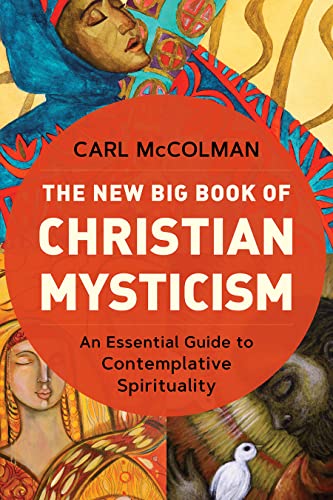
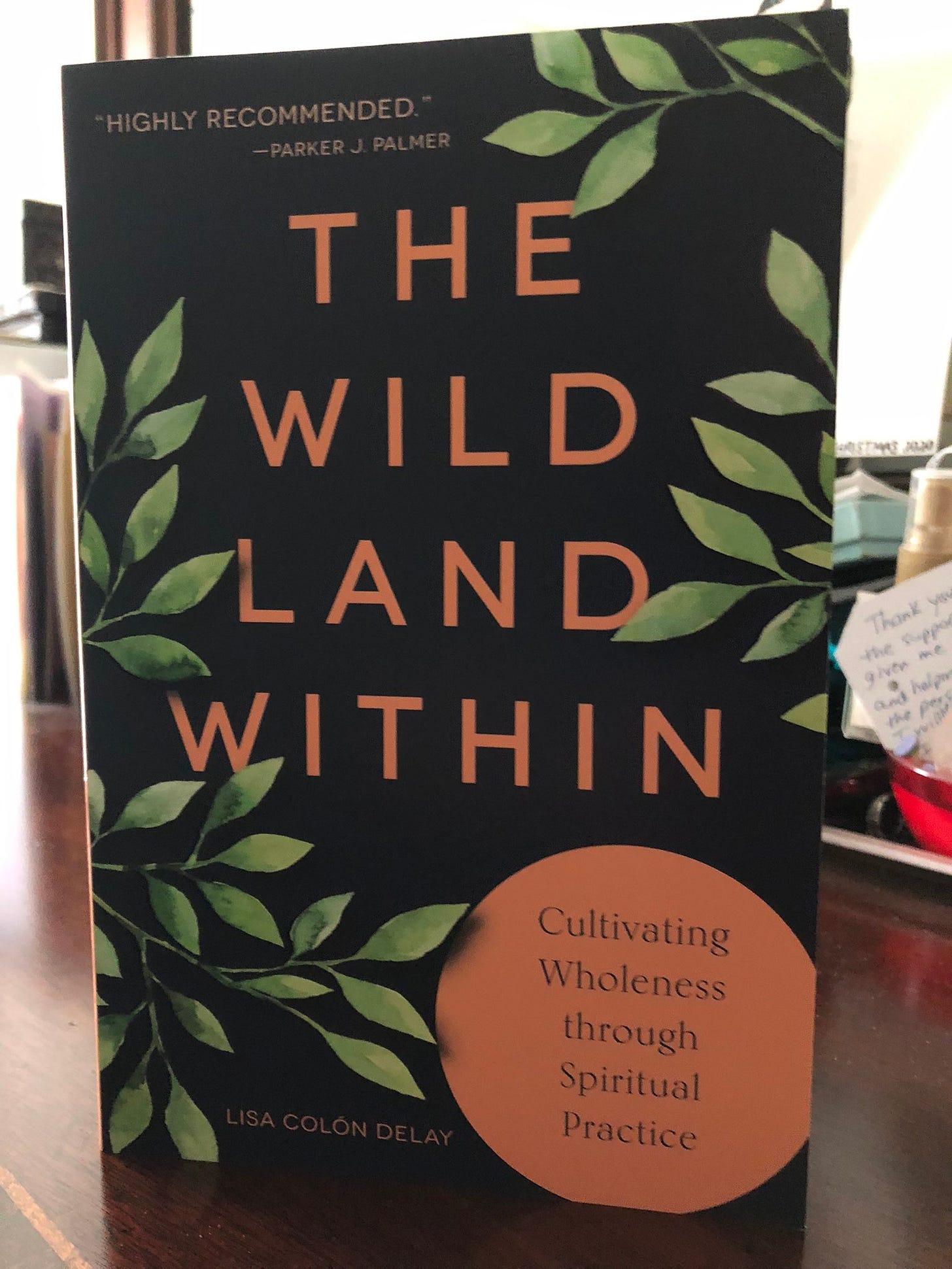
Gaining Christian spiritual insights from devoted lovers of God outside your own era and your own experience of a specific faith tradition is an invaluable blessing, and very faith building. Foster outlines major points and people of the Contemplative Stream, starting with the apostle John, in the book you see below:

Classic contemplative standby: Frances of Assisi (1181-1226)

Brother Lawrence (1611-1691) The Practice of the Presence of God (short read, and free online. sweet.)

Frank Laubach (1884-1970)


Evelyn Underhill (1875-1941)

Thomas Merton (1915-1968)

Thomas Merton “In My Own Words”

Henri Nouwen 1932-1996)

Here are 2 useful previously posted articles on this Stream.
1. Kataphatic and Apophatic Prayer Explained
2.Meditation to Contemplation – Kataphatic to Apophatic Prayer (an prayer exercise/experience)

Jun 13, 2011 - Authors, Bible, Christ, Jesus, Mysticism    3 Comments

Is God our Cupbearer?

From the poem of Mechthild (of Magdeburg, 13th century) translated “The Flowing Light of the Godhead” we get a fascinating picture of God-Three-in-One (in Book II).

God as Cupbearer

[Cupbearer] noun chiefly historical or poetic/literary
a person who serves wine, esp. in a royal or noble household.

At first blush it may seem insulting to consider God in this servant role. Yet, God has always treated his people like royalty. He has always been the God who serves.

Former slaves in Egypt, the wandering Israelites were to be donned in fashions or regalia of the priestly class, and participate in many temple priestly rites and rituals, no matter their social class or gender. Unlike the pagans gods of the region, Yahweh–the living God–instituted numerous festivals and feasts, not for his pleasure and consumption, but for his people to enjoy.

A cupbearer tastes the drink and food before the king does. Utmost loyalty and devotion are required. If food is spoiled or poisoned, the cupbearer will pay the price, saving the King from harm. Didn’t God do this for us with our sin?

A helpful image in worship and prayer may be to envision God (Trinity, three-in-one God) as Cupbearer, Cup (becoming a broken cup pouring out life for us, in the sacrifice of Jesus the Christ) and the Wine from the Cup, as the healing presence of the Holy Spirit.

It is because God has served us so well, become broken and died from the poison we should have gotten, that we may be healed and redeemed by his Spirit, like healing Wine.

Have you heard this comparasion before? Does this visual help you? why or why not?

Thoughts? Comments?

Coffee bowls and 2-handled mugs- Jehovah Java

I’ve posted two other posts on coffee, (Free coffee post,and “is coffee spiritual” post) and how the enjoyment of it is a true spiritual practice. I’ve wanted to find more information about the Carmelite monks who use no handle mugs so they can be fully present, and appreciative to their Creator during their daily practice of sipping their warm brew.

Jehovah Java-the God who provides coffee? Okay, I’m not sure about the Hebrew on that one, but here are more information and links for coffee lovers, or people who love them.

What is a coffee bowl? Used is Peru, France, and various other places in the world, a coffee bowl is grasped with two hands and coffee is sipped. This also keeps the hands warm. (You can locate the one pictured below, here.)

coffee bowl

café au lait bowl


Here’s another item that promises to warm up hands when filled with hot cocoa or coffee. (find it here)

no handles

This “Mystic Monk (2-handled) Mug” looks like a practical joke. It harkens back to the idea of the hands-on method of drinking coffee, and it’s a bargain among the others here, at only $6.99. Mystic Monk Coffee is a brand created and Carmelite monks in Wyoming who roast their own blends to support their solitary life of prayer. They have many varieties, including a fair trade blend, Carmel, Cowboy Blend, Hermit’s Bold Blend, and Midnight Vigil, among them. They also have a sampler pack with free shipping, and a coffee club-how handy.

Modern monk style mug

Modern monk style mug


Coffee Taste-tester Monk

Coffee Taste-tester Monk


What’s your favorite container to hold coffee, and why?

Related Posts Plugin for WordPress, Blogger...
UA-25751574-1 UA-25751574-1