E-junkie Shopping Cart and Digital Delivery
Tagged with " pastor"

Sin and Riptide?

escape riptide daigramI love this handy-dandy safety chart on . As you swim inland a rip current will prevent you from coming to shore. It will pull you under and drag you out to sea. Even in shallow water a strong swimmer can drown in rip current, so get wise to the wicked water and read it!

In the start of a new series leading up to Easter, my (Jeff Byerly) began on Sunday talking about Recovery. Using themes from the 12 step program (and the Celebrate Recovery organization) he mentioned that even though we don’t all suffer the torments of pronounced addictions, the path to healing remains the same. This is one of the benefits of a support group like Celebrate Recovery. It functions like a guarding outpost when the rip current is subtly strong.

Whether we tend to get into co-dependent relationships, spend time looking at pornography, succumb to retail therapy (shopping), fixate on eating too little (or feel the compulsion to eat too much) our compulsions and hang ups read like a similar story, a human story. A normal story.

The most piercing portion of the talk came when Jeff referenced some thoughts from C.S. Lewis…here I’m paraphrasing from Jeff’s paraphrase…but it goes something like…

–Bad people really don’t know that much about their badness— (maybe some of you Lewis fans can point me to the exact reference)

In sinning (which is the normal but deadly stuff of life), we go along with things as they come. We don’t distinguish much as we do mostly what we please. It’s only when we resist, try to consistently do what is right and and when we try to go against the opposing and fierce force within and without that we run into a kind of riptide trying to pulling us under and kill us. Goodness then is a right mirror showing what still needs work in us. It reflects an ugly picture we don’t care to look at.

Paul really fleshes this out in Romans….What a great devotional read this makes. (Go on and click here for that)

So, it is in doing right where we come against the reflecting that shows us how bad are really are. Simply because we have terrible failures. We hit a snag. The contrast our need of rescue. Without the challenge of doing what we know is right, we never really assess the weight and scope of our sinful ways. But, my, how unpopular this concept is. Off-putting and out of vague. Time for a few reassuring pats on the back… But try to be unwaveringly good for a while, and we see how true it is.

And how you’ve ever noticed how self-satisfied people are? It’s probably because they aren’t making much of an effort at consistently doing what is right. They haven’t been humbled by failure. They’ve rarely seen felt this opposing monster for themselves because the room is too dark.

Maybe you’ve felt the same way too at times, “Well, I’m not so bad. I’m certain not as bad as most people.” Trust me, the day will not pass before this thought is likely to cross my mind as well.


It’s that kind of subtle self-dellusion that can thwart our willingness to be a part of the ongoing of  the . He works us over and makes us over. It’s that mauling process, if you will, that does the hard work. So, Jesus said, “Only the sick need a doctor.” He was of course talking to sick people at the time, only they didn’t think of themselves that way. There’s nothing more hopeless than that.

If we ever went a whole week noticing and noting all the strays from what we know is right and good and set about to only do right…WATCH OUT. The proof of our weaknesses, problems, and short-comings will pop up like an angry bee sting.


Fatigued then, in a fight to do what’s right, sometimes we realize it is in he surrender to our powerlessness that we find rescue. It’s counter-intuitive as much as swimming out to sea is when you’re almost drowning. But it works. This is part of the powerful of observing a season of Lent.

The great from sin and that sort of deadly riptide comes from and forgiveness. This theme is never more potent than when we celebrate on Resurrection Sunday. More on this sort of thing in posts to come. Please click for updates (right sidebar)


Have you felt this kind of riptide?

(You can me a voice message with your thoughts, if you’d like. Click the voicemail tab on the right)

rip current image found here: www.palmbeachpost.com

Guest Post from Ryan Braught (church planter)

Welcome guest post contributor Ryan Braught. Ryan works as a church planter in Lancaster, PA. I met Ryan in college, and later found out that he went on to get his Masters of Arts in Religion at the same seminary a few years ahead of me. Evangelical Seminary now offers a new and fantastic Masters of Arts in Christian Leadership, a unique hybrid program combining online and on-campus studies and has partnered with Messiah College, Lancaster College, and Asbury Seminary to extend their educational programs. Today, Ryan shares about the challenges of and identity. Thanks, Ryan!

Identity

For the last two and half years I’ve been planting Veritas, a missional community in Lancaster, PA. There are various challenges in this.

There’s the challenge of developing a Core for Veritas. There’s the struggle of seeking to do church in a whole new way in an area that has a fairly traditional view of what church is. There’s the challenge of balancing 4 part time jobs between my wife and me, a free lance job, two kids and keeping up with everything that comes with running a household. But the biggest challenge that I have been faced with revolves around the issue of identity.

All too often, whether in planting a new faith community, or in life, we define ourselves by what we do. And we define our self worth from what we do, and whether we are “successful” or not. Maybe men do this more.

If I’m honest with myself, my self worth all too often is tied into how I perceive things are going.  If we have a good Sunday, as far as numbers (even though we seek to define success by other metrics) I feel good about myself.  If we have a bad Sunday, as far as numbers go, I feel horrible about myself and want to throw in the towel and give up.  The biggest challenge I believe, at least for me, in this planting journey has been to remember this phrase, “It’s not what I do, it is about whose I am.”

Scripture says this about me, “he predestined us for adoption to sonship through Jesus , in accordance with his pleasure and will” (Ephesians 1:5), and “The Spirit you received does not make you slaves, so that you live in fear again; rather, the Spirit you received brought about your adoption to sonship. And by him we cry, “Abba, Father.”(Romans 8:15).  Too often I say to myself (or Satan says) the very opposite of these words.   I forget that I am a child of the King and that I am loved, not for anything that I can do, have done, or will do. I am loved period.

One thing that stuck from my years at seminary that has helped me confront this problem of identity is this simple statement, “There is nothing you can do to make God you any less.  There is nothing you can do to make God you any more.”  My identity is not in being a church planter, a father, a husband, or anything else that I try to define my worth in.  My struggle is to remember that, and place my identity in the fact that I am a child of the Heavenly Father.

Have you ever struggled with identity based on what you do?

9/11; and the Interview & Confessions of a Funeral Director…

The 10th Anniversary of the 9/11 tragedy a week from this Sunday. We will once again see images and recount the horrors of that day, and try memorial to accept the reality of this world. Most of us don’t encounter death and our own mortality too often. Most of us don’t constantly see suffering, and witness grief and loss.

Please take some time today, or this weekend to remember that the events of 9/11 still bring pain to many. Loved ones are missed, and we can’t gloss over the national tragedy that left a collective hole in our hearts, even ten years later.

This seems a fitting time to discuss an author who is very acquainted with death. It’s his job to , and his perspective can very helpful to us. As promised a couple of weeks earlier, the following is my personal interview with blogger and upcoming author Caleb Wilde, a 6th generation Director, seminary student, husband, and expectant adoptive dad.

My Questions for Caleb:

1. Being a 6th generation funeral director, you have quite a unique vantage point on life, loss, and mortality. How do you think you live life differently than other Christians because of where God has placed you?

Caleb: In traditional religious calendars, the day in-between “Good Friday” and “Easter” is called “Holy Saturday”.  “Holy Saturday” is the day the disciples’ hopes and beliefs were engulfed in death and silence, as they viewed their Messiah’s death without the knowledge of the resurrection.

In some sense, I live the life of Holy Saturday.

As funeral directors, we’re paid by families to be a human shield to death, whereby we make death somewhat easier, less real and more proper.  As this human shield, I’m affected.  I’m affected by the brokenness, by the grief, by the hopelessness I see in faces, by the newly fatherless/motherless children, the tragic deaths and the accidents.

All this has made my personal faith more sensitive to questions of God’s goodness and justice.  It’s easy for me to understand ideas of “eternal hell”, or ideas of “meticulous divine providence” or even “absolute foreknowledge” or “omnipotence”.

Sometimes I wonder if I’m still a Christian.

2. What do misunderstand most about your work?

Caleb: We’re a lot like pastors.  Our jobs are really quite similar, except that one is recognized as “ministry” while the other is “business.”  That’s probably the largest misconception … there’s no way funeral directors can meet with grieving families through the most difficult time of their lives and come out on the other side as “business people.”

Everything else is true, though … we are dark and we are odd people.

In ancient times, death practitioners were ostracized from normal society by rule.  Today, we’re partly ostracized from the norm of society by practice.

3. The constant stream of customers (people dying, and their families burying them) can make one grow numb or cold toward the concept and of death and burial. Do things still surprise you or impact you? What kind of things?

Caleb: There’s something so unnatural about death that (save the very old) it’s difficult to become numb.

4. You’ve probably thought about what you’d want your own funeral to look and sound like. Can you tell us about that?

Caleb: About two years ago, I started taking one minute video clips of myself, so that by the time I’m 70, I should have a montage of age progression videos that can be used for my funeral.

I’ve also talked about recording a message from myself to my family and friends that could be shown at my funeral as the eulogy.  But, by the time I’m ready to die, I figure they’ll have holographic projections, so I’ll wait for that tech until I record my final goodbye.

5. The saddest funeral I ever went to was for a 13 year old boy who took his own life. What have you learned about people during the time of more tragic circumstances that you’ve been a part of?

Caleb: Funerals/death are a perfect storm: you have death, the inheritance money, high emotions and family you might not like too much who are around you all the time.

Funerals intensify people’s real character.  You see the best in people and you see the worst.  The bad people will do horrendous things at funerals, like start fights, curse out their family members over money.  And you can see in the good ones.

6. Do you find your work mostly depressing, hopeful, profound, mundane, etc.? Would you recommend this vantage point to others?

Caleb: It’s a tough ministry that has little boundaries.  Many funeral homes are also generational, so many of us work with our dads, grandfathers, uncles and cousins, which can make this at-need work that much more difficult to set up healthy boundaries.

Similar to any ministry, I think there should be a passion for death work … a calling of sorts, whereby you know this is what you’re supposed to do.  And being a “calling”, few have witnessed this vantage point.

It’s unique.

7. Do you want to stay in the family business? Why or why not?

Caleb: Next question : )

8. Tell us a bit about how you view suffering, pain, and death from your unique perspective…which probably has a lot to do with the message in your book.

Caleb: I’ve built my understanding of God around suffering, pain and death.  It’s a local theology.  And my understanding of God, suffering, pain and death in light of my faith is the content of my upcoming book, “Confessions of a Funeral Director.”  Hopefully, it will be out in less than a year.  You can get an idea of how death has affected my view of God at my blog, www.calebwilde.com.  My book, though, will contain much more narrative than my blog.

9. What’s your best idea for a Smart Phone .?

Caleb: I live near Lancaster County (), home of the Amish and Mennonites, so there’s a lot of intermarrying in these parts.  Not to mention, most of the towns in the rural areas of Pennsylvania have families that have lived there for centuries, so many of them are related.

I have an idea to partner with Ancestry.com and create an app the lets you bump smart phones with another person and it will tell you how you’re related to them.  My theory is that this will greatly help the evolution of humans by creating a purer gene pool.   The apps name is “Bump it before you Hump it”.

 THANK YOU, Caleb, and best wishes on your book. I’m really excited to get a copy. 

The working title for Caleb’s book is Confessions of  Funeral Director. A bit more on that here.

So, my reader friends, what are you curious about? Ask Caleb your deep, dark, or even silly questions!

4 Things Leaders Forget

Bridge Building  

My expertise is in personal, relational, ministerial, and spiritual growth. So, no, I’m not Michael Hyatt who has loads of CEO experience. But, I tend to notice things that others don’t, and I know a few things about pitfalls.

LEADERSHIP:
Most of us are in some form of leadership. Maybe it’s in our community, as a youth sports coach, at our 9-5 job, as a parent, within an organization, or in some form of ministry. Honing our talents and skills is vital to our leadership success.

I’ve identified 4 things many forget. any of them describe you? What critical thing (or things) do YOU think leaders forget?

1. Leaders forget to notice untried (or potential) leaders and develop and mentor leadership in others.

2. Leaders may forget that leadership is more about character than or charisma.

3. A leader’s greatest strength will tested by his (or her) corresponding weakness.

4. Failure in leadership is part of the process.

Unpacking those 4 Things:

1. Notice and develop leadership in others. A critical part of leadership is realizing that the role of guiding outstrips that of commanding. up-and-coming leaders is too often overlooked. Sadly, sometimes helping nurture other leaders even seen as an existential threat to one’s leadership. But, nothing could be further from the truth.

2. Leadership is more about character than capability or charisma. I recently experienced a situation of, “Too many chiefs, and not enough Indians.” (Bear in mind, this phrase is actually misunderstanding regarding Native America tribal leadership. So-called “chiefs” functioned more as “big men” style leaders, not like a monarchy type of leadership and not often lineage-based. No elections either. A lack of confidence would propagate emergence of other “big men” leaders within tribes. Members would break off from the bigger to follow them.) Sometimes when I work on a group project where action is needed, and I will opt the role of “minion worker bee”, even though the project may be an area of expertise or gifting. Weird, huh? I purposefully do not vie for a leadership role. At all. Why? Well, I learned this little gem “on-the-job”. Depending on the group, I may sense when a team possesses a quality of dominion instead of concert. That means “being heard” is overshadowing the project itself. In this situation, people will display the quirkiest parts of their personality in response to stress. They may appear overly opinionated, stubborn, emotional, or unduly vested in the matter at hand. Control or significance is the at play, and usually the results will not turn out for the best. Sometimes personal growth comes from stepping back.

In those cases, modeling character is more important that who’s message is the loudest. As leaders we can show the group through cooperative service the spirit and attitude that will achieve the best outcomes.

As a leader, be willing to take a back seat for the greater in the long run. Now is not the time to peacock your intelligence, capability, or persuasiveness, but rather to act in character.

3. A leader’s greatest strength will be tested by his corresponding weakness. This one is easy to miss. This one needs your full attention: What has helped us in leadership can be our very downfall. Here’s an fictitious example: Joe Winnar is an extrovert. He’s great at taking action, and exciting others to join him in his vision for what lays ahead. So, his corresponding weakness could be that he steamrolls other’s ideas or contributions. For every gift we possess, we also have a weak point (or points) that can reveal a growing edge. This means it’s a likely pitfall where we will fail somehow in our leadership.

4. Failure in leadership is part of the process. This one stinks. Far more leaders fail instead of succeed. And in what regard? 9 times out of ten it will involve interpersonal issues. Leadership is made or broken at the relational level.

For example: What happens when a leader cheats, lies, becomes abusive, or breaks faith with the group? Integrity is shattered, and relationships are damaged. If we are going to fail as leaders, it’ll likely center on, or least include, this aspect. There is no better way to avoid this other than keeping a close reign on our issues of humility. Not if, but when you fail, admit to your mistakes, don’t act faultless, work cooperatively, and don’t lose a spirit.

Comments? Suggestions? Insights?

So, You wanna ditch your church? Top 5 Mistakes

's work here reminds me of Redeemed Humanity, the Bride of God's Only Son

Sometimes going to doesn’t seem worth it. For ’s sake, wouldn’t it be better to just have breakfast with some family or friends, and forego irritating people, scheduling problems, overblown or petty dramas de jour, personality conflicts, politics, dodgy doctrinal positioning, and the rest of machine the local church can be? Is the Cracker Barrel growing a bit more more alluring each Sunday morning?

Seems like a no brainer, right?
If this is kind of thing is happening for you, in your local church, maybe is around the bend? Well, wait just a minute. Here are 5 Mistakes you can make (or have made) regarding your local church.

1. Making theological judgements for what are personal preferences.
2. Mistaking the “local church” for The Bride of Christ.
3. Misunderstanding the idea of “community.”
4. Implementing a consumer approach with the spiritual and transcendent.
5. Overlooking what is happening in the sacraments.

Being from a more independent , I grew up with the sense that church, in the local setting, was mainly about worship and fellowship. Well, it is, but in the small sense I understood it to be. Now a bigger view of Church guides my life, and my relationship with my God and Savior.

Simply put: Church is hardly about “the local church” or about any human individual.

Jesus saved humankind through his Bride the Church. That means our preferences have very little to do with what God is doing, and the workings of Church.

The Church is something universal, invisible AND visible, international, and local. It is bound by culture and history, and yet handily transcends them both. It may exist in a location temporarily, but exists eternally in every location. Yes, it’s bigger, in every way than you think, or have the ability to imagine.

We apprend it in such tiny ways at times…
Perhaps, we get caught up or annoyed by such things a personalities, worship styles, programs, or issues related to our doctrinal formulations, opinion, or personal preference.

We may go “church shopping” and miss the point completely.

How correct to say, “Church is not about me.”
It’s about WE.

In the sacraments, the community of God (Trinity) intertwines with the community of man (humanity). We receive . God is with us. God is with his Bride, the Church. Locally the church celebrates what the collection of Christians, past, present, and future is enacting, together.

Each Sunday, worldwide, Christ’s Bride gathers, and meets together. The church is with “him”, as it has done from the beginning.

Even as the earth spins, the variances in time zones cause prayer without ceasing, and the fellowship and communion of the saints occur, globally.

And with Christ, Father, and Spirit, we celebrate the of koinwnia (koinonia) with the Divine.  Thomas Aquinas wrote, “the Eucharist is the sacrament of the unity of the Church, which results from the fact that many are one in Christ.”[7] (Eucharist means thanksgiving.) Koinwnia is what Christ exercised divinely with humanity, by , through his work in his ministry, on the cross, and in his resurrection. It is how we commune with each other, and worship God in Spirit and Truth.

Through a local church body, we live out, and enact the Gospel and participate the actual in-breaking of the Kingdom of God here on earth. The local church is people, and people are flawed. What God has done, is doing, and will continue to do, is not.

This whole concept is all summed up nicely in the Apostles Creed, in which followers of Christ unite in spirit and truth. Many of us may not know the creeds, or declare them together with other Christians. But, this particular creed, well-established in the 300s A.D. (C.E.), and is the/a manifesto (see ref. link) of the Bride. It is a speak-act and agreement of followers of the divine Father, Son, and Spirit, for a way of living and being; and understanding the world.

To take this creed fully to heart will expand your idea of church, unify you with Christians of the last 2,000+ years, and may even help you forebear with the frailties of  local church you attend, here and now.

From the Book of Common Prayer -

I believe in God the Father Almighty,
Maker of heaven and earth:
And in Jesus Christ his only Son our Lord,
Who was conceived by the Holy Ghost,
Born of the Virgin Mary,
Suffered under Pontius Pilate,
Was crucified, dead, and buried:
He descended into ;
The third day he rose again from the dead;
He ascended into heaven,
And sitteth on the right hand of God the Father Almighty;
From thence he shall come to judge the quick and the dead.
I believe in the Holy Ghost;
The holy Catholick Church;
The Communion of Saints;
The Forgiveness of sins;
The Resurrection of the body,
And the Life everlasting.
Amen.

Your comments are welcome.

In Tribute to MLK

Dr. Martin Luther King Jr. is one of my favorite Christian figures of the 20th Century.

7:37 min of the Knock at Midnight :
“He promised .”

Each year I try to post on something about his work and mission.
I refer you to my  previous tribute posts here and here.

These posts include his , quotes, a famous prayer, and an extended quote on “loving ones enemies”. All quite inspiring, so please enjoy them, as you remember this Christian brother who lived out his core Christian convictions on social justice, and maintained the highest level of ethical devotion.

To fix your mind on what is good, and right is counter-cultural. It’s much easier to get a laugh at someone else’s expense, to find something smug or snide to say, to look for the negative circumstances or other people, and to grow cynical. But doing that changes us. It spiritually forms us into a malformation. Then our aim, and our work this world is badly compromised and less effectual. is a model for us to live out such ideals–even to die for them.

Today, co-opt with these thoughts. Thoughts close to this pastor and leader in the American movement–Dr. Martin Luther King, Jr..
Ingest them and emulate them. Thank you for reading.

Philippians 4:8
And now, dear brothers and sisters, one final thing. Fix your thoughts on what is true, , and right, and , and lovely, and admirable. Think about things that are excellent and worthy of praise. (NLT)


Also-American King James Version
Finally, brothers, whatever things are true, whatever things are honest, whatever things are just, whatever things are pure, whatever things are lovely, whatever things are of good report; if there any virtue, and if there any praise, think on these things.

Who Am I? (poem from prison: Dietrich Bonhoeffer)

It’s so much a matter of who we are, but who we belong to.
This poem was written by a man who would soon die at the hands of his captors. At the end of his , he could question who he was, and who he had been, but his resolution to all of that rests Theological principle, worldview.

Please enjoy, and feel free to comment.

MLK: Love Your Enemies


Pastor, Dr. , Jr.


The following is an excerpt of the last portion of Martin Luther King Jr.’s speech entitled,

Loving Your Enemies
November 17 1957

…And our civilization must discover that. Individuals must discover that as they deal with other individuals. There is a little tree planted on a little hill and on that tree hangs the most influential character that ever came in this world. But never feel that that tree is a meaningless drama that took place on the stages of history. Oh no, it is a telescope through which we look out into the long vista of eternity, and see the of breaking forth into time. It is an eternal reminder to a power-drunk generation that love is the only way. It is an eternal reminder to a generation depending on nuclear and atomic energy, a generation depending on physical violence, that love is the only , redemptive, transforming power in the universe.

So this morning, as I look into your eyes, and into the eyes of all of my brothers in and all over America and over the world, I say to you, “I love you. I would rather die than hate you.” And I’m foolish enough to believe that through the power of this love somewhere, men of the most recalcitrant bent transformed. And then we be in God’s kingdom. We be able to matriculate into the university
of eternal life because we had the power to love our enemies, to bless those persons that cursed us, to even decide to be to those persons who hated us, and we even prayed for those persons who despitefully used us.

Oh God, help us in our lives and in all of our attitudes, to work out this controlling of love, this controlling power that can solve every problem that we confront in all areas. Oh, we talk about politics; we talk about the problems facing our atomic civilization. Grant that all men will come together and discover that as we solve the crisis and solve these problems—the international problems, the problems of atomic energy, the problems of nuclear energy, and yes, even the race problem—let us join together in a great fellowship of love and bow down at the feet of Jesus. Give us this strong determination. In the name and spirit of this Christ, we pray. Amen.

[full speech here.]

Please leave your comments. Thank you.

Freaked out!

The face of "Freak out"

I got this on Facebook from Susan Sims. Me thinks she pulled it from somewhere online. If anyone knows the proper source for citation, give me a shout out.

I thought this picture just perfectly captured what happens on my insides when I get suddenly horrified or surprised. Notice the weird hand gesture of fright. Classic.

a rather unrelated note, due to my employment research, I found this, and I thought it would make a fine read, even for those not in recovery. Please note the restorative it takes to get well seen in these steps. It makes one wonder how many of us are all that well, ?

(I welcome your thoughts and comments!)

12 Steps of Alcoholics Anonymous (& Biblical References) by Alcoholics Victorious

1. We admitted we were powerless over alcohol … that our lives had become unmanageable. “I know that nothing good lives in me, that is, in my sinful nature. For I have the desire to do what is good, but I cannot carry it out.” ( 7:18)
2. Came to believe that a Power greater than ourselves could restore us to sanity. “… my grace is sufficient for you, for my POWER is made perfect in weakness.” (2 Corinthians 12:9) ..for it God Who works in you to will and act according to His good purpose.. (Phil. 2:13)
3. Made a decision to turn our will and our lives over to the of GOD as we understood Him. “… If anyone would come after me, he must deny himself and take up his cross daily and follow me.” (Luke 9:23**)
4. Made a searching and fearless moral inventory of ourselves. “Let us examine our ways and test them, and let us return to the Lord.” (Lamentations 3:40)
5. Admitted to GOD, to ourselves and to another human being the exact nature of our wrongs. “Therefore confess your sins to each other and pray for each other so that you may be healed.” (James 5:16)
6. Were entirely ready to have GOD remove all these defects of character. “If you are willing and obedient, you will eat the best from the land.” (Isaiah 1:19)
7. Humbly asked Him to remove all our shortcomings. “Humble yourselves before the Lord, and He will lift you up.” (James 4:10)
8. Made a list of all persons we had harmed and became willing to make amends to them all. “Therefore, if you are offering your gift at the altar and there remember that your brother has something against you, your gift there in front of the altar. First go and be reconciled to your brother; then come and offer your gift.” (Matthew 5:23, 24**)
9. Made direct amends to such wherever possible, except when to do so would injure them or others. Give and it shall be given you. A good measure, pressed down, shaken together and running over, will be poured into your lap. For with the measure you use, it will be measured to you.” (Luke 6:38**)
10. Continued to take personal inventory and when we were wrong, promptly admitted it. “For by the grace given me I say to every one of you: Do not think of yourself more highly than you ought, but rather think of yourself with sober judgment, in accordance with the measure of faith GOD has given you.” (Romans 12:3)
11. Sought through prayer and meditation to improve our conscious contact with GOD as we understood Him, praying only for knowledge of His will, and the power to carry that out. “May the words of my mouth and the meditation of my heart be pleasing in your sight, O Lord, my Rock and my Redeemer.” (Psalm 19:14) “Let the word of Christ dwell in you richly…” (Col. 3:16)
12. Having had a awakening as the result of these steps, we tried to carry this message to alcoholics, and practice these principles in all our affairs. “Brothers, if someone is caught in a , you who are spiritual should restore him gently. But watch yourself, or you also may be tempted. Carry each other’s burdens, and in this way you will fulfill the law of Christ.” (Galatians 6:1-2) **The words of Christ

Featured Guest Writer- Professor Doug Jackson (not a futurist)

Professor Doug Jackson

Today’s Featured Writer has something to say about the future of the church. But, he has an altogether different perspective, than our previous guest writer, John O’Keefe, and actually, most . And this, in a nutshell, is Doug Jackson. But you could ever squeeze him into a nutshell, so never mind. He is a thoughtful and gifted thinker, a searching pilgrim, a devoted , and a baking whiz. And, he’s topped with more than a modest dollop of wisecrackiness.

Please enjoy and interact with Doug’s contribution.

Mini-Bio: Doug Jackson

Director of Logsdon Programs, Instructor of Spiritual Formation at South Texas School of Christian Studies, in , TX.

  • D.Min. – Truett Seminary ( 2006)
  • M.Div. – Southwestern Baptist Theological Seminary (1985)
  • B.A. – English Literature, Grand Canyon College (1982)

The Church with a Future

-Doug Jackson

John O’Keefe is a futurist.  I find that intimidating as heck.  Personally, I’m a traditionalist.  I can quantify the difference.  Tramping through the jungle, a futurist and a traditionalist happen on some tiger tracks.  “You track him,” suggests the traditionalist, “and find out where he’s going.  I’ll backtrack and find out where he’s been.”

There isn’t even a cool name for the preferred direction for my arrow of time.  “Futurist” conjures up images of, well, guys with shaven heads and soul patches.  “Traditoinalist” calls up images of guys with bald heads (which is SO not the same thing) and no soul at all.  This part I can at least work on.  I think from now on instead of “traditionalist,” I’ll call myself a “past-er.”

So what can a past-er say to the church’s future?  If there is, in the words of T. S. Eliot’s J. Alfred Prufrock, “time for a hundred visions and revisions” of the people of in community, how much time we have (and should we allow) for a rear-vision?  Not too much, I don’t guess.  Accordingly, I want to state a thesis and offer three theories.  My thesis is that, whatever the church OF the future looks like, the church WITH a future will be the one with a past.

To speak of the church OF the future is simply to make a chronological observation.  It means “the church that isn’t here yet.”  It doesn’t tell us much about what this church will do or how long it will last.  By the church WITH a future I mean the local community with staying power.  And this church, I believe, has a future precisely because it has a past.  Which leaves my three notions of what such a church looks like.

First, I believe that the church with a future cares less about the draft of its craft than the depth of its ocean.  In his eightieth sonnet, Shakespeare admits to his chick that other poets can praise her better.  So why should he keep scribbling?  Then the bard continues:

But since your worth, wide as the ocean is,

The humble as the proudest sail doth bear,

My saucy bark inferior far to his

On your broad main doth willfully appear.

Your shallowest help will hold me up afloat,

Whilst he upon your soundless deep doth ride.

In other words, what matters is that her merit can bear the burden of grand praises and meager ones. I come from a generation of ministers who learned that good meant big so bigger meant better.  I think the church with a future looks back on the mighty acts of God in history and realizes that the Queen Mary of the megachurch and the rowboat dinghy of the corner congregation all float on the vast sea of God’s greatness, and that plumbing this depth, not scaling our own impressive rigging, is what counts.

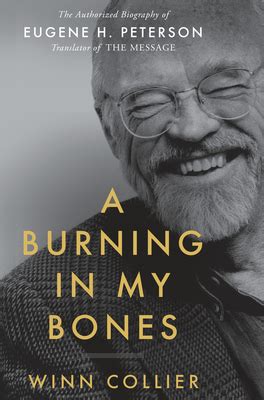
Second, I believe that the church with a future cares more about reading its story than writing its narrative.  “Narrative” seems to be a big word in church these days.  As far as I can tell, it has a lot to do with composing our own future in a compelling way that attaches single acts of worship or service to a greater purpose.  I’m all for that, but I think it is important to remember that, at best, we’re writing one chapter in a very long book whose plot is already clearly laid out.  This even works at the local church level.  Eugene Peterson warns us in The Contemplative that, “the cure of souls takes time to read the minutes of the previous meeting, a meeting more likely than not at which I was not present.”

We find those minutes recorded in church history and church hymnals, two documents which have fallen from favor in my own denomination, where we seem to believe that the church poll-vaulted from over several regrettable centuries until she landed safely in our own generation.  That’s why we jettisoned a songbook that came to us polished by millennia of theological mulling on the part of the worldwide body of Christ and opted instead for toe-tappers and hand-clappers that can give us no idea of who we are.

I’m not knocking contemporary music, nor do I believe the Spirit quit inspiring songwriters somewhere around the time Fanny Crosby died.  But because more recent music has not had the advantage of the filtering years, I would like to apply C. S. Lewis’ dictum about books to the business of congregational singing:  “After (singing) a new (song), never allow yourself another new one till you have (sung) an old one in between.  If that is too much, you should at least (sing) one old one to every three new ones.”  (I should admit here that Lewis disliked ALL because he thought the poetry was .  He’s probably right, but to me it seems that their theology is rather good.)

Finally, I believe that the church with a future cares more about present faithfulness than future viability.  Because the church of the future will be a mess.  Do what we will (and I hope we will), she will remain a morass of carnality and littleness and arguments over service times and carpet samples for the new fellowship hall.  And she will be the Body of Christ, the one institution Jesus ever promised to care about, and one which he said would sit on an unshakable foundation.

So the church with a future doesn’t spend too much time reading the chicken guts of the changing culture and dealing a Tarot deck of trends.  She doesn’t cross with sliver the grasping palms of earringed “consultants” ensconced in dark tents of occult insider info.

Lewis’ Screwtape rightly warns his protégé Wormwood that the proper focus of human endeavor is the junction of Right Now and Forever which leads us to ask what we need to do in the former in order to serve the latter.  But “the future is, of all things, the thing least like eternity.”

The beauty of futurists like John is that they won’t let us rest in Merlin’s tower forever gazing at some ecclesiastical zodiac; they keep demanding that we do something about this stuff.  They refuse to let us fall into Screwtape’s trap of forgetting that the future is not (Screwtape again) “a promised land which favoured heroes attain,” but rather “something which everyone reaches at the rate of sixty minutes an hour, whatever he does, whoever he is.”

In short, I should simply say that the Church is the church with a future.  For two thousand years we have hijacked her with our high-handedness, betrayed, bureaucratized, bushwhacked and bamboozled her, tarted her up, sold her out, locked her in and dragged her down.  We have made her impertinent, irrelevant, irreverent and irritating.  We have used her to camouflage our carnality and let the slimming stripes of the martyrs’ scars hide the midriff bulge of our overfed carnality.  “And for all this,” the poet Gerard Manley Hopkins reminds us (if I may take a large liberty), Christ’s church

. . . is never spent;
There lives the dearest freshness deep down things; 10
And though the last lights off the black West went
Oh, morning, at the brown brink eastward, springs—
Because the Holy Ghost over Christ’s bent
(Bride) broods with warm breast and with ah! bright wings.

What feedback do you have for Doug?

Featured Guest Writer – John O'Keefe !

I’m thrilled to have John O’Keefe as our featured guest writer. John is at the tail end of finishing his dissertation, and is writing a book about vision for and leadership in this century. Some exciting times are around the corner, and I believe John has some valuable insights to share. Below is a brief bio, and then his post. It’s sure to whet your appetite for what’s to come. Feel free to ask him more about it, contribute your thoughts, and give John a shout out.

Bio:

John  is a doctoral candidate at George Fox , and has been called a “creative futurist ,” by people other than his mom. For 15 years has been an active voice in the emerging/evolving conversation regarding Christian Spirituality. As Senior Pastor and Planter with 15 years experience, he is leader, and a dynamic, honest, up front speaker and consultant. 

Besides being the founder of ginkworld, John has written for a number of other ezines: the Ooze , dtour , Next-Wave , and others. John has also written for homiletics and other publications. He likes to take pictures of himself driving, such as you see here.

John O'Keefe


The Conceptual Church: A Vision

-by John O’Keefe

When I was asked by Lisa to a guest blogger, I was excited.  I was excited because in her request she told me I could share with you what was on my heart and for me, as of late, that has been the idea of leadership in the emerging church.   First, I want to say that I am beyond the term “emerging.”  because I see it as a “bad” word, but because I am beyond thinking in terms of “emerging” and think more in terms of being a conceptual church – let me explain.

When we think in terms of “emerging” I think in terms of “coming from.”  That is to say, a flower emerges from the plant.  While the flower “emerges” it is still very much the same as the plant it emerged from, with minor variations in color and size.  The flower will go to seed and produce a plant pretty much the same as the plant it comes from – the cycle continues; even though they emerge they carry the DNA to the next generations.  So I have found with the leadership concepts of the emerging church.  Those in leadership are products of what I call the “industrial church” (what many are still calling the modern church).  Because of this, many emerging churches are simply younger offspring of the industrial church model.  While the church may look different, at its core leadership there is very little difference.  So, what I am calling for is something very different, and something very right brained – something I am calling a “conceptual church” (a church for the 21st Century).  For the conceptual church we need to develop a “conceptual leader” – a shift from the left brained industrial church to the right brained conceptual church.

I am in the process of writing a book for my doctoral dissertation based on that very .  The idea to reach out to a conceptual people we need to develop conceptual churches lead by conceptual leaders.  Right brain thinkers who are creative, empathic, dynamic, and understanding people who see the world with new eyes, and lead in new (yet very ancient) ways.  Without going too deep into the book (not willing to give away the ) I will share that one of the keys to understanding a conceptual leader is to see people as people – in the industrial church people are seen as resources and assets and are placed in the “expendable” category when it benefits the organization.  Yet, in a conceptual church people are seen as people and add to the diversity of the of a community of faith.

My prayer is that the book will be ready by the middle of 2010 – let me know what you think.

My Top 5 Reasons/signs you may be burned out on church

1. You find yourself thinking up illnesses that would suffice for excuses for staying home. Sometimes you even invent names like Snufflititus or Schnozatigo: The serious redness and inflammation of the area beneath the nose from too much tissue rubbing. Rx , remote control, rest, snacks, and tissues with lotion built-in.

2. You suddenly realize how cool, smart, and savvy the early Sunday morning tv shows are, and feel like you might be getting a raw deal but missing them.

3. You feel deeply offended that your church doesn’t care too much that the coffee offered tastes something like armpit, and you start to identify this characteristic with an inherent spiritual problem of your congregation. (perhaps the misusing of the gift of hospitality) 

4. You start to pick apart the ’s sermon with a graph, and two columns of hatch marks on your church bulletin, adding up the times he is substituting a self-aggrandizing story instead of using a true parable to teach a point.

5. You find getting tapped for nursery duty a welcomed relief, because you won’t really have to talk to anybody, watch a worship performance you won’t enjoy, or try to not yawn an ungodly amount of times as you try to get through a sermon the pastor must have downloaded from somewhere late Saturday night.

Okay, this was a purposefully whacky list. you can relate to any of these internal excuses, signs, or avoidance qualities, in some sort of way, then maybe the experience of attending church has grown stale.

It’s normal to have spiritual slumps. It can’t be wise to think of walking with as a continual emotional high, and when it’s not experienced as such, something is horribly wrong. Like any journey, there will be hills and valleys. Faithfulness demonstrated as a choice done continually, (rather than a feeling-based action) can really see us through times like this. is always with us, whether we “feel” him or not.

However, I’ll make a different point. There is also a tendency to fall into a consumer mindset, and feel like church-going is like shopping, and picking out something you like. We probably all do it, to an extent. Have you ever walked out of the service on Sunday thinking, “That wasn’t really what I was hoping for,”? Yep. Unmet expectations are common. But, it doesn’t have to wreck the whole bit of it.

Church doesn’t have to delight us every , and soothe us. Most times it won’t feed us, not in the deep ways we crave. Those times are often found in community that can plumb to greater depths, and do the harder work, but build the stronger bonds that make genuine growth possible. (Think , or spiritual directors, spiritual mentors, and situations.)

Church isn’t just some way to get recharged for your week, and be poured into. But, have you noticed how easy it is to slip into that bare minimum, and consumerist outlook of it? I have. I’ve been guilty of it way too much.

It’s not about just an experience, nor is it just meant for worshiping God with others. We worship God all the time, whether we do it poorly and unawares, or we tune in and give him our whole selves. We are his creation, our lives lived are a form of worship, like it or not.

Church-going, and the whole of the spiritual walk, are about applying the gospel to our lives in every circumstance and situation, the whole way through. God’s and love came down. He draws us to him. He restores. It seems we co-opt and yield to his mighty, gracious work to changing us radically, to be more like him.

Sometimes it just comes down to sucking it up. Sometimes it means you have to change, not your local church.

Have you ever been burned out on church, like I have, at one time or another? What helped you?

Leave any kinds of comments you’d like.

Related Posts Plugin for WordPress, Blogger...
UA-25751574-1 UA-25751574-1