I have an Easter treat for you, and of course it’s a gift that will give all year long–no matter when you stumble onto this episode!
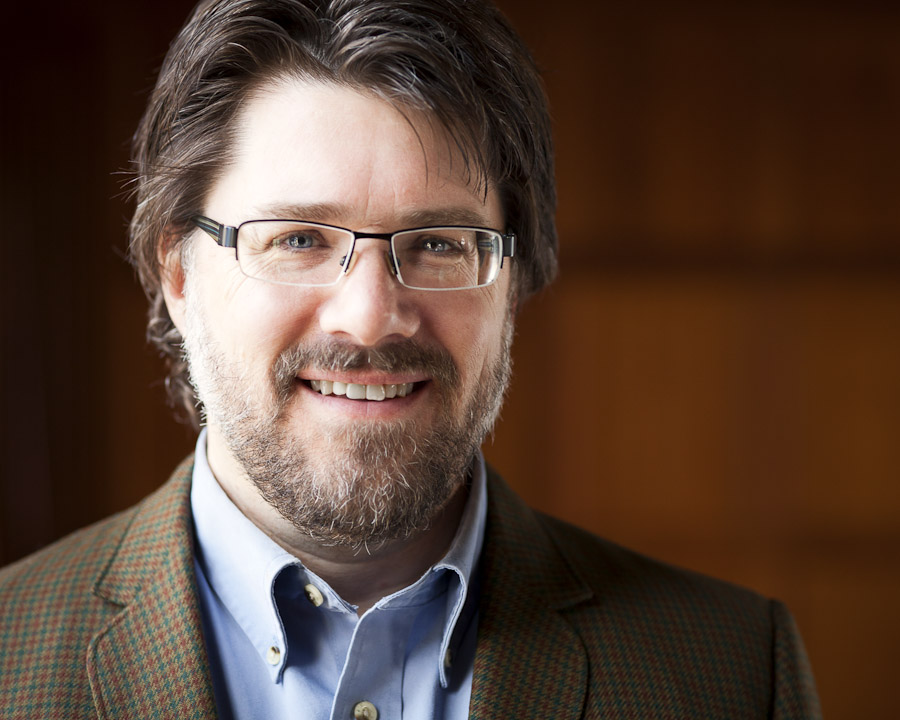
My guest is Christine Sine, M.D. an author, blogger, teacher, gardener, spiritual contemplative and the Executive Director of Mustard Seed Associates.
She has much to tell us about Christian spiritually lived in a healthy, whole, and fully-embodied way.
The Show Notes are SO full of links to books and resources. Scroll down for all of those.
• Please share this episode liberally. It truly is lovely to glean from Christine, especially as we begin Spring; and my wish is that as many as possible are exposed to her and her work. Thank you!
Christine’s experience as a medical doctor and director on Mercy Ships and her development on the ideas of health and wholeness.
MIN 4:30
Wholeness and the connection she found to Celtic Christian Spirituality.
MIN 7
Celtic Christianity as a brand of faith was identified with the poor and family and not connected with wealth and power associated with the Holy Roman Empire and European monarchs.
MIN 11
Creation in translucent. God is shown through it.
MIN 14
God speaks through two books: The Bible and The Book of Creation.
MIN 17
The many expressions of faith that shaped Christine.
MIN 20
Tapping into the tools, history, and learning resources (often through technology) to enliven and enrich our faith.
MIN 21
Listening for the voice and presence of God and joining God in what is already happening. This avoids burnout. The Jewish view of the day starts with rest and sleep and God at work.
MIN 24:30
On her Godspace-msa.com website and the resource center with guest writers.
MIN 27
Easter and the Resurrection
MIN 29
Seasonal resources and family resources
MIN 30
Books recently influential to Christine:
To the Table: A Spirituality of Food, Farming and Community by Lisa Graham McMinn
A Spirituality of Listening by Keith Anderson
Barbra Brown Taylor “An Altar in the World”
“Learning to Walk in the Dark”
Henri Nouwen
Christine Valters Painter
Lectio Divina
Eyes of the Heart: Photography as a Christian Completive Practice
Thank you so much for your interest and for listening today.
Spark My Muse has new episodes TWICE per week.
I ask of you 3 things:
1. Please subscribe (see below),
2. Leave a kind review on iTunes,
3. And come back again soon.
I frequently host LIVE, online discussions and you are invited. You can catch many of the REPLAYS here too. Poke around and see what you find here at the website!
Thanks for listening to Soul School which comes out each Wednesday. Be sure to listen on Friday for the weekly guest episode too. This week (2/19/16), it’s the amazing Bruce Van Horn!
Today’s episode is about the lesser-known themes of Lent.
LENT means Springtime. In much of the Northern Hemisphere of the world during this season spring has NOT sprung,but it has started underground. This is a metaphor for our interior lives at times too, isn’t it?
When everything seems barren, rebirth can be right there underground.
Millions of people around the world focus on this nature of the human experience. The new life that comes after a time of dormancy and expectancy in the 40 days before Easter is celebrated each year. See how the themes can benefit you as you consider them personally, even if you don’t follow the liturgical calendar.
Want to encounter this season more deeply and transformationally than ever this year?
I’ve been work at work to make that possible.
This lesson comes with a lot of extras! I made a great video lesson, I’ve included some fantastic resource links (including my favorite audio devotional link I’m using this year), and I made a companion worksheet to enhance the lesson that YOU WILL LOVE.
Right now, one of the most powerful and influential men in the world is undoubtably Pope Francis.
Pope Francis is the first Jesuit Pope, but too few people know the specific qualities of his Order (The Society of Jesus-Ignatian spirituality). His spirituality and training powerfully and uniquely guide his worldview, philosophy of vocation and work, and themes of his prominent, worldwide administration especially when compared with his predecessors.
Through his decisions, he influences Roman Catholics internationally (a staggering 1.1 billion people) and his ideas influence and inspire many of the 2.2 billion people who consider themselves Christian (specifically: a follower of the way of Jesus), including me.
What is most influential to Pope Francis?
His training in the Society of Jesus (the Catholic Order founded by Ignatius of Loyola 400 years ago). This is what guides how he see the world and makes all his important decisions that direct the Catholic Church and influence others worldwide.
Today, we will learn more about these teachings that often come out-of-sync with the ways and structures of established institutions of religion, politics, and power.
Spirutal Director, Jeanine Breault, formally trained in Jesuit Ignatian Spirituality
Today, you will hear from my spiritual director, Jeanine Breault, a Roman Catholic who is formally trained in the Ignatian tradition. We converse about some of the salient characteristics of the Ignatian spiritual teachings and traditions.
Thus, you will find out the manner in which Pope Francis is directed spiritually by his own spiritual director within this 400 year old spiritual tradition; learn how Ignatian spiritual directors (and the current Pope) see the world and how God works in it, and more.
SHOWNOTES: EPS 24: The (Ignatian) Spirituality of Pope Francis
MIN: 1:00
Answering: What is Ignatian Spirituality?
1:20
Finding God in all things. We are invited to notice how God is at work. More than head knowledge but an experiential knowledge.
2:30
God is always at work for the good in my life and in my world and growing in that awareness. How can I respond to God’s call?
3:30 An Intimate relationship with God SO THAT I can labor with God.
Now that there is a Pope who is a Jesuit (the first in history) how does that shift the role and the the way he see the world as the head of the church.
5:00
On Pope Francis’s new letter “The Joy of the Gospel” and the Jesuit flavorings contained within and the influence on his life.
8:50
On the massive changes at the Vatican.
9:20
Who was Ignatius of Loyola?
The story of the man who founded the Society of Jesus (the Jesuits)
Born in 1491 and his message continues to changes peoples lives.
His war injury and what changed his life.
11:30
The mystical experience he had.
12:30
He work in the discernment of spirits (his work called the Spiritual Exercises) and how these forces work in our lives.
13:10
Discerning and choosing between two goods.
13:30
The rules for discernment that can be applied to anyone at anytime.
14:30
The basic of the rules of discernment.
When a person is oriented to God and desires to please God, then God confirms that and gives graces of peace, joy, and comfort. The opposite feelings do not come from God (fear, anxiety, discouragement, despair, etc).
16:20
Through the Ignatian spiritual exercises, one can figure out what is of God and what is not.
17:40
People coming to direction for the first time are really grappling with a sense of God’s love for them (and not really believing it.)
19:00
Coming to a spirit-led decision and grace is involved.
19:30
Overcoming the obstacle of unworthiness.
20:00
Working at cultivating people’s awareness. Asking questions that create space for inquiry, discovery and discernment.
21:00
We forget that God loves at at some level and it’s a continual process of remembering.
21:50
Her experience with guilt in prayer because of a lack of focus. Apologizing to God about being preoccupied. And the amazing thing God seemed to say in response.
The part of affirming the goodness of God and what God is doing in that person’s life is the job of the director.
23:45
The answer won’t expect to my question: “What do you say or do when people can’t see or sense God, or they have a blindness and are unaware?” (Maybe an “image of God problem”)
24:10
The “director” is not a good word. The Spirit of God is the actual director and it’s God’s business.
25:20
The parallel with gardening and patience for growth.
26:10
“God loves that person more than you do.”
26:00
On not “fixing” things and solving problems.
27:00
Compassionate listening and getting out of the way for God to work better.
28:00
What supervision of a spiritual director looks like so that good listening can keep happening for those directed.
29:00
Finding a director that is properly prepared to direct others is crucial.
Asking Jeanine, “What happens in your mind and heart when you find yourself wanting to solve problems and rescue someone?”
30:00
Remembering the kind of ministry direction is. A prevailing ope that God is at work and in control ultimately. It’s sacred time and time to stay focused. Setting aside things when they come up.
32:40
Do people expect you to be their counselor? And what happens when that happens during direction?
35:00
Helping people know what to expect from direction and how to find someone who is properly trained.
The international listing of trained directors. sdiworld.org
Director will work with people from any tradition.
42:30
The connection of Buddhism and Christian Mysticism in practice. Seeing the goodness in other traditions.
44:00
John O’Donohue and his comments of what Buddhism can brings to Christianity and vice versa.
46:00
Noticing the “now”.
47:00
Coming to a vibrant faith where (you realize) God is working in this very moment.
48:00
Relationships are the ways we become tuned to God and working out our salvation in real life and ordinary experiences.
49:00
Resources to continue on this path.
Ronald Rollhieser The Holy Longing and Prayer: Our Deepest Longing
Carmelite nun Ruth Borrows. Guidelines for Mystic Prayer
Did this ever happen to you? You think the way your family (of origin) does something is normal, and then, suddenly, you find out it isn’t?
Usually, this happens when you form close relationships outside your family of origin. Fireworks can ensue!
How your family dealt with conflicts, problems, shame, secrets, and tragedies shaped you and learning relational and loyalty dynamics from the previous generations in your family can bring relational repair, health, and hope.
That’s what today’s show is about. I’m glad you can listen, today.
Today’s guest is graduate school professor and marriage and family therapist in private clinical practice, Janet Stauffer, Ph.D.
JANET’S BIO:
Dean of Students, Evangelical Seminary
Professor of Marriage and Family Therapy
In addition to her work at the seminary and her clinical practice, Janet is vice president of the Board of Directors at Philhaven Behavioral Healthcare facility. She has led retreats, presented at professional conferences, and published articles in a number of journals. She is a licensed marriage and family therapist and approved supervisor and clinical member of the American Association of Marriage and Family Therapists. She also holds membership in the Christian Association for Psychological Studies. Her research interests include genuine meeting through dialogical engagement, loyalty dynamics between and across the generations of the family, and the intersection of faith and therapy.
SHOWNOTES:
MIN
1:40
Each person is born with an inherent longing to connect.
2:40
Early childhood experiences shape who we are and how we relate to others.
Our ancestors deliver ways of being to us across generations:
4:00
What can be done if the early years weren’t filled with dysfunction and problems?
5:00
How relationship can alter the wiring and re-patterning of the brain.
5:30
Jim Coen, UVA – The Hand holding experiment.
7:00
In close relationships, we end up feeling–not only are you here with me–but somehow you are me. Somehow we are here together.
8:20
Before we can help others, we have to be open to ourselves and our own healing. Our wounds can remain as vulnerabilities and our greatest resource.
11:00
“I because who I am through my relationships with other people, so that more of me gets called forth as I respond to others in my world around me.”
The still face experiment:
12:15
“Foo-Poo” (FOO = Family of Origin) influences our current relationships.
12:45
The interconnectedness and “loyalty dynamics” between and across the generations and how during all our interactions we are holding something that has been passed down across generations and in the larger cultural dynamics.
14:00
Example from life (Janet, her husband and the Ford Fiesta). Naming the truth in our interactions and being curious about what we hold from generations before us.
16:00
Janet explored what anger was like for her mother and grandmother and discovered not just a family secret and the shame that was carried on, but also a a family norm relating to how pain is dealt with.
18:00
Family secrets and ways of interacting waiting like land mines that can sabotage our other relationships.
20:00
We can also end up carrying or holding visibly or invisibly things that our spouse (or other close relationships) hold as well.
21:30
There are options for growth and healing if we can be open, aware, curious and can find courage to turn and face [the other] and remember where our weakness are and admit them.
22:30
The power of naming what is happening for us emotionally.
23:00
“Honoring my personal truth, personal awareness, my being, and made a claim for myself has a profound impact in my own knowing.”
24:00
“Every one of us experiences terror at the thought of finding the courage to turn and face the other in a painful situation at some point in our life.”
25:30
A defend or fight mode should be superseded by the prevailing message “You and I are on the team team ultimately. We have a reason to connect and I long for you. But it’s been hard between and here’s something of how it’s been for me… and I want to know what it’s like for you.”
26:20
Yet, we cannot think what we say will always help because we cannot guarantee the other person’s response. So there is vulnerability in saying the truth.
26:50
Being calm, curious and compassionate even in the face of wounds and vulnerability.
27:30
Emotionally self-regulating and contending with emotional triggers.
30:00
(In marriage or close relationships) Learning self and other in a whole new way…in a kind of sacred space to grow through the most tender places that we hold.
31:00
Telling the other what would help in what feels like an unsafe place emotionally.
31:20
Learning to soothe one another.
32:00
On core lies we can believe about ourselves.
33:00
Honoring when emotional safety is just as important as physical safety.
34:00
What to do when it’s not safe to have important conversations.
36:00
Martin Buber-We live with an armor around us and bands around our heart and being closed off and unaware and unaddressed.
37:30
Asking questions of ourselves to create more awareness and realizing our thoughts and memories are not us.
38:30
We limit our imagination about the capacity each of us holds to respond the other, the world around us and ourself.
39:00
We can test our assumptions and plant seeds that bring new possibilities for ourself and others.
40:20
When we can’t yet name or isolate our feelings.
41:00
Giving permission and a soft demand to know what is going on with someone else and helping them find their voice.
42:30
The biblical tradition of the garden where God says “Where art thou?” a story about hiding. God’s longing for humankind.
44:00
King David in the psalms is modeling openness and receptivity…asking “What is in my heart?” “Who am I?” “What do I hold?”
46:00
Being open and still safe. Giving yourself warm, regard, and leaving the self-judgment out.
“Judgment limits the knowing.”
47:00
Being present to and growing in recognition of “here’s what I hold” or “here’s what freezes me” etc and asking “how can I be more free?” and then exploring new pathways and practices that go somewhere.
50:10
On the spiritual practices and things can people do to move forward.
51:00
These ways of understanding what it is to connect, grow and be human are universal and offer hope to those with varied religious tradition and no religious affiliation too.
53:00
The spiritual and the Other when it is not defined as “God”.
54:20
“God doesn’t limit God’s self to the church or the synagogue or the mosque and we can never fully describe God because God cannot be contained and is always more than what I can fathom or grasp”
55:00
Asking, “How do I understand the call before me and how do I invite others and find the place where they are experiencing call and longing and where is this work happening within them. What is being invited forth?”
56:10
How we can pass down the best of our generational dynamics and loyalties to our children.
57:20
On the invisible family rule of perfectionism and how it made Janet think she could be the perfect parent and how that idea was shattered.
58:30
How she approached her son after that point to understand what he was experiencing and being surprised by his reply.
59:00
We can never get it all right, but we can be willing to go to our child and ask them about their experience.
60:00
Inviting others to know themselves in whatever capacity to do that they can and hold what they say with care and honor.
61:00
Enacting moments and accumulating themes and transactions and happenings and asking “Is their a burden they carry or an injury of disregard or diminishment that was not theirs to carry?” which deserve address and caring and honor.
62:00
On having a commit to “I will be there for you, and I will be here for me, and I invite you to be here for me,” is a profound act that helps us for the long run.
64:00
Despite our efforts, outcomes are not guaranteed and each person has an opportunity to respond uniquely.
RESOURCES for further discovery:
Please subscribe to the Spark My Muse newsletter (HERE) to know about upcoming shows and new things in the works!
Think anyone else might appreciate the show? Please share it with that special someone! :)
Shownotes: PART II
A conversation with Vulnerable Communion: A Theology of Disability and Hospitality, author Tom Reynolds
Bio:
Tom joined the Emmanuel College (part of the University of Toronto) faculty in 2007. He is committed to an interdisciplinary, practical, and relational vision of theology, and his teaching and research address a range of topics related to constructive theology (particularly the doctrine of God and theological anthropology), theological method, intercultural and interfaith engagements, contextual theologies and globalization, philosophical theology, disability studies, and the thought and influence of Friedrich Schleiermacher.
Tom on Theodicy – The question of why does God allow suffering and how should we think about suffering.
1:00
How would Tom, as a theologian answer the question, “Why would a sovereign God allow a person to be born disabled and encounter such suffering?”
2:20
The Why questions and the answers are messy, ongoing, and evolving. These answers are limited and open to ongoing revision.
3:00
Reframing needed. Question the question and its suppositions about seeing suffering first and foremost as the issue.
3:40
If we are pitying a disabled person and seeing them how we would interpret suffering, we might be off base.
4:10
Exclusion as suffering. Social suffering is something we can alleviate as the church or community.
4:40
Tom on the central questions of Theodicy.
5:30
What would a good world be? Interdependent and that holds up the preciousness and fragility of life and human experience as valuable. Good things can be fragile things.
6:30
Does God cause suffering and determine it? Maybe it’s (all) unfolding for us in mysterious ways.
Who sinned? (disciples of Jesus thinking of blindness as a curse)
So the glory of God can be revealed. (What might that mean that we haven’t understood yet. [Lisa])
The story is less about curing the disabled and more about reveal Jesus’ power and legitimacy as the Messiah.
9:20
NT Wright author of Evil and the Justice of God
(on the Problem of Evil)
• God as the Incarnation steps into human suffering as a means to assuage it and also, in that, provides us a model for how to encounter it in the world ourselves, practically speaking.
The answers to suffering can become “incarnational”, not cerebral and (held) at a distance.
12:00
The why questions signal a (good) unsettledness which can be productive…
12:20
1. God is bigger than our questions and we should feel free to engage in dialogue with God and each other about God.
2. And because it calls us to live into the world and the lives of people will engage who ask, “Where are you?” and we can be there in presence and not (just) with answers.
13:00
“being-with”
(The heart of Incarnational living.)
13:30
In many cases God’s own presence is us to each other.
14:00
“Care isn’t so much “doing for” but “being with”.”
15:00
1 in 5 families regularly encounters a serious disability of some kind.
15:30
We (as a family) chose to continue to come to church even though it was sometimes messy so he (and everyone) could figure out how to make it work. (Lisa)
16:00
How can people in Christian Communities or leaders in Christian communities do better when it comes to being truly hospitable and caring well for people with disabilities.
17:00
Training ministers to come along side is important.
17:30
In his mission and intro to Theology class, what is framed is practical wisdom lived out in relationships of caring regard with other people. (not in the academic halls or in isolation).
18:00
On developing the perception to see/understand differently and to see places where people have been harmed by certain ways of seeing these…like the healing narratives…illness as curses from God, or metaphors of seeing and hearing language and attitudes (able-ism) for example.
18:50
How to show consideration:
Asking before you assist someone. Or asking how you can best help and not presuming that you know (or know better).
Listen first, then do.
19:30
Ministry doesn’t have to be deficit-focused to the “needy”…but rather possibility focused.
As all people of resources and gifts [are] welcome among the community…this turns things upside-down.
20:30
Think of people as sites of wisdom that help a community of belonging.
Members having the same care for one another. All can care and contribute.
Living out the image of God with shared affinity.
22:00
Transformative and vulnerable communion within our communities…being together.
23:20
[There is] dignity in participation. (Lisa)
Allowing people to serve along side means that we are equal.
25:40
Equality isn’t sameness. Difference doesn’t mean a hierarchy.
27:40
(Tom) Music is my therapeutic other life.
A Call for Help!
Will you help me meet my goal of raising $1,000.00 in August to keep Spark My Muse going? Use the Donate button on the left sidebar. Thank you for listening!






 Did this ever happen to you? You think the way your family (of origin) does something is normal, and then, suddenly, you find out it isn’t?