
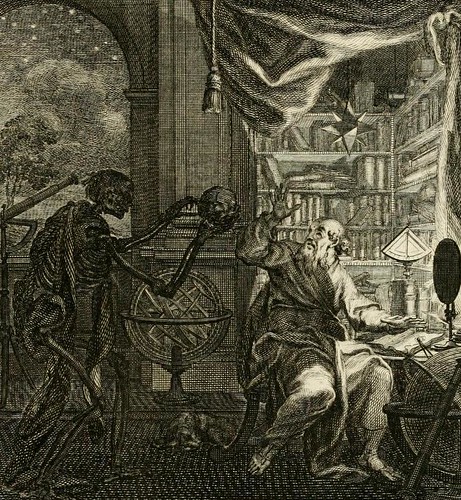
A Practical Guide to NOT getting an Advanced Degree

Detail from
Photo Credit: Arallyn! via Compfight

I’d love to save you save money right now. I love education, but I do sense that our system is outdated by 50-500 years. I can hardly think of anything more stifling to creativity and innovation than this strange situation.

So many people in the North America are getting advanced degrees, I’ve noticed. Have you? I see a boat load of cautionary tales in the whole matter.

First of all….Have you noticed how much advertising is directed at feeding the desire to improve one’s self through education?

It gives me pause.

An affluent country can create a whole education industry that can make little sense when pragmatic end goals are apprehended. Indeed, it already has!

It seems many diploma seekers actually don’t actually know what they want…but it’s hard to dismiss education as a waste of time. Yet, education has never be easier to get…and for free. I have a list of places. More on that in a moment…

Since the job market is horrible many are delaying entry into it or avoiding it by enrolling in a masters program, etc. This trend depreciates advanced degrees across the board, duh.

Really the industry have never been shadier since public school teachers have been required to earn a masters degree to keep their jobs. Programs spring up to meet the need and basically make the whole thing a mockery. Busy work and rigamarole replace andragogic excellence. You thought I’d say pedagogic, right? See how outdated the whole thing is…pedagogy is a medieval term. Yeah, right…so anyways…

For people who value high-quality learning and scholarship it’s an affront.

BUT Why do people enroll?
…lots of reasons:

• To add Credibility (maybe some resume fodder)

• To soothe something on the inside

• In hopes that new opportunities will open up

Though plenty of places will give you the paper you think you want…it might not give you what you are really looking for. I contend that it often won’t. (Seth Godin has hit on this too. It’s worth the read.)

The reality is that without careful consideration the results are more debt and angst than possibilities. A Masters Degree or PhD may help to land a college teaching job…except for the fact that there’s a genuine glut of people with advanced degrees and fewer jobs than ever. School budgets are being slashed. Everywhere. Don’t want to teach? Then an advanced degree is the wrong tact much of the time. This illustrates the point that system is quite broken.

If you are (or someone you know) is in or planning to enroll in an advanced degree program, remember to ask the harder questions. The why questions.

• Are you putting something off?

• Are you afraid of something?

• Do you need or want something that really isn’t about the credit hours?

In reality Success can come in numerous ways through the vehicle of technology. Times have changed.

If it’s really education that you want. That’s all cool. Free Education initiatives are underway at so many top universities, like MIT, CMU, Berkley, Tufts, Yale, Princeton, Norte Dame and others. It’s AMAZING. Check it out.

In the end it’s results and experience that give you success, not who you paid on your paper chase.

Success has a lot to do with creativity, hard work, ingenuity, and perseverance. 

I hoped I’ve saved you (or someone you know) some time and $.

Find the Surprise!

Cracker Jack
Creative Commons License Photo Credit: Bruce Denis via Compfight

As a kid I loved cracker jacks. It wasn’t for the coated popcorn, it was for the experience of finding a surprise. I hunted down the peanuts and the toy surprise straightaway. My hands would get sticky scrounging toward the bottom of the box, but it was worth the effort–even if the humidity made the box soft and the popcorn a untied front against me. The real jackpot was when I scored some water-based sailor tattoos. An anchor or a heart that read “mom” and had an arrow shot through it.

Inspiration and Creativity have a lot to do with finding the “toy inside the moment”. Locating the surprise. We get lazy about this sometimes. We stop looking. Don’t we?

Here are 5 ways to disrupt the ordinary to find the surprise at the bottom of the box you’re in right now.

1. Eagle’s eye – worm’s eye.
What did this look like from somewhere else? Change your perspective, maybe even your actual physical perspective. If you still can’t tell, ask around.

2. Kiddie Ride it.
How might a child approach the situation in terms of curiosity, wonder, or even naiveté? You’re familiarity with your situation may be too stifling to find surprises. A breakthrough can come when we treasure hunt for wonder. And by the way, cynicism kills wonder.

3. Stew it.
Have you noticed how some things come to their fullest potential after they mull or stew for a while? This applies to more than food. Try a slow cooker  approach: First write down your concerns and obstacles, and then fully set aside your situation or dilemma for 2 or 3 days. Give your unconscious mind time to simmer on things. Rest, work on something new, and absorb beauty in art or nature. Then, encounter your situation again nice and fresh. Jot out your new ideas before you get out your list, and then you’ll uncover some surprises. It’s like shaking the box to get the goodies to shift.

4. Play
When was the last time you were lost in joy? Let yourself really enjoy something for the fun of it without worry. Something simple, like when you were young and carefree. Cease the day and suck the marrow out of life. It could be the mental break you truly need to find the primo surprise.

5. Shhh
Are you pulled in a bunch of different directions? Media, relationships, obligations, work, projects, and commitments can make finding the good surprises all but impossible. Unplug. Turn down the “life noise” for several uninterrupted hours. You’ll start to feel human again, and that’s important. You can’t discover surprises in a mosh pit atmosphere, right?

What was the last thing that surprised you in a good way?

Guest post from J.R. Briggs

I’m really happy to have J.R. here today to talk about the patience needed for spiritual growth. As ministers, leaders, teachers, or parents frustration can set in when our efforts seem fruitless. This post will encourage you with needed perspective!

Thanks, J.R. !

The Impatience of Ministry: Waiting for the Vegetables to Grow

by J.R. Briggs

A few years ago my wife did something for the first time that she had wanted to do for quite some time: plant a garden in our backyard. We live in Pennsylvania, one of the most fertile states in the Union. The saying around here is if you can’t get your garden to grow in PA you’ll never get it to grow anywhere.

She bought a few small plants and spent an afternoon delicately placing them into the soil and watering them. Basil, tomatoes, green peppers, cucumbers and mint, among other things. It was a relatively small garden, but enough to find great enjoyment out of growing items we could enjoy. There is nothing better than eating dinner in the summer with items you grew a few hundred feet away.

Our oldest son (who was three at the time) was excited to hear that mommy was planting a garden that afternoon and he wanted to help. He got his boots on and with trowel in hand, helped mommy dig around in the soil and water the plants once they were in the ground.

As they finished the planting process that afternoon, it was time for his afternoon nap. He was disappointed when I called him in and cleaned him up before heading up to his room. When he woke up a few hours later, his first question to my wife was “Are the vegetables ready yet?” With a smile, she explained that they won’t be ready for at least several weeks. Plants just don’t grow that fast.

He was sorely disappointed and confused. I will never forget the look on his face: completely downtrodden. All my wife and I could do was try to keep from him noticing our smiles.

As cute as this story is, I find it a fitting reminder for pastoral work. Its easy to place impossible expectations on people in our churches to grow and produce fruit – and do it immediately.

We become impatient and wonder what’s wrong, why nothing is working, why it seems nobody around us is growing in the same way we read about in the last issue of a ministry magazine or heard about from the stage at the last pastors’ conference we attended. Why are the vegetables not ready yet? Its been a few hours already!

My son provided a good reminder – and a poignant challenge – for me and my approach to ministry. In fact, I’ve told this story dozens of times to other young pastors who are anxious that while they are faithful to do what they are called to do, they wonder why they aren’t seeing tons of fruit yet. And, yes, I’ve had to tell it to myself multiple times, too. True fruit production in the lives of people trying to be like Jesus is a long process, full of dirty and mess, which requires a great amount of patience. As Eugene Peterson wrote, spiritual maturity is a long obedience in the same direction.

The vegetables will come – but not this afternoon. We must do our part: wait, water, pull weeds, tend to the soil. And wait some more. It is dirty work. Fruitful work, but dirty nonetheless. The vegetables will come, but they will not come by this afternoon.

This is God’s work to be done, not ours. We cannot attempt to do the work that does not belong to us.

The vegetables will come, but not this afternoon.

There is no need to be disappointed.


J.R.’s Bio:

J.R. Briggs serves as Cultural Cultivator of The Renew Community a Jesus community for skeptics and dreamers in Lansdale, PA – a suburb of Philadelphia, which he helped start. He is the founder of Kairos Partnerships, an initiative that partners with leaders, pastors and church planters during significant kairos moments in ministry. As part of his time with Kairos Partnerships, he serves on staff with The Ecclesia Network and Fresh Expressions U.S. and coaches leaders, pastors and church planters across the country.

He also oversees the Renew Apprenticeship Program, a year-long experiential program that equips, trains and teaches young leaders and pastors to become effective and faithful church planters for contextual ministry in the 21st century. He is the creator and curator of the Epic Fail Pastors Conference, which helps pastors embrace failure and grow to see failure as an invitation to growth and an opportunity for grace and healing, instead of shame.

He has never helped write a Wikipedia entry and will never outgrow the joy that comes from popping bubble wrap. He’s prone to put too much wasabi on his lunch, but he is a proud card-carrying member of the Clean Plate Club.

J.R. and his wife Megan have two sons, Carter and Bennett, and live in the heart of gritty Lansdale, PA.

Kevin Haggerty [Guest Post]

Kevin makes me laugh at his isle of man blog, so I invited him to post here. Enjoy!

BIO: Kevin Haggerty is a 32-year old husband and expecting father. He runs and writes for a humor blog called TheIsleOfMan.Net. For his full-time job, Kevin is a middle school teacher and basketball coach. He also writes for a mixed martial arts (MMA) blog called MMAMania.com. He’s the oldest of seven children, a continual skeptic and smart people think he’s funny (at least that’s what he tells himself).


The Day I Fell Down a Mountain

When I was a freshman in college, I sucked at being a student.

In high school, I graduated with honors. I worked hard, but nothing else was an option. Being the oldest of seven kids (which doesn’t give you the right to ask me if my parents like to have sex…so don’t), a lot was expected of me. I generally lived up to those expectations, but it took its toll.

By the time I got to college, I was completely burned out on studying, reading and being a student, in general. To give you some perspective, I went from a 3.9 high school GPA to a 1.8 freshman average.

My parents weren’t there to spur me on. No one got in my face when I failed a test. No one jerked the covers off of me when I slept pass my alarm clock. I was learning how to be an adult, and I was failing the course badly.

I wasn’t kidding. I sucked at being a student.

Everything culminated on one fateful day. The end of my first semester was nearing a close. We were in the middle of finals week. I had a History exam that morning. I needed to do well.

In high school, I coasted through History, like I did with most of my classes. I memorized the material and never really stretched any mental muscles. It was easy. I was barely trying.

College presented me with a whole new set of obstacles I’d never encountered before. Specifically, I had a History professor who had a very unique take on U.S. History. He taught us things I’d never heard before. In retrospect, I’m not even sure he was wrong, but it was unorthodox and outside the box. I had to really think in his class.

I hated it.

Back to the exam.

I woke up, in a panicked cold sweat, looking at my alarm clock to see that it was 7:50 a.m. Why is that a big deal? Because the exam was at 8.

I freaked.

I threw on the nearest school appropriate attire I could find in my disgusting mess of a dorm room and darted out the door.

I wasn’t walking. I wasn’t even jogging. There was no time for that. If I missed this exam, I’d fail the course. That was simply unacceptable. I had to make it. So I sprinted.

Did I mention it snowed the night before?

Well, it did. Not only did it snow, but the ground iced over. To further complicate matters, my dorm was situated on top of a steep hill. Are you starting to get the picture?

I could have gone down the stair cas


e. They’d even salted it. That would have been the smart move, but I was late. I had no time for stairs.

I stupidly maneuvered through the bushes that led down the slope of the hill. This was the shortcut we always took when we needed to get to the academic buildings faster.

I got there fast alright. Oh, did I ever.

As I ran through the bushes, I was greeted with a fresh patch of ice that caused my feet to betray me and fly in the air. I was literally head over heels. I continued my clumsy descent down the hillside, which stretched a good 100 or so feet. When I emerged from my adventure,

But I had an exam to take, so I got up, brushed myself off and continued to run like an idiot to the academic building.

As I endeavored on towards the door of the classroom, I saw the professor closing the door. If he shut it, he’d lock it. If he locked it, he would not unlock it. This was a series of events I could allow to occur.

So I ramped up my speed to “overdrive.” Luckily, I was able to grace the doorway before he had completely shut the door. More luckily, he allowed me to enter.

I don’t even remember how I did on the test. I think I did alright, and I passed the class. Regardless, that whole episode was part of my growth as a student.

I realized something very important that day. That wasn’t who I wanted to be. That wasn’t how I wanted to spend the rest of my college career. I needed to step my game up, and it took falling down a mountain to really gain the necessary perspective.

Has life ever used an icy hillside to get your attention?

STORY & the Little Free Libraries

This photo is a of a “Little Free Library”. Cool idea, huh? Not sure what could be more adorable, aside from a baby or a kitten, or a baby with a kitten.

The power of Story is potent and universal. We’ve all been changed by stories, and they often bring meaning and pleasure to life.

In my ebook, I talk about the 4 themes of God’s Grand Story. It’s not limited to just the Gospel Story, but rather 4 Big Ideas that root our experiences, create hope, add meaning, and reveal the nature of Creator and Redeemer God:

• Creation

• Fall

• Redemption

• Consummation

This idea of Story and the human experience is something I’ve been chewing on for a few months, so my ears perk up a bit when something ties in well.

The STORY conference in Chicago this September is one of those things. It’s especially designed for creators, communicators, and lovers of Story.

I’ll be writing an essay for the STORY Conference attendees Notebook on the topic and beautiful recent phenomenon of Little Free Libraries. Have you heard of them? Hundreds are popping up around the United States and are now in at least 20 other countries. Each small book holder (a mini library, like you see in the photo) can be registered at the website and found through its GPS coordinates. “Take a Book. Leave a Book.” many of them say. The originator of the first one puts it like this: “Libraries big or small we support them all!”

I just spoke with Todd Bol, and I’m writing the Wikipedia entry for this organization, and I’ll be sharing his perspective and the amazing story of this movement in upcoming posts.

Find out more about the Little Free Library movement, and consider constructing one of your own, joining the LFL staff (they need help desperately), or donating to Pay it Forward for a community without library resources, or a neighborhood near you.

To me, the whole this is an example of goodness and generosity within that reflects the grace and redemptive nature of the One who made us.

What a great project to do with your kids, over the summer too, to promote literacy, generosity, and a stronger community!

What are some stories that changed you?