Listen to the Latest Audio

A Pathway to Publishing, Interview with Ed Cyzewski

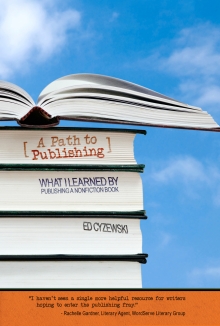
A Path to Publishing, by Ed Cyzewski, 2010

Interview with Ed Cyzewski

Author of  A Pathway to Publishing ©2010

1. At the end of each chapter you give Action steps to help a writer move toward concrete goals. Is this what you did when you wrote, or do you wish you had done it? How important is this element?

It’s some of both. Most of the action steps are based on what I have found most helpful, but a few of them come from what I have learned from other writers and publishing professionals. I’ve had some wonderful guides throughout my brief career and they helped me take the right action steps along way, though sometimes I stumbled onto what worked best for me.

Beginning writers need to take themselves and their work seriously, and the best way forward is to take action. Whether it’s something as simple as reading the latest edition of a writing magazine (such as Poets & Writers, Writer’s Digest, or The Writer) or jotting down ideas for books and magazine articles, we all need to start somewhere.

2.      Which part of the publishing process is a beginner most likely to overlook?

I think there are two things beginners can overlook. The obvious one is the degree to which writers must be able to market their work on their own, but the more subtle one is learning how to write a book that is both true to their vision for it and suited to a specific audience. I believe that getting into the heads of readers is one of the most challenging and important aspects of writing. There are a lot of writers who labor over manuscripts that will not connect with readers because they aren’t asking the questions that readers will be asking. I have made this mistake far too often myself.

3.    From the start of your book, you tell readers to prepare for rejection. Aren’t you afraid you’ll scare them off?

I used to work at an art gallery, and I was in charge of the volunteers who returned work to artists after it was rejected by a jury. About a quarter of them acted surprised, outraged, and suspicious that their work was rejected. I’ve always thought they shouldn’t submit their work unless they are prepared to see it rejected, and that’s how I feel about writing. Publishing hopefuls should not try this unless they are prepared for editors to say “no,” reviewers to say “not quite,” and readers to say, “That book’s not worthy my $15.”

Handling rejection is a necessary and ordinary part of the business for every writer. Even Christian literary legend Fred Buechner shared at an event last year that his regular publisher rejected his latest book proposal. It never ends, but it does become easier to deal with. In addition, if you can keep the big picture of your writing career (and/or ministry) in view, then a few measly rejection letters aren’t too big of a setback. For a bit more about dealing with rejection, I have a series on it at www.edcyz.com.

4.      Do writers really need literary agents in order to succeed?

Agents aren’t exactly required for everyone. I have a friend with a really influential blog, and he was offered a book deal based on this amazing series he posted. No agent necessary. However, for the vast majority of us hoping to secure a book deal with a major publisher, an agent is necessary. Most editors will not even look at a manuscript unless an agent sends it to them.

If you want to try publishing without an agent, keep in mind that you’ll probably make tons of mistakes, some of which may affect your bottom line, control over your material, and future works. One friend I know narrowly avoided legal trouble because of some misunderstood contract terms. I view agents as an insurance policy and as a first line of defense to make sure your proposal/manuscript is as bullet proof as possible.

5.      You mention self-publishing as an option in this book, and the book itself is self-published. This has been thought to not be a legitimate form of publishing in the past. Is that still true, and what makes a self-published book succeed?

As far as legitimacy, let’s note the three major things publishers provide: editorial/design development, distribution/marketing, and authority. Today writers can hire their own editors, designers, and publicists, while selling through online sites instead of book stores. Most nonfiction writers won’t get in the door at a publisher without a marketing platform that will enable them to sell their books anyway.

If an author can make a legitimate case for writing a book and selling it to a specific niche, then I think it has a shot as a self-published work. Many authors are publishing commercially and self-publishing, but they are doing so with an established marketing platform and a degree of authority—Cory Doctorow and Seth Godin come to mind. I have spoken with one very well known editor at a major NYC publishing house who said, off the record, that self-publishing has lost its stigma for the most part. I don’t think self-publishing in and of itself is illegitimate. Authors who skimp on editorial development, design, and building their credibility are the ones who give self-publishing a bad name.

Let’s face it, book covers with clip art and tacky fonts are a tough sell. I hired my brother-in-law (www.joelinmotion.com) who is fresh out of Savannah College of Art and Design to put my cover together. He’s not a professional book designer, but he knows how to pick fonts and colors. The small investment I made in his help made a huge difference in the quality of the book in my opinion.

Having commercially published first, I can say that self-publishing involves a ton more work since you’re doing all of the little things yourself, such as book lay out, sending out press releases, and worrying about how your book appears at online sites. Since I can’t say this self-published book is a success yet, having just released it, I can’t quite answer this question definitively. However, I think the key to success, however you publish, is to market your work until you drop and to contribute to your community of readers.

6. First time writers don’t think too much about marketing their book. You seem to speak to that issue a lot. Was this a surprise to you, and what nuggets did you learn when you published?

I was blown away by how hard it is to sell books. The most effective way to sell books is in person. I’m a big fan of blogging and all that, but when you can hand someone your book and tell its story in 30 seconds, that person will most likely buy it. The personal connections you build online may be significant and may sell books, but selling it in person is quite effective. In addition, I’m a big believer in radio and podcast interviews, as well as online videos. Anything that helps readers make a personal connection with the author will be most effective because we’re all wondering, “Do I trust this person?” Think of the best ways you can answer that question, and that’s how you need to market. Having said all of that, writers need good web sites with stellar blogs in order to stay connected with their readers.

One other nugget is to begin thinking of every personal connection that can help you book speaking events. I find it really tough to find speaking engagements where I can talk about my books, and it can be hard to land events at book stores. Start thinking about this now. If you’re going the self-publishing route, keep in mind that many book stores will not want to host a self-published author, so think up some plan B options.

7.   You offer lots of extra free goodies and resources for new writers, tell us about some.

I think most writers will benefit from the online marketing chapter that I listed online. It covers everything from setting up a web site and writing a blog to using social media. This is a good place to begin building a platform, even if your long-term goal is to integrate speaking engagements and radio/podcast spots. I also have a sample of the book available for those who aren’t convinced by my “brilliant” answers here.

There is a growing list of links at the Resource page, but a glitch in my blogging program erased about 90% of them. I’m adding them again, so keep dropping by there for suggested articles and books on publishing.

Lastly, my writing blog www.edcyz.com has a bunch of series that writers will find helpful. My latest series covers what I learned from the self-publishing process.

Thanks for hosting me on your site Lisa! Happy writing.

Ed

Lurking

A one way conversation

They say that 90% of people who visit a blog simply “lurk.” That is, they read, and rummage around a bit, but do not participate or respond to posts by leaving comments–even when it is encouraged.

Why do you think this is?

(Smash the stats, and answer rather than lurk this time, k?) ;)

Thanks for reading!

Have you Ever Wanted to Write a Book?

Writing a book...

Writing a book is something many of us have considered. Some of us feel a gnawing something within indicating that a book is waiting to get out. An experience needs to be shared. A story idea needs to be brought to light. A character with an adventure needs a life to come into existence on the page. A How To needs to be How Told. Somehow we are “pregnant with book,” and it’s time to do something about it.

Writing a book is one thing. Publishing it is a whole other thing. Writers MUST know a lot about publishing, but they rarely do. They fumble, stumble, and fail; and they don’t get to see their creativity come to life in print. Many writers wish that the route to getting a book published was simply mapped out in some simple form, where the pitfalls, tricks and tips were out in the open, and easy to find.

This is just why author and speaker Ed Cyzewski authored his new book A Path to Publishing: What I Learned Publishing a Nonfiction Book. He gave me a copy to read, and I know it’s going to make things much easier for people who want their books published.

A Path to Publishing -by Ed Cyzewski

In the next post, (or soon) I’ll ask Ed a few direct questions about how his book can be helpful. If you have something you’d like to ask him about his publishing experience with his book Coffeehouse Theology, or about writing or publishing, leave questions in the comment section.

Until then, enjoy a full chapter free right here.

Banqueting Table, Part 3: Factory Food and Slow Cookers

Mass produced factory food, simply re-heat.

I’m not a big fan of prepared foods, like the one you see above.

But, I have to admit, usually when food comes from a factory, it’s quick and simple.

It’s also sealed with cellophane and full of sodium to keep it “fresh”. How long could you keep this “meal” before heating it? …months for sure, maybe a year. It’s a bit of a one-size-fits-all cuisine approach, right?

A frozen meal typically comes tidy, in a divided plate. So, no mess, no worries. There’s no long prep time, no plate, just a piece of plastic flatware is needed-say a “spork”–to cover any food texture. One might not even need a napkin, if one eats it…calmly. But, I think, you’d have to be on the verge of starvation, have non working taste buds, or have little experience with eating delectable food if you wish to devour this quickly. Not too many salivate over or pine for pre-fab food, like only a mother a factory could manufacture.

When people want to “serve up” the love of God, or share the gospel can’t the same thing happen?

Serving up God. yum... ?

Sometimes not only are the workers few, but maybe what workers there are don’t know enough about the richness of the God’s banqueting table. Maybe they’ve been using the spiritual microwave too much. Or maybe they aren’t patient enough to let God into their kitchen and make the meal, and show ’em how it’s done.

It takes a while, it seems he likes slow-cooker and long roasting recipes. (Ask Moses or Joseph about that one.) Sometimes the longer process of becoming a lot better in the kitchen, and letting God be the Chef de Cuisine, doesn’t seem like the smartest or most efficient move for a ministry. “What, spend long hours in the hot kitchen? Chop vegetables, mince, simmer, sauté, reduce…that could take, well, heck, years! We’re trying to help people, here!”

Well, we might give them something to eat, “really quick,” but how edible is it? Is it healthy or good for them? Will it cause stomach cramps and diarrhea? Will they only be able to serve up the same sort of thing? Will we get to the point of creating and serving the kind of spiritual food that God specializes in–the kind we created with him at his side, just like Abba used to make?

Can we reflect God properly by serving up convenient, ready-made, spiritual fast-food?

I’m doubtful.

What if we tried a sumptuous slow roast?

What if we could mentor (disciple) willing helpers (pilgrims/Jesus followers) and give them a solid, theological, narrative framework (God’s Story) from which to see their reality: God’s present Kingdom, and his Kingdom to come.

What if things marinated, and the juices got savory and settled down deep into the meat, rather than inviting others to dig into some version of pre-fab nosh because, the slow cooker style just won’t suit our time frame and ambitions?

Would we be able to offer something closer to the nature and heart of God the slow cook way?

(For our good and theirs.)

Would we be changed to be more to his likeness in the process of that?

Oh, yes, it’s far messier to prepare, serve, and eat! It takes prep time, long hours of cooking, setting the table nicely. We’ll need plenty of napkins and perhaps a wet washcloth or two. Plus, don’t forget we’re talking about REAL people. There are spills, squirts, and stains. Life is MESSY. Even good relationships are fraught with various difficulties. What about the clean up? A sticky, gooey mess for sure. And maybe dental floss will be handy to keep around. Real meat gets stuck in one’s teeth.

Oh, but there’s this: it’s really satisfying, and tastes fantastic.

Messy, and slow cooked

Add some veggies or a large salad to the slow-cooked entrée you see above, and you have an excellent, tasty, and messy meal many will really enjoy. If the company is good, they might even come back for more.

What do you think about it?

Have you ever been in a situation where it seemed like you had to choose one way or the other?

What happened?

Does the slow-cooker way seem out of reach? (Does this post need a follow up with specifics? Let me know.)

Comments, ideas, responses…

thanks for reading.

Banqueting Table, Part 2: Thoughts on Genius

I have developed a bit of an old fashion view of “genius”. Roman empire times “old fashion”. “Genius” was a term given to an outside entity of sorts that basically lived in the walls, and helped out with problems and other matters with a “spark of genius,” a kind of superior energy and creativity that had to come through a human vehicle, and come to fruition cooperatively. A person who “had a genius” had to listen to that genius. His brilliant triumphs would not be completely his doing, nor would his failures of genius. Some of the blame or credit was due to the genius. It had a way of keeping people more human I do believe, not puffed up with vanity and hubris, or unduly in despair for a bit of a lazy genius.

Somewhere along the line (I’m guess during the human-centered “reason” and experimentation of the Enlightenment Age) the term genius came to mean “a person who has brilliance”. A deep shift happened, if you noticed. Genius sourced in the person alone. “How advanced and sophisticated,” some might say. But wait. No one could imagine the stress that would put on people, especially highly creative people (think: writers, poets, artists, inventors, innovators, thinkers, etc.) who would now have to be solely responsible for producing genius worthy outcomes, and items, repeatedly.

Ever wonder why genius and madness are so closely tied? I think, that’s part of it. It’s hard to separate the creative aspect from the non creative aspect in a person. It’s hard to not take failure (or success) personally. I do believe it (“genius” or the process of the initiation of the truly great) has something to do with an intertwining, interaction, or crossover point with us and the Divine (our Creator).

A better, and less destructive way to define “genius” is to realize our success and failure is partly our doing, but partly something that comes to us and overshadows us. It’s better to realize the “gift of genius,” which would be not at all personal brilliance that start or ends in an individual, but instead an ability to be aware, receptive, and collaborative with others, and most importantly what must be higher and beyond our ourselves. A “touch of genius” could be said to be when everything involved hits just the right harmonic cord, and something revolutionary is borne, something is unearthed, or a creative act generates new life.

If you were to say, “Lisa, you’re a GENIUS!” I’d smile, and feel flattered for about 2 seconds. Then I’d realized the bigger truth going on. Very little has much to do with me. I’m not a genius, but sometimes I listen and detect better than at other times. To people who’ve heard my thoughts, ideas, or read my papers, they might hear some original thinking, or novel theories, but I really doubt I was the first source for them. At best it was a strange cooperation of experiences, education, preparation, creative exchange and communication, and a touch of something I can’t put my fingers around, and will not attempt to take credit for.

This “invention” pictured here below is a simple example of just a bit of a “touch of genius”. Check it out.

Why is it? It uses resources, readily available, to move beyond their supposed potential for a well-needed purpose. Is it every paper clips destiny? Probably not, but with a “touch of genius” perhaps, a they serve a purpose that is quite helpful and transcends the assumed norm, the typical, or the mundane.

witness a "touch of genius"
photo source

The people of our interactions deserve the same kinds of treatments and communications as these seemingly simple paper clips–At work, play, ministry, home life, social life, and all the rest. It’s the spark of genius, in cooperation with what is above and beyond us, that is needed to produce not what is hoped for or expected, but what is just out of reach, and just beyond our human imaginations. Groups and Communities can link up with “genius” too.

We can only see what’s been done, or what’s right in front of us. “Genius” doesn’t work that way. It’s a way of collaboration, even relinquishment to do the unexpected, even with simple “instruments” to create the extraordinary.

What thoughts do you have about genius?

If this is new to you, or fascinating in some way (positive or negative), please link to this article.

thanks for reading.