Listen to the Latest Audio

Does Prayer Make a Difference?

Have you ever wondered what prayer is all about? Not just that it’s important, but why it is, or how it changes us? Why might God wish us to do it? Why did Jesus do it? I have.

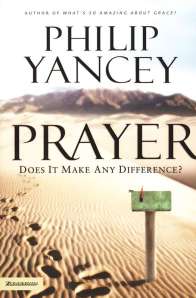
In my Christian education class at church on Sunday, we’ve been going through the book by Philip Yancey, Prayer: Does it Make a Difference. I recommend it highly. It discusses the questions many of us have wrestled with regarding prayer. Such as, “If God knows everything, what is the purpose of asking him?” or “What is happening when it seems like God is silent, and my prayers seem to just be  hitting the ceiling?” or “What should I pray to God? What is off limits? Is it for him that I pray, for me, or both of us?” Yancey goes through plenty of tough prayer-related subjects honestly, without pat answers.

If you’ve read this book, what did you like, or what didn’t you like?

271053_1_ftc_dp


What have been the most helpful thing or things you’ve learned about prayer? What books have helped you? Please, leave a comment or lesson you’ve learned here.

"Is God Knowable?" (Response to reader)

Can we know God?

The easy answer would be to come out right away and say, “Yes!”

But, I won’t. I think the more honest answer is, “Yes and no.”

For one thing we can’t even know people that well. We can live with a spouse, or family member for years, and still find out new things about them, time and again. People are deep wells of information, experiences, natures, and characters… but through time and devotion, we can get to know them…. We never know them completely. What I mean is, we become thoroughly familiar with those we’ve spent plenty of time with, but it is naive to say we know them fully. 

BUT- what about God? God is SO different, right? He is UNFATHOMABLE. He created everything, and is everywhere, all-knowing, all-powerful, so says the Bible, right? How can we REALLY REALLY possibly KNOW him, right? He is beyond language. Correct? Well, the short answer is “yes, kind of.” 

God made it possible for us to have an amazing book in our reach called the Bible which talks all about him. It can’t capture him fully with words, but the narrative that runs like a river through the whole council of the Bible can loosely give a good contour of the Supreme Being that is all at once Almighty God, Father, Savior, Friend, and much more. We can’t sketch a sunset with pencil, but we can get some shapes down. We can’t use words to describe what tasting coffee is truly like, but with words, we can outline a bit what the aroma is like, and how good a warm cup tastes and feels when it is drank. One can imagine well what it is REALLY like based on a word description. So too with God. The reality of him can be known, but not fully grasped. He is knowable, but not fully comprehendible. It is limited knowledge, but entirely useful.

Let us not dismiss some of our best ways to encounter God by calling them shoddy when we use and trust language for so much else. It is on the basis of language, words, and propositions, that we first encounter all our initial ideas before they are incorporated into our lives. They are a starting point, not the end all be all to knowing God. Like any complex relationship, knowing God involves invests of time and devotion, not just mere research.

Do you know God? How have you encountered him? Feel free to leave your comments.

Afraid of God

normal_FrightenedLady001 I was speaking with “Gwen” not that long ago, and she was telling me about an emotional subject. The words, “Oh my God” escaped her lips. She stopped. She looked around, and then with a look I would have to describe as panicked, she said, “I’m so sorry. I know God doesn’t like if I do that.”

I didn’t want to make anything of it, so I encouraged her to continue her story, but later I starting thinking about what happened. She was feeling afraid. It was fear she felt toward God when she apologized. 


Because God made us as relational beings, I wonder if we need to do better than being afraid of God. I know as a parent, I want to love my children and have them love me, not fear me. I want them them to respond to me and with me, not just respond out of fear of something happening to them. I enjoy my place as parent, rather than their peer. I do want honor and respect, and I try to offer that to them. But, if they operate in a way where they look over their shoulder every time they do something, I think I sense I have failed in some major way in relating to them, and parenting them. I will not have established a relationship of trust, and healthy love and caring.

I wonder if Gwen will feel close enough to God to feel unafraid one day. I wonder if she will feel he loves her dearly, and knows all about her, and still loves her just exactly the same. The fear comes from her own expectations, and probably what she has been told about God, but not God’s nature, and what God desires for her. He wants closeness, intimacy, and free reciprocal communication. He doesn’t want a cowering servant, always afraid to do or say the wrong thing that may displease him. Pagan gods were temperamental, but in contrast, Yahweh was and is not. I think the God image in her mind might look close to the dad she had, or some authority figure. But, the Lover of her soul, cares for her so deeply it would blow her mind.

Have you been afraid of God? Do you know someone who is? What has been the effect?

Perceiving Grace… Your thoughts?

Proposals on grace, including “kenotic decentering” here. After reading it…What are your thoughts about what you read?

Adam Miller‘s article brings up notions of what grace may be in how it may be perceived, or actually work in how we experience life.

Does grace fill in the gaps of our weakness, bringing us to find satisfaction and salvation in ways we never can alone. OR maybe is it what we allow, (and what is given) to help us find contentment and salvation in whatever the mixed bag of sorrow and joy happens in life. In other words, life is already normal, (not abnormal, despite the negative side of it) and grace helps us see life as not deficient. 

Miller points out a third way, and, of course, there are other ways to perceive grace, or propose how it works too. 

I’d LOVE to hear your proposal, or stab at it.

Art-the universal human language of connection

[youtube=http://www.youtube.com/watch?v=518XP8prwZo]

Art isn’t a segment that involves a certain branch of the population, it is a part of the human spirit itself. Through it, the connection, and language under, deeper than words expresses more than linguistics allows. Without forms of art we seem like mere brutes, animals, or machines, hardly able to get past our own shallowness or insufficiencies. And with it we struggle through the same, and grow into fuller humanness, which is the point.

Ukrainian sand artist, Kseniya Simonova depicts her people and their struggles following WWI and into the Nazi takeover in this awing artistic performance. She gets to the root of the human experience, and in my opinion, the place of greatest need where God always is.

Please, tell me what you think of this video.