EPS 33: A Muslim talks about Allah, what he says will surprise you

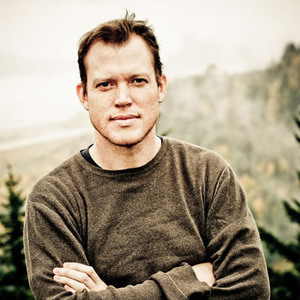
Usama Awan
My guest is a young man who reflects the mission of this project called Spark My Muse. That mission is to be the spark of light and love I (and we) want to see the world.

If that’s a mission you can support, please spread the word about what’s happening here and contribute a little bit to help me meet the financial burden of keeping this effort going.

Please to help today.
Do that HERE.


Usama Awan is a medical Student at Ohio State and a Ahmadiyya Muslim that escaped religious persecution in his native Pakistan with his family when he was a young boy.

Contact him here: muslimperiscope@gmail.com

On Twitter @MuslimPeriscope

Ahmadiyya muslims are a moderate minority sect in the Muslim world and they believe their messiah came already.

The Messiah of the Ahmadiyya sect was Hazrat Mirza Ghulan Ahmad. He was a teacher and he was not divine.

Ahmadiyya believe in an established Khilafat is not a physical dominion but a dominion of the heart.

The website about his sect of Islam
http://www.alislam.org

2:30
Usama addresses some misconceptions about Islam.

About his wanting to change the perception of Muslims by going live on Periscope to answer questions.

3:40
Usama’s story of leaving Pakistan because of religious persecution.

His sect believes in a Messiah of Muslims (who died in 1908) and this belief makes his sect targets for persecution from other Muslims in the Muslim world.

6:00
Current leader (the Caliph) is Hadhrat Mirza Masroor Ahmad and lives in London. He advocates for peace.

8:00
About the belief in Jesus by Muslims.

Three goals of the Muslim Messiah:
1. Revive the teachings of Islam and bring Muslims back to the true teachings of Islam
2. To spread the truth about religion and to get humankind back to its Creator
3. To unite all religions

10:30
Worshipping the one true God and Creator.

Allah means God in Arabic. Arab Christians refer to God is Allah because it is the word for God.

12:00
Some of God’s attributes.

13:00
How names summarize us poorly.

14:00
God as male?

15:00
What Islam is not:

Terrorism is forbidden.
Life is precious, no matter the faith belief of the person.

19:30
Asking Usama, “Do you think most Muslims understand the truth?”

1.6 billion Muslims in the world but most have lost the true teachings of Islam–like a body without a beating heart.
The Muslim Messiah is there to get the heart of Islam to beat again.

20:40
The Quran is (usually) misunderstood. It is written in parables and must not be taken literally in ways that it is commonly.

The Calif (leader) is the ultimate authority on the Islamic teachings and there to resolve disputes.

23:00
What is the same about people is far more than what is different.

23:30
The big curveball question:
Was Mohammad violent and in favor of killing unbelievers?

The wars of Mohammad and were they fought in self-defense?

24:00
How the wars in (pagan/polytheistic) Mecca started around 610 AD.

Mohammad moves to Medina and the faith starts to spread.

27:00
Book by Karen Armstrong the life of Mohammad as a historical figure.
https://en.wikipedia.org/wiki/Karen_Armstrong

A history of God

Name Your Link

The religious context in Mecca: It was pagan and in the city of Medina there were some Jews.

28:00
The Kaaba, the black box, in Mecca was surrounded by idols and worshiped in a yearly pilgrimage.

Kaaba HD (3)29:00
Religious or spiritual figures are reviled by those in power (Moses, Jesus, etc.)

30:00
The economic factors that cause wars throughout history.

30:30
Abraham and his son Ishmael.

31:00
The Quran says that Abraham is told by God to leave to go to Mecca and leave Ishmael and his mother to make a great nation.

32:00
The family fight in the Middle East.

33:00
Exclusive truth is claimed by both Christianity and Islam and what can we do about it?

35:00
Usama says that his sect of Islam does not claim to have the only way to God. Many prophets have come over time and have told God’s truth.

36:00
The return of God is a message in every culture.

37:00
Answers the question: What’s the point of being a Muslim if all paths get to God?

The Five Pillars (of Islam) help you lead a godly life.

38:00
Jihad means to struggle and keep Satan away.

39:00
The Grace of God. Prayer helps us but it is not for God’s benefit or to get his favor. It establishes a link to God.

When people ask, “If God exists why doesn’t he just show himself?”

Belief is to hone in on “spiritual frequency”.

41:00
Worshiping God in Spirit and in Truth.

(from Lisa) Christians sometimes think of God as a Christian or of Jesus as a Christian.

44:00
Finding common ground to love the world as God wants us to.
Conversations. Service projects. Work together. Volunteer together.

Protecting each other and respect each other and focus on the common ground.

Mary the mother of Jesus is revered in Islam.

46:00
To serve God and bring glory to God we need to bring peace and love into the world together.

Soul School – lesson 1

"Safe Neighborhood?" (creative commons photo by Josve05a Flickr)
(creative commons photo by Josve05a Flickr)

Here is something different.

It’s a short episode with a thought experiment, a kind of class in “soul school”.

Let me know what you think.

I’d like to intersperse short “lessons” with my typical interview episodes. I’ll do a few as a test and see where it goes.


EPS 32: Rolf Potts, Celebrated Travel-Writer and Best-selling Author


Rolf Potts is a celebrated travel-writer and best-selling author (over a million books sold!). Besides writing best selling books, teaching writing in Paris each summer, occasionally hosting a television travel show, and inspiring the polymath, phenom Tim Ferriss to embrace the Vagabonding philosophy (as well as give Potts’ book of that same name the coveted spot of “first book in the Tim Ferriss book club”), Rolf Potts lives in rural Kansas and saves for extended world travel. And there’s also the gangsta rap project.

rolf-headshot
Scroll down to the Click to Listen Button and read the shownotes.


Listeners and friends, as you enjoy the show, will you please consider a giving a small tip to help out?

How about $1?

To help click 
HERE. Thank you!


BASIC INFO LINKS:

Wikipedia article on Rolf HERE.

Rolf’s Website HERE.

(Find all his books, audio books, travel photos, essays, and much more there.)

Rolf on Twitter HERE.

SHOWNOTES:

Guest, Rolf Potts

click the icon below to share an audio snippet

MIN 1:00

On Rolf’s philosophy of life (vagabonding) that makes room for a richer way of experiencing the world and the people in it.

Vagabonding

Tim Ferriss made Vagabonding his first book club selection.

A philosophy of life, travel and seeing the world.

Vagabonding and the “time-wealth” value-adjustment from which action naturally follows.

(video by Tim Ferriss)

Time is treated as a commodity but thinking of how we will spend our days and our lives can poorly reflect a life we really want and actualize time well.

Travel is not an expensive indulgence. Freeing up the time to travel can be the greater obstacle (mind-frame) for living well.

“time-wealth”

Seeing Time as the true wealth of our lives.

5:20

The repercussions of “the selfie stick” for the modern traveler.

How technology affects how we travel.

6:30

Technology can have you living through a screen instead of traveling or living at a firsthand level.

Tourists of everyday life. Is performance engaged enough?

7:40

Counting selfie sticks in Paris.

It can advertise that you are there to harvest photos.
(The least obtrusive selfie stick I could find, in case the temptation for better shot is too much.)

Comic book Wenamun the ancient Egyptian travel story.

Screen Shot 2015-10-15 at 11.55.29 AM

If we get bored, lost, or lonely while traveling you are forced to be more imaginative and be more engage with the people and place where you actually are. These are gifts of travel.

10:20

Discipline and the ability to wean off technology and allow life to happen can give us richer experiences. More surprises and more vulnerability can make for a better trip.

Put the smart phone away.

12:10

Asking people where to eat who actually live there.

14:40

How he has evolved as a world traveler?

16:00

Being a Korean ex-pat for a few years and understanding how cultural is a gut-level thing that helps to learn while living there so that the abstractions change into lived experiences.

18:30

Rolf on having a provincial perspective and how it has been a benefit to him because he appreciated the smaller towns and places and not judging the place for their perceived lack of sophistication. People have more time for you in small towns. Big cities can have more arrogance toward other more rural places.

21:00

His recent travel adventure: Renting a car in France with a 100 page road atlas but no guide book. Seeing the beautiful town and eating Beef Burgundy.

23:00

His Paris writing class.

Ladder of abstract in writing. We meditate the world through abstractions. Root myself in the concreteness of travel and use my 5 senses.

25:00

The crap shoot of how he choses where to travel.

Visiting friends feels less like travel than it does like reunions.

On traveling alone and winter traveling.

29:20

Places with bad reputations can be the best places to travel. Syria, though, has become too dangerous, but had been one of his favorites.

Egyptians are very accommodating except near the pyramids where it’s very tourist-heavy.

China is a giant country with many things to experience.

Russia also has a lot to experience.

32:00

Less traveled parts of the world can be more interesting and people can have more time for you.

New projects:

Comic book (Wenamun) inspired by reading about travel in the ancient world. The anti-hero is Wenamun who bumbles through his travels. Proceeds go to help Syrian Refugees, Save the Children Fund.

Buy it HERE: The Misadventures of Wenamun

35:00

Another writing project:

Bloomsbury’s 33 1/3 Series
Small books that feature historically significant music albums.
the Geto Boys

Houston and the 5th Ward of Houston

and gangster rap group called the Geto Boys 1990 self-titled album.

the psycho-graphical way to see a city.

Gangster rap was about the crack-era urban decline of certain areas.

Gangster rap in the 1980s and 1990s was the first black music form in the 20th Century that wasn’t appropriated and sold “with a white face”. Authenticity was so important in the art form is was done differently.

40:40

First exploring the 5th Ward in 1995 and going on a police patrol ride-along and seeing the crime from that vantage point and coming back in 2015. People ride horses in parts of the 5th Ward. The inner city in often a troupe. In Houston, the ghetto is place-specific and Rolf enjoyed writing about the history of it too.

Investigation of place.

44:30

Where to find Rolf, his writings, his books, and travel photos: rolfpotts.com

May you see world travel in a different way. It is accessible.


Sorry, this is only a partial recording! The LIVE viewers got a great Q & A with Rolf. Don’t it out on the next one. Show up on TUESDAYS at 8pm EST / GMT -4 for the guest of the week.

EPS 31: Life After Midday, A Conversation with former Moody Radio host Lori Neff

THIS IS A VERY SPECIAL “in-betweener”  episode!
Check out the other one released this week too.
• Rolf Potts here!


The Life After Midday Story…

This Autumn, when the giant Christian Broadcasting Network, Moody Radio, suddenly ended the award-winning and popular show for women called Midday Connection, fans were stunned and so were the four hosts of the program. The show ran strong for decades and dealt with tough topics with trustworthy and transformative authenticity, and now it was abruptly over.

In the weeks and months that followed the news (first conveyed confidentially to the hosts a few months earlier) host Lori Neff struggled to find her footing. What was her identity after losing her dream job , her 18-year career, and the interaction with her friends from her job? What should be the new path for her ministry and her life’s work?

In this beautiful episode, Lori conveys to us with her characteristic authenticity and her deep well of spiritual fortitude what was happening during that time, how she has processed the tumult of the upheaval in a way that has best connected with her values, and she reveals her exciting plans for the future (some of which include THIS show).  It is an inspiring and a useful model for any of us in a difficult transition or painful situation. Her message will hearten and delight you.

LoriNeff

Scroll down to click on the button to listen and see the shownotes below for links to things mentioned in the show.

We had a LIVE online podcast after-party, scroll to the bottom to view the replay!


Thank you for finding Spark My Muse project and listening in. So much is in store. Wonderful guests, new partnerships, and upcoming ways to connect. (Also, check out the community we started HERE.)

• If you have enjoyed the program and want to be a part of helping it continue, you can help out HERE. Even $1 or 2 is wonderful, because as everyone helps a little–it helps a lot.

(Dead broke, but still generous? Share the show with a few friends now and visit this link to write a helpful review on iTunes HERE.)


Be sure to connect with Lori!

Find Lori at her website HERE.

Find her on Facebook HERE.

Connect with Lori on Twitter HERE

Shownotes

MIN 1:30

18 years of radio broadcasting for Lori came suddenly to an end?

Broadening the scope of the women’s program to talk about spiritual formation and tougher topics.

3:20

How Lori was introduced to and trained in spiritual direction (and what is it?)

4:00

Moving away from problem-solving.

Christos in MN, training program

6:00

Listening with the other person for…

God’s activity in their life. Enjoying the creativity that can go along with it.

7:00

A gentle, safe and warm ministry.

9:00

The shock of the Midday Connection ending.

11:00

Leaning into the things that bring you joy.

11:30

A podcast focused on prayer. (Everyday Prayer Podcast)

14:00

Using art for prayer and worship

15:30

Lori’s spiritual background and faith tradition

16:30

The trap of legalism that began in adolescence.

18:00

Janet Davis book, The Feminine Soul

19:30

Our devotion can make us strive for certainty.

20:00

Critical Journey Janet Hagberg

22:00

The format and date for her new podcast.

23:00

Pray as you go

Daily disconnect podcasts with daily prayer

Guided prayer practice. About 8 minutes long.

Sacred Pathways by Gary Thomas

25:00

When prayer “stops working” and the seasons of prayer.

27:30

A prayer Lori goes back to is she’s discourage, sad, or busy:

Lynnette Martin

Practical Praying [READ it here]

We give a glance, a smile and say “hello”.

29:00

Basking in the presence and intimacy of God in an intentional way.

31:00

Asking, “Where is God in this?”

The chair was like a nest.

33:00

Relying on written prayers when you feel prayer.

34:30

Celtic prayers.

Morning, afternoon, and evening prayers that are holistic.

35:30

Lori doing women’s retreat with Melidna Schmidt.

Creative Faith.

Vision and value statements

5 Core value statements.

Mind Mapping – a tool for putting thoughts on paper in an organized way.

Beth and David Boorman

Sustainable Faith Indy

38:00

Discovering her dreams.

43:00

Authenticity and vulnerability and lack of fear to address hard topics is what she’ll miss the most.

45:45

Anything like Midday Connection on the horizon?

46:45

Anita Lustrous Faith Conversations podcast

47:30

Spark invitation

49:00

Finding Lori and what she’s up to. lorineff.com

“The end of Midday Connection” series on the blog

51:00

Losses take time to move through.

A lament like the psalms.

The journey of grief.

53:20

Is there something as “pure joy”?

54:00

Not pushing aside the tension of joy and sorrow.


Please let me know if you enjoyed the show. Don’t forget to subscribe and come back in a few days for another episode!

-Lisa


EPS 30: Why is it funny? A neuroscientist on humor studies

  • What makes something funny?
  • Can the science behind what makes us laugh teach us something about how to make better decisions, or how to getting along better with others?
  • Why do some people find things offensive that others find hilarious?
  • What factors influence humor and can they be altered for desirable outcomes?
  • Can the brain recover from major damage and how plastic is it?

All these questions and many more are studied using experiments and FMRI brain scans at the Goel Neuroscience Lab at Toronto’s York University to unlock the role of emotion in decision-making, mental systems, and human behavior.

Scroll down to click the LISTEN button.

Iceland

Dr. Vinod Goel is my guest today. He is a neuroscientist of note, but he is currently on sabbatical in Zurich, so he will not likely be joining us for our LIVE discussion portion on humor on October 13.

Enjoy my recorded conversation with him for the podcast and scroll down for shownotes.


Caleb Warren, behavioral researcher from the Humor Research Lab, with Pete McGraw author of the Humor Code,  is stepping in to answer your questions and discus the science of humor on October 13 HERE(or click to watch the replay)
calebwarren


The Spark My Muse Project is little listener-supported endeavor with a mission to be a spark in the world. It’s not just a podcast, website, and resources, but a partnership AND a fellowship of kindred spirits. Thousands of people n 171 countries are listening and helping too.

• If each listener contributes just a bit per month, we can keep the Spark!

Ready to help today?
Do that HERE.


SHOWNOTES

MIN

1:30

The way the brain understands a joke works the same way any mental set shifts work. By studying what the brain does with humor, we can understand how the brain understands and perceives the world in symbols, language, abstraction, and in social contexts. Using FMRI scans that study of the brain has revealed some interesting and surprising findings.

3:00

Basic jokes rely on non verbal set ups that become funny when the expectation is not met and advance jokes are semantical and often involve a shift in thinking about a social norm.

4:30

Why uneducated people get offended at jokes.

6:30

Physical humor and language-based humor. It depends on triggers.

7:20

Study show that tickling rats cause a kind of laughing response. Are they REALLY laughing?

8:20

How are humor develops, starting in childhood and moving toward abstract concepts. The social context and the semantic network of association develop to understand much more.

10:40

His study of the role of emotion in reason and decision-making.

The impetus was watching American politics.

12:30

The manipulation of emotion in advertisements to bring people to an illogical conclusion. Different portions of the brain are not used that would help make a good and logical decision.

14:00

Arguments laden with emotion don’t engage the reasoning part of the brain found in the left dorsal lethal prefrontal cortex. Instead brain activation happens in the medial ventral prefrontal cortex.

Studying war veterans with brain damage in the medial ventral prefrontal cortex could reason just fine but not if the medial ventral was damage. This part of the brain filters out the emotional content so we can make wise decisions.

17:00

His findings show the individuals with more education and with higher IQ, and better working memory capacity care better at compensating for the differences and detect if there is emotion playing into the decision at hand.

19:30

Brain plasticity and what can be healed.

22:00

The strange case of the normal woman they scanned who had the shockingly atrophied brain hemisphere. Her working hemisphere took over all the functions of the damaged hemisphere.

26:00

One of the surprises in his recent research that exploded the common perception in the field of neuroscience.

The visional perception parts of the brain that are not near the frontal lobe but help us in reasoning.

30:00

Dr Goel ideas about why humor is such an important part of the human experience.

Humor allows us to entertain ideas in a non threatening and safe environment or forum where we can positively interact.

34:00

The distinction between humor and pleasure and between laughter and humor.

35:00

Laughing disorders and occasions where laughter doesn’t include mirth. Laughing yoga and the “holy laughing” phenomenon.

Where in the brain laughter is sourced. Feigned laughter is shown to come from a different part of the brain than genuine laughter.

39:30

Laughing and yawning can both be phenomenon.

40:30

Laugh tracks used in comedy shows to make us perceive the show as more funny.

43:30

Often humor is relying on the violations of social norms. The science behind why Archie Bunker is no longer funny for most people.

45:30

On what makes something classically funny.

48:30

Dr Goel children don’t think he’s funny.

50:20

The brain chemistry of humor in the reward centers of the brain.

51:40

“Humor is a very sophisticated marker of intelligence.”