One of the most helpful writers for me in understanding God’s heart, and healing from wounds inflicted by other Christians, has been Philip Yancey.
I’m offering a wonderful book by him about seeing God through the life and ministry of Jesus called, The Jesus I Never Knew. This is a great giveaway!
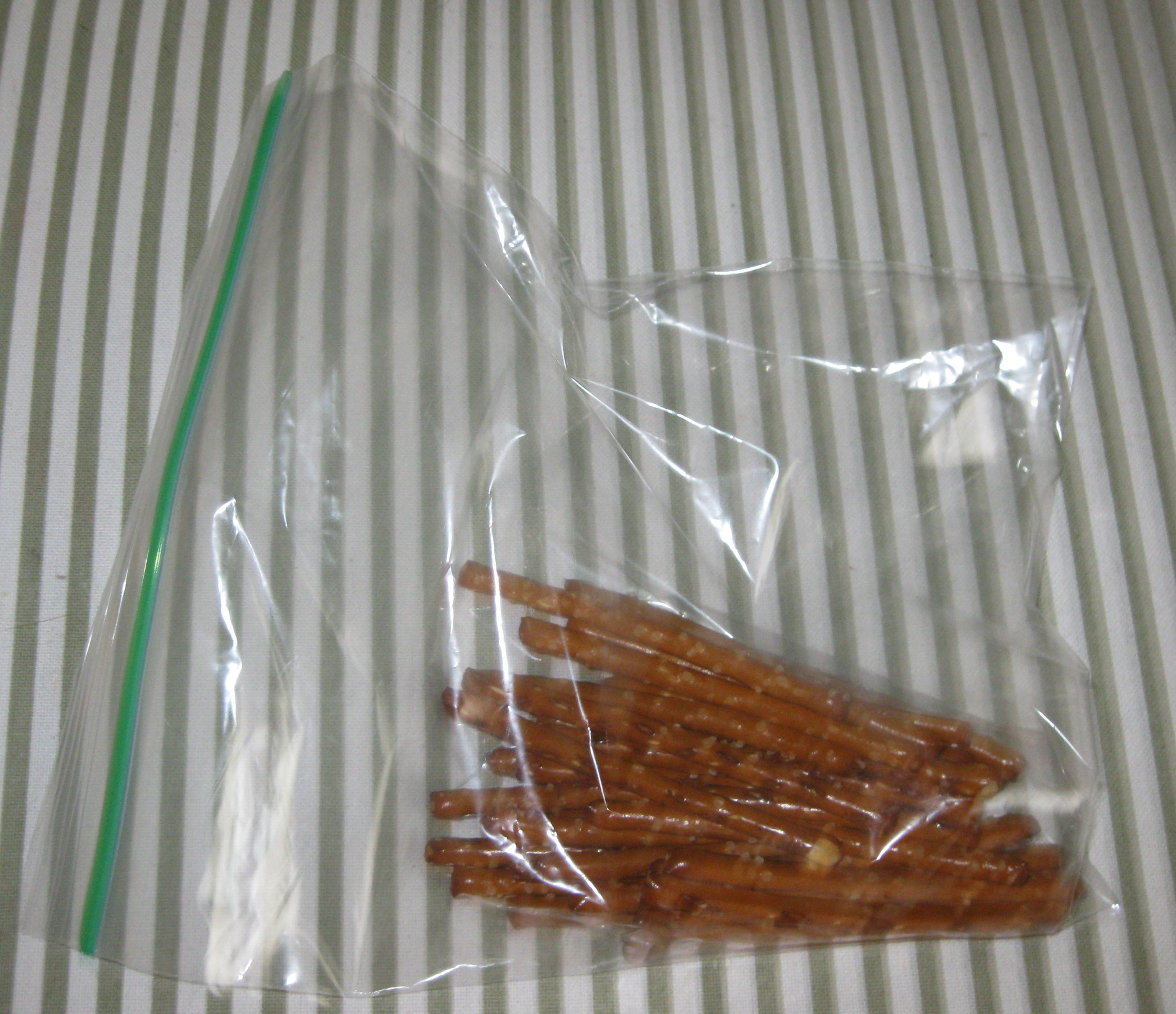
What an eye-opening book this was for me, and a great blessing. To win a (new) copy, and the other goodies shown, guess the number of pretzels in the ziplock shown in the photo below. The first one to guess correctly wins, or the one to come the closest first.
Prize: Yancey book, coffee, and disposable tooth cleaners!
My church’s youth drama club did this performance on Sunday. What a special youth group we have. . .Such a blessing. I watched it with a big lump in my throat. The journey may be hard, but Jesus and his love prevail.
This is not an article that defines backsliding with a simple answer. Rather, it is one that is asking questions, and interrupting our presumptions about spiritual things.
On the surface-Backsliding implies that something or someone is pushed/set back, off track, or somehow, something has gone wrong. It connotes that one must “make up ground” once backsliding has happened. One should avoid or prevent it. It is not the “best for us.” But, perhaps we can take this definition to task, and investigate further…
So, I ask: Is backsliding used as a term for other things? Is it a nicer way to say rebellion? Is it a more pleasant way to say, “my heart is not as loyal,” or “I’m doing my will, for now” ?
What if backsliding is actually not a backwards motion at all, for some. Could this be true? Perhaps the term is a misnomer?
Could it be part of the journey that takes on the appearance of wrongheadedness, doubt, or bad judgment?
And is backsliding the same as “going astray,” or is it something different?
I was thinking about this a lot because I see a tendency for Christians to label things as all good or all bad. Tough times, like a period of dark night of the soul, does not feel pleasant. Many can mistakenly name something such as this, something it is not. At times, the Christian may not be going backward, but ever deeper into the love and understanding of God, and will come out on the other side, strengthened and changed.
I put the question out there: How do you see it? Does it matter? If not, what does?
There is a terrible irony in the typical human’s response to pain.
Emotional, physical, or mental suffering is most often considered personal, or about one’s self, and so it is dealt with on one’s own.
A suffering person, ready to divulge their pain, may say, “This is hard to say out loud,” or “This is difficult to share with people I don’t know that well.” The pain has been internalized, and taken in, stewed.
We all do it. But now I ask “why?” Habit maybe, yet we do terrible jobs of healing ourselves. Our wounds fester and putrefy.
Outside perspectives, and the gracious love of community offer healing we can never find alone.
I wonder if the broken-ness of this world makes us retract. Maybe a flight/flight instinct is at first to simply be self-preservative. In reality, we are not alone, our pain is not unique. But, the shock, and upset sends us into hiding, or a kind of “hunker in the bunker” mode. The bitter stab, the disappointment, or the awfulness of suffering makes us fear, and mistrust, so we give ourselves no option but to withdraw, and go inward, taking the pain with us. It rarely finds a good exit. Then we lick our festering wounds, in solitude, even as we may curl back unnoticed, behind the dumpsters of the very hospital (a situation) that could being healing, comfort, and hope. Don’t we?
Could pain really be something different altogether, and we might just be misapprehending it far too much?
Could it be a way to lead us home?
Is it a way to lead us into each others arms, once again?
Those who have been calmed and gained healing, find that healthy community is the surest way to growth, start invigoration, locate meaningful purpose, and heal hurts. How is it that so many of us suffer quietly, and alone, in the margins?
How very strange that together, we suffer alone! The irony is horribly striking. How awful too, I think, that we’ve also missed something big about others who suffer. We too often shoot our wounded, by condemnation or inattention. Or push them out, somehow, into further isolation. How coarse. How morbid. The God who welcomes the outcast, the wounded, the sick, and the sinner, mingles with them, pulls them in, and is close enough to touch their afflictions, and pass them bread.
Let us think of ways to come out of our own sufferings into the light and healing nature of community with others, God has provided. Beyond that, let us reach out to those isolated, or away from us–those silently hurting. Let us understand that they will try to handle their pain themselves, but they cannot. We can kindly be there, to hear them, offer friendship, and love. But most of all, with or without words, reassure them that no one suffers alone, not any more.
Do you have comments about suffering or isolation?
Please contribute.
If you take this to heart, and do something about it, please share that with us. Thank you.