Resources, Guidance, Products, and Services for personal growth, spiritual formation, and community connection
Category: Spirituality
Topics pertain in some way to the unseen realm of Reality, the inner world, or the Divine, most often in a Christian and ecumenical context with the assumption that all people are in reality, beings with and of spirit.
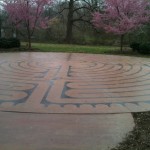
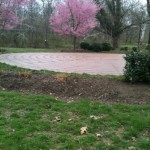
All the ingredients were there for a splendid time of reflection, worship, and prayer. A beautiful unseasonably warm day, new blossoms, and a perfect metaphor for life: A Prayer Labyrinth.
It didn’t help.
I felt restless and distracted. Yes, I could appreciate the goodness surrounding me. I could also grasp the spiritual significance of the nearby metaphors and analogies. Yet, I didn’t have a time of felt connection with God. The word “dud” comes to mind. I didn’t get the experience I thought I would; and it all seemed ordinary and uninspired.
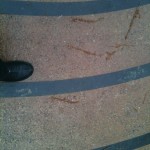
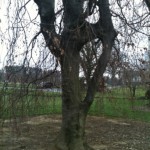
Here are some images I took during my time there. You have to admit, it was a delightful scene.
What this means:
Just a few thoughts…maybe you have some ideas too.
If God is a person (…is a Being, not just an impersonal Force, but rather has a personality, and is capable of relationship), then I really can’t expect God to follow a predictable formula like he is a math equation.
My other relationships function in a similar way. They aren’t clear cut and palpable. They are more opaque and protean. I wonder if God switches things up precisely so we don’t depersonalize him, (among other reasons, I’m sure).
In biblical narrative this rings true. The Hebrews are rescued by God in a different manner almost each time. Sometimes it was pitchers smashing that started the process, other times horns and shouting. Sometimes it was just typical military tactics.
I was okay with the fact that the spiritually nourishing experience I had at the Jesuit Retreat Center was nothing like my (seeming) dud of a prayer experience this time. In the past it might have felt like abandonment. I might have seconded guessed myself, or my God. I see the nuances now, perhaps. I can still believe God is there, and God is good, even when I don’t sense God’s presence. It would be the same way with a dear friend, or my spouse. If I had a blah sort of time with a friend, I wouldn’t jump to the conclusion that the friendship didn’t exist. If I didn’t sense my husband was in the house, I wouldn’t assume we weren’t married.
When was a time when God didn’t show up when you thought God would?
Here’s a previous post explaining a prayer labyrinth. Have you ever used one?
Today’s post comes from Doug Jackson. Professor Jackson is a bona fide man of letters and a teacher of spiritual formation. He also blogs. He’s not the kind of expert that touts his CV. Rather, he’s a man acquainted with his humanity in a way the endears you to him right off, and a wisdom that can change you.
“For I am the sort of man,” Augustine once declared, “who writes because he has made progress, and who makes progress – by writing.”
Christian bloggers should rework Jane Austen’s dictum, “Write what you know,” and state it as follows: Write until you know. If we understand blogging as a process of self-discovery and even of self-formation, we may tread this track with greater gratitude and greater care.
Gratitude and care: Keeping an internal diary has long been seen as a spiritual discipline, from Augustine’s Confessions to Wesley’s journals to Mother Teresa’s recently published papers. The Internet tweaks this ancient practice by offering the perilous privilege of publication.
I say privilege because blogging encourages journaling by offering the incitement of instant readership. Journaling has never been one of my own spiritual practices because I am too much of a writer (or perhaps too little of a Christian) to stand the sound of one keyboard clattering. Writers write to be read, and while perhaps saints do not, most writers are at best saints-in-process. Tradition tells us that Abba John the Dwarf, at Abba Pambo’s direction, watered a stick every day for three years until it burst forth in fruit. I, however, simply will not chase the dead stick of writing if there is not a carrot of being read dangling somewhere on the end of it. George Bernanos’ country priest begins his Diary with the promise that after twelve months he will use it for kindling; by the end of the first chapter he amends it to “I’ll stuff it all away in a drawer to re-read it later with a clear mind.”
So blogging offers an incredible privilege: Writers who in the very recent past would have no outlet for their work can now find instant publication – and instant motivation. Anne Lamott notes the value of this kind of work:
I just try to warn people who hope to get published that publication is not all it is cracked up to be. But writing is. Writing has so much to give, so much to teach, so many surprises. That thing you had to force yourself to do – the act of writing – turns out to be the best part. It’s like discovering that while you thought you needed the tea ceremony for the caffeine, what you really needed was the tea ceremony. The act of writing turns out to be its own reward.
But the privilege comes laced with peril: the deadly sin of wrath.
Blogs are self-edited and self-published. I can say whatever I want. Blogs are also released to cyber-space: I can’t unsay anything, even if I want to. This makes a blog a great place to get angry, but a poor place to repent. When I played football we often drilled using foam shields known as “air bags.” I noticed that guys who avoided physical contact at all costs suddenly went Jack Lambert on us during these sessions. We dubbed such selective warriors “Air Bag All Americans.” A blog can be a playground for Air Bag Martyrs who speak boldly from the behind the bunker of their firewalls.
But wrath is a deadly sin for a reason. Jesus equated insults with murder. People often ask me, “Does that mean calling someone a jerk is just as bad as killing him?” My standard reply is, “Not to him.”
Which is largely the point and takes us back to blogging as self-discovery: My anger may or may not harm my targets (with a readership like mine, probably not), but it tells me something about me. “The pleasure of anger,” explains C. S. Lewis, “the gnawing attraction which makes one return again and again to its theme — lies, I believe, in the fact that one feels entirely righteous oneself only when one is angry.
Then the other person is pure black, and you are pure white.” Ranting blogs probably reveal very little about my airbag victims, but they should tell me something about the state of my own soul.
And then there’s the temptation of attention: Wrath translates to readership because everyone loves the vicarious thrill of an Internet takedown. If we write to be read, we must take care lest we automatically write what people like to read. Donald Kaul once closed a review of Robert James Waller’s chick-lit romance “The Bridges of Madison County” by admitting, “I still don’t know what Waller has, but if I thought it was contagious, I’d kiss him.” If cyber-sneering and digital drive-by’s mean viral results, we’re too quick to kiss – well, whatever needs kissing.
Harry Farra’s “Little Monk” begins keeping a journal early in his vows, and later finds it to be “a valuable record of a soul tamed by God.” Toward the close of the book, he abandons the volume to the care of a young woman. She shares it with her wayward son who finds that it changes his heart. Perhaps that should be the goal of the believing blogger: the charism of being overheard. An old joke says, “Live in such a way that you would not be afraid to sell your parrot to the town gossip.” I would amend it to: Blog in such a way that you would not fear to have your words read by a seeking soul in danger, one whom you may never meet.
I write these words as one more unknown note in the mighty symphony (or cacophony) of the blogosphere. My URL does not appear on big-time blog rolls. No one has contacted me to offer a book deal. Christian universities do not invite me to speak. But I don’t think I need the caffeine of fame (though, quite honestly, I’ll take it if it comes); what I need is the liturgy of writing. And who knows – maybe that is what someone who reads my blog needs as well.•
•
After twenty-five years as a pastor, Doug Jackson finally made it to Tarshish as an assistant professor in the Logsdon Seminary program of the South Texas School of Christian Studies in Corpus Christi, where he teaches spiritual formation, pastoral ministry, and Greek. In addition to his teaching, Doug writes “Sermoneutics,” a weekly devotional and sermon-starter blog based on the Revised Common Lectionary: http://sermoneutics2.blogspot.com/.
Background in one sentence: On March 6th I went to my first all-day, silent, guided prayer retreat held at the Jesuit Center in Wernersville, Pa.
Simply put: I’m hooked, probably for life.
I’m not sure what can rival what happens when I finally unplug, quiet down, and let God be God. This was that sort of time.
In the morning, our group gathered for a brief preparation to guide our personal prayer time. Sr. Maria McCoy shared some thoughts and gave 2 rather simple but profound analogies for God and God’s presence. As we entered an extended time of silence and prayer, these (theological, and ontological) ideas about God were to pervade our experience. And did they ever!
Spiritual Guidance Tip: To get a snatch of the experience yourself, try this: Block off 20 minutes, or more if you can, for prayer. Then, read the following 2 analogies and take them with your into your time. Talk with God about them. See what happens.
She kicked it off like this, “There was once a baby fish…”
I thought, “I don’t care who you are lady, but anybody who starts a pensive day of prayer like that is a kindred spirit!”
The rest went something like this:
There was once a baby fish, who went to his mother and said, “What is water and where is it? I’m so very thirsty, and I think if I don’t find some water soon, I will die.” Her mother said, “Water is all around you. Sometimes you can’t even notice it, because it’s so close and so real.”
God is like water and we are his fish. God is real and ever-present. There is nowhere where God is not. As we swim about, we may not be able to feel God’s presence or see the boundaries of God. We cannot see these boundaries, because God has no boundaries. God continues. God is.
And then another one something like this…
Think of an ocean sponge. Think of an ocean sponge where it is supposed to be…deep in an ocean. The sponge is surrounded by water. But, the sponge is full. Full of that same water too. The water is in, and through, and all around the sponge. You are that sponge, and God is the water. Realize that God, who is your Creator, and everywhere present, is present at the core of who you are. God is the center. God is indeed in, and through, and all around you.
So when sticking to Christian theology, God is omni-benevolent (throughly good) and omnipresent (everywhere present) I pray differently. Sometimes I act more like a dried out sponge, and I forget this basic stuff about God. I forget how this Truth* plays out.
Another amazing gift is that before I went to the retreat, I used the language of water to describe my reason for going (see that part here). I mentioned how physical and spiritual dehydration can, after a while, turn into a kind of lack of thirst–the very opposite of what is most needed. I think refreshing and retreat go together.
When was the last time you noticed your spiritual thirst?
Verses of reflection:
Eph 3:16-19 I pray that out of his glorious riches he may strengthen you with power through his Spirit in your inner being, so that Christ may dwell in your hearts through faith. And I pray that you, being rooted and established in love, may have power, together with all the saints, to grasp how wide and long and high and deep is the love of Christ, and to know this love that surpasses knowledge—that you may be filled to the measure of all the fullness of God.
Psalm 139:5-8 You hem me in—behind and before;
you have laid your hand upon me.
Such knowledge is too wonderful for me,
too lofty for me to attain.
Where can I go from your Spirit?
Where can I flee from your presence?
If I go up to the heavens, you are there;
if I make my bed in the depths {hell}, a you are there.
*Truth capitalized to denote Truth as a Person (God). Found or experienced in relationship more clearly or fully than through propositional statements or systematics.
The more stink and infighting I hear chirping on the blogosphere, the more I realize the internet is like The Ring (a la Lord of the Rings). It seems few can wield it’s power all that well. Good intentions can switch to division and vitriol.
This is not a new sort of problem.
Have you ever acted differently in your car than you do face-to-face with people? I have. I first time I drove with my husband-to-be, the man truly surprised me. Hallmark placidity turned to zeal and strident use of a motor vehicle.
It’s a problem of the flawed human heart. It’s spiritual, not behavioral.
Something about the material confines of transport too often unleashes something worse than normal in our thoughts and behavior. The internet is the very same way.
Instead of road rage, we see web rage. Comment sections on many news stories, for instance, are filled with toxic language and malicious conjecture.
But, this is not the end of the story!
As we pull back and examine ourselves, we feel the call, even the duty, to do better. What may sustain that initial motivation and produce better actions and results is community committed to a higher way.
This is where The Spiritual Guidance for Bloggers Project enters the fray. It’s a spot where we agree to virtue over high blog traffic. It’s not just a place online to thumbs up “like”, but rather a community where we encourage each other to be more personally reflective as we encounter and broach challenging issues.
click for FB page
I ask you to be a part of the solution, not the problem of blogosphere rancor. Join at the Facebook community, where resources, support, and hopefully face-to-face gatherings will build better kinds of online interactions.
I’ll just bring up one more thing, and I ask that you would help me with your prayers and suggestions. I sense the entreaty to assemble a guided prayer retreat day for soul care for the weary blogger (essentially, for Creators & Communicators).
Maybe toward the end of August. I’m not certain what it would look like, or even if anyone would care to come, but I envision a consecrated time of rest, prayer, fraternity, silence, unplugging, renewal, and vision-casting. Will you help me figure it out?
Aside from my utter confusion in my first Mass experience (stand up, sing this, say that, sit down, pass peace, say something else…all things a casual Evangelical finds alien), I was so very filled and fortified by my recent all- day retreat at the Jesuit Center‘s Guided Day of Prayer (which was Lenten themed).
It stood together in contrasts:
A quiet and calm place & my restless and weary soul
Freedom in the boundless love of God & the the intricate, foreign formality and rule of Catholic liturgy and Holy Communion.
Muted joy of Lenten season & the bright love and goodness of my spiritual siblings
A banquet of food and refreshment & the observing of stark silence
A wide open day of prayer and reflection & the speed at which it passed
A scheduled day of silent prayer retreat is something you might not know you need until you get it. I sat in the beautiful chapel and wept off and on for over an hour, much to my own surprise.
I found it amazing how God can use a place and others to all at once pierce and convict my sullied heart of sin and obstinacy while also flooding it with his omnipresent love and overflowing grace. Let me tell you, it’s healing.
But let me be clear: It’s healing, not in an “I feel all better now” type of way. It was very much like the “undragoning” spoken of in The Voyage of the Dawn Treader. (I was Eustace Scrubb.) It smarts, but then too, it brings refreshment.
In the absence of noise and obligation you begin to hear, see, listen and perceive with keener clarity. In determined places and times of silence Reality becomes louder and more involved. Love becomes saturated in, through, and around you, the creaturely image-bearer of the Divine. You come again to the Center, the Real. Home.
Several analogies shared at guided portions brought me great insights. I’ll share those in soon in part II.
Many retreat centers offer space for a time of quiet and prayer for just a little money. Here’s a directory to find one near you.