I unplugged

Yesterday, I felt a leading to not do the regular stuff of my day.

Usually, I “tend” my blog, I water my facebook connections, I weed my emails, I fertilize my social media outlets. Not yesterday. I heard a still small voice say. “Don’t do it today.”

This seemed silly…. and counter-productive, counter-intuitive, and just plain “not what I wanted.” I dug in my heels a bit. I balked. I sighed just a little–kind of like a whine. And then I resign to it for the day. But it was good.

I didn’t have expectations. I had nothing to “put out there” for people to see or like. I didn’t have to try. And for more than several hours, I felt a different sort of restfulness than I have regarding writing.

I’m thinking about taking a sabbatical, of sorts.

Maybe unplugging. Perhaps a retreat.

Word Origin & History(1)

1645, “of or suitable for the Sabbath,” from L. sabbaticus, from Gk. sabbatikos “of the Sabbath” (see Sabbath). Meaning “a year’s absence granted to researchers” (originally one year in seven, to university professors) first recorded 1886 (the thing itself is attested from 1880, at Harvard), related to sabbatical year (1599) in Mosaic law, the seventh year, in which land was to remain untilled and debtors and slaves released.

Graduation is coming, and it would be a good fit.

What ideas do you have about sabbaticals, or how to best encounter them?

1. sabbatical. Dictionary.com. Online Etymology Dictionary. Douglas Harper, Historian.http://dictionary.reference.com/browse/sabbatical (accessed: April 21, 2010).

Prayers of Adoration (Praying the Names of God)

At my school, if you have ever taken Dr Mellinger, then you have engaged in this particular prayer form.

Praying this way, is a way of praising and worshiping God–a useful spiritual practice.

It’s quite simple, and may take on variations, or adaptations. It’s helpful for individual prayer time, or in a group setting.

I’ll present something simple here.

If you use it, or come up with something else, I’d love to hear from you.

Art work – Names of God

Prayers of Adoration/Praying the Names of God: A “How To”

1. Make a list of 10-20 words for God (Encouraged is including names for all 3 parts of the Trinity: Creator, Redeemer, Spirit, etc.).

Adjectives are fine, or names of God found in the Bible.

(Examples: Savior, Father, Light of Lights, Lamb, Protector, Reconciler, etc.)

For Prayer in a Group:

Pick a name from your list that seems to  stand out as be more meaningful, and take turns praying your selections in adoration to God, calling God by the name, and saying something of your own, similar to the following:

“God, you are Savior. I thank you that you are a Savior to us, and you’ve given yourself up for us.”

Everyone then may respond together in agreement:
“God you are Savior”

(or whatever name has been selected)

It’s amazing how 5-10 minutes of this will change the whole atmosphere in the room. Truly. amazing.

For Individual Prayer time:

• Work down through your list, in a similar way.

• Rest, and consider each name, as your finish adoring God with that name.

At the end, jot down some observations, thoughts, insights, feelings, associations, etc. that came to mind during or after your prayer time.

GROUPS: Take turns sharing some of these.

Individuals: May read over your observations again; and later come back to them, and re-read them.


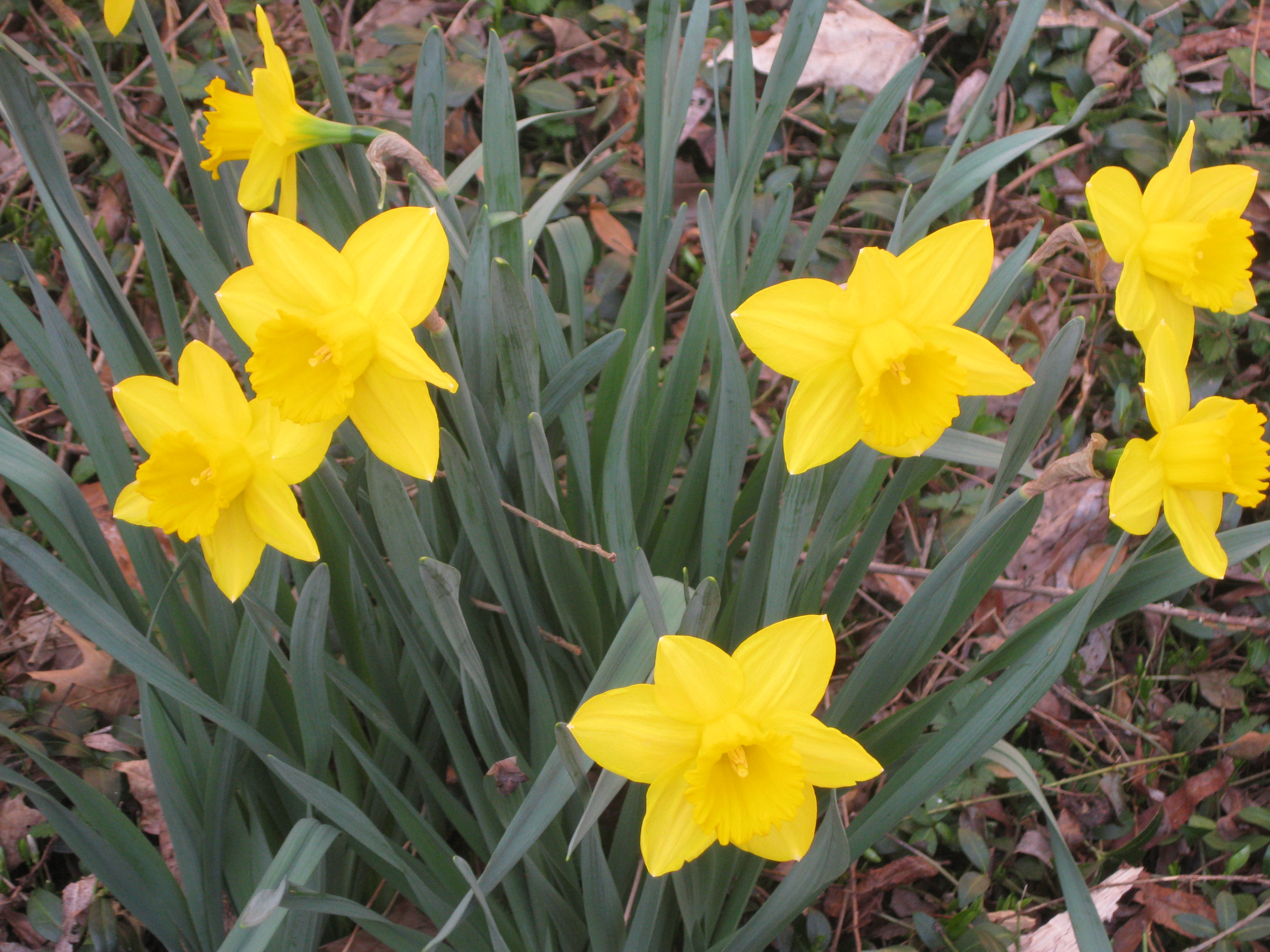
Beyond Daffodils …

Easter Sunday Daffs

I took this photo on Easter Sunday at my mother’s house. Currently, at my house, my daffodils have passed, withering beyond their peak, and will suffer the fate of the lawn mower, once my husband gets to them.

Spring is fully here, and most of the trees have gotten leaves, and have begun their growing season. And most of us, will ease into the routines of warmer weather, and longer periods of sunlight.

From there we will either grow, or be distracted. We’ll sink our roots deeper into being, and understanding, or we’ll get acquainted with flitting from thing to thing–like a bee rushing from flower to flower.

I love the daffodils, but I really enjoy watching how the trees meander through the summer days. First they blossom or tiny leaves come out. The leaves are impossibly light green, and fresh born. Then they take shape, and unfold. They spread out, and expand in size, getting richer and deeper in hue. Finally they look like unfolded umbrellas, but reaching upward to catch sun rays, or cup rainwater for insects. The wind blows, and the tree will seem to be tossing its new head of hair proudly, firmly standing its ground, and being.

It’s time to move beyond daffodils.

The trees of the fields will clap their hands.

How might you do it?

What are some of your thoughts lately?

(Nancy Eiesland) 'The Disabled God' -How do we define "normal"?

In reality, all of us “healthy” or “normal” people can more aptly call ourselves, “the temporarily able-bodied.”

Theologian, sociologist, and author Nancy Eiesland was wheelchair bound since childhood. She surprised many when she said she hoped to be disabled in heaven. She died at age 44 of congenital lung cancer, but not before she made huge inroads for the Rights and Dignity of the Disabled, and penned a groundbreaking book about understanding disability, and suffering, in light of God, and his nature.

Nancy Eiesland 1965-2009

Article excerpt on Eiesland from the “Scotsman” publication:

By the time of her death, Eiesland had come to believe God was disabled, a view she articulated in her influential 1994 book, The Disabled God: Toward a Liberatory Theology of Disability. She pointed to the scene described in Luke 24:36-39 in which the risen Jesus invites his disciples to touch his wounds.

“In presenting his impaired body to his startled friends, the resurrected Jesus is revealed as the disabled God,” she wrote. God remains a God the disabled can identify with, she argued – he is not cured and made whole; his injury is part of him, neither a divine punishment nor an opportunity for healing. FULL ARTICLE HERE

Toward a Liberatory Theology of Disability

Resurrection, Easter, Rebirth, Forgiveness

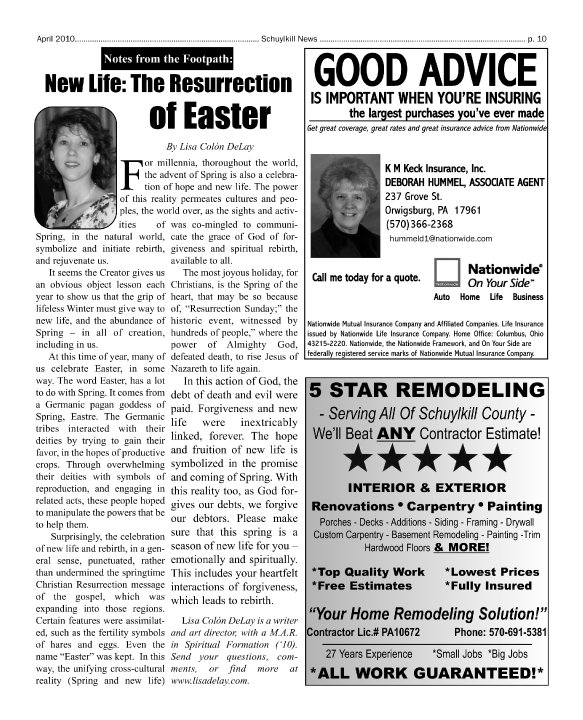
Here is my Schuylkill-News column (Notes from the Footpath) for Easter and Spring.

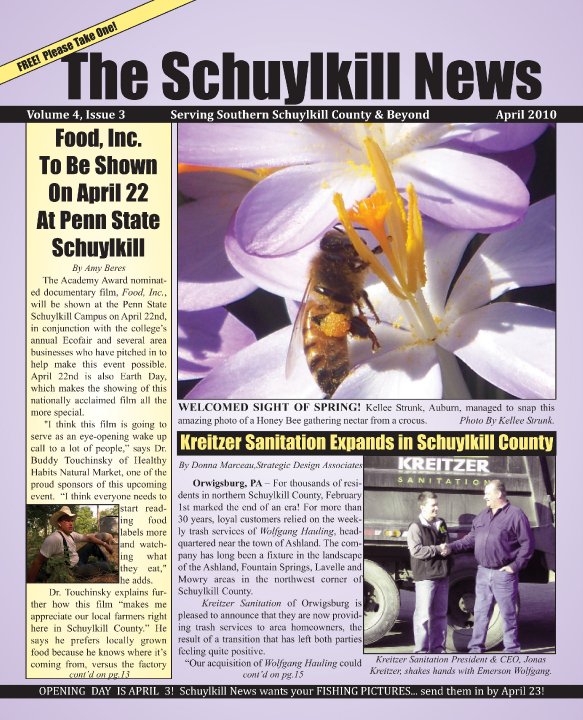
The whole copy is available free at various places in Berks and Schuylkill counties, in PA, or on Facebook.