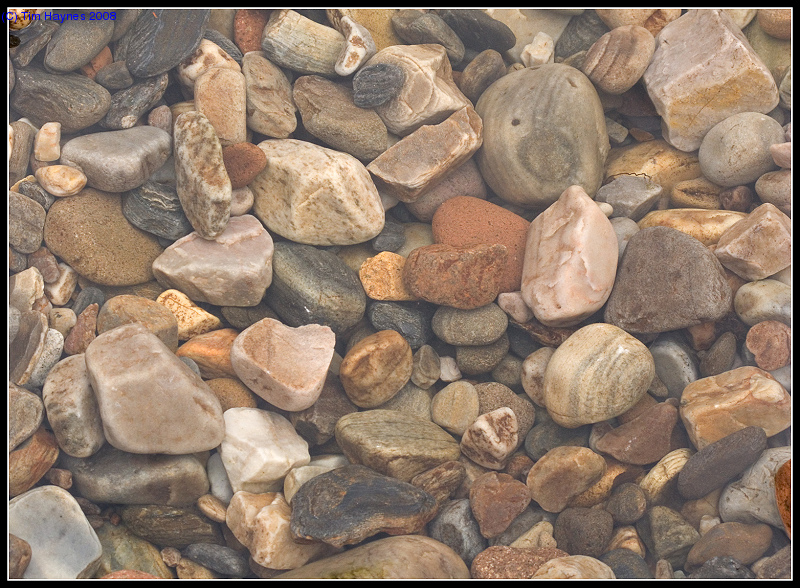
Spiritual Challenge:
Find a stone, and hold it tightly.
See it, and feel it as the weight of your worries.
Say a prayer of release.
Then, drop it and walk away.
Your comments are welcome here. We hope you share them.
Lisa Colón DeLay | Spiritual Formation and the Way of the Desert Elders
Resources, Guidance, Products, and Services for personal growth, spiritual formation, and community connection
Spiritual Challenge:
Find a stone, and hold it tightly.
See it, and feel it as the weight of your worries.
Say a prayer of release.
Then, drop it and walk away.
Your comments are welcome here. We hope you share them.
For mother’s day my family got me a Rose of Sharon plant.


As you can see it’s nearly in full bloom. Although a lot was happening in the life of this new floral addition to my yard, it is the blooming that get us to notice it most, and think of it as really “coming to life.”
Working this week doing the Bible lessons for Vacation Bible School has gotten me to thinking a lot about ordo salutis (“the order of salvation”). This refers to the series of conceptual steps within the Christian doctrine of salvation. Evangelical tradition is particularly focused on “the decision” to follow Christ, and “accepting him into our heart.” While a choice is involved here that can change one’s life, we might be noticing the spiritual blossoming when we concern ourselves primarily with a person’s sudden conversion experience.
Today, my former theology professor, Ken Miller (of the Methodist tradition), posted quite an insightful piece on spirituality that we in ministry and soul care are wise to read:
excerpt: -by Ken Miller
Let me put this out there up front: I grew up in a revivalist tradition, in which a signal experience is what initiates one into the faith. Further, in that tradition it is more similar events which act as catalysts for further growth in the faith. Crisis experiences, usually building on emotions and culminating in a trip to the front of the church/campmeeting/crusade venue and subsequent prayer, are what create significant growth in the Christian life. These experiences likely have to do with the confession of a known sinful act or habit or the sudden realization that one’s current pattern is displeasing to God.
I am not about to dismiss the potential value of theses events/experiences. But I will question their sufficiency. Too often we watch the same individuals having emotional releases, only to return to the same patterns of life. It’s a problem at least as old as the revivalist tradition itself, as John Wesley himself struggled with it and created the Methodist system as a corrective. One could conclude, as Wesley did, that those who reverted to the old ways never really tasted the saving power of Christ; others, wrongly in my reading of scripture and Christian doctrine, claim that the experience itself authenticates one as “saved” for eternity. Apparently, change is optional. Tell it to Paul.
That brings me to the subject of the day, and of the brief passage below. Transformation happens not by an emotional experience, but by the renewing of the mind. We may well experience—and many may well need—the jolt of the emotions provided by the revivalist approach. But change will only come when the mind is changed. We need to think differently about things if we are going to act differently. We need to unlearn some things, some of which were certainties before the word of God pointed in a different direction. We will have to take a look at the ideas we’ve adopted from the culture, along with the ones we didn’t even think were open to serious challenge.
But there’s more to it than turning the faith into an intellectual battle with “worldly” ideas. As Paul’s argument continues, we find that we are called into action immediately, requiring a different attitude and set of habits toward the people we live with and encounter on a regular basis. Is it the case that these ways of dealing with people constitute the renewing of the mind as much as the bigger worldview questions?
Miller’s full article here:
It’s interesting to note that if we think one must be “saved” from spiritual separation from God–by mainly the act of a conscious choice–the mentally handicapped and others are excluded. It also erodes some of the proper understanding of God’s sovereign work (as if Salvation is “up to us”).
If however we see both the hunger to seek the truth about life and God, and also we perceive the work and indwelling of God, (seen best in the fruit of the Holy Spirit), we may be noticing the blossoming of God’s continuous work (of which is largely a mystery).
It seems we must be careful to understand the entire process, including the disciple-making (training) and sanctification process, post-decision…if “the decision” is even the crux of it all in the first place. For us it may seem pivotal, but later a deeper experience could follow, yet for God, it’s one long Story that includes his work, and us (individually) and the rest of humanity.
In truth we have a limited and frail concept of what God, by his grace, gives us.
What are your ideas regarding salvation or conversion?
Some flowery information:
(found here)
Chavatzelet HaSharon (Hebrew חבצלת השרון) is an onion-like flower bulb. (Hebrew חבצלת ḥăḇaṣṣeleṯ) is a flower of uncertain identity translated as the Rose of Sharon in English language translations of the Bible. Etymologists have inconclusively linked the Biblical חבצלת to the words בצל beṣel, meaning ‘bulb’, and חמץ ḥāmaṣ, which is understood as meaning either ‘pungent’ or ‘splendid’ (The Analytical Hebrew and Chaldee Lexicon). The name Rose of Sharon first appears in English in 1611 in the King James Version of the Bible. According to an annotation of Song of Solomon 2:1 by the translation committee of the New Revised Standard Version, “Rose of Sharon” is a mistranslation of a more general Hebrew word for “crocus”.
The most accepted interpretation for the Biblical reference is the Pancratium maritimum, which blooms in the late summer just above the high-tide mark. The Hebrew name for this flower is חבצלת or חבצלת החוף (coastal ḥăḇaṣṣeleṯ). It is commonly assumed by most people in Israel that, the Sharon plainbeing on the coast of the Mediterranean Sea, the Biblical passage refers to this flower.


I use the word “training” here, because if I used the word “discipline” it would be an immediate turn off. You may just click away in a huff or something. I’m tip toeing around for you this time.
Discipline has a “dirty word” feel to it now, right? We seem to associate it with pain for the sake of gain, or something too hard, or bothersome. Really, a disciple is a person in a training mode, learning, and absorbing things meant to improve him and his life.
This post is the third installment to deconstruct and renovate our lives that have taken on the “personal reality show” traits. This default setting we have to center our lives around our desires, wants, needs, and shortcomings, keep us stuck. Gone is the life-giving existence that comes from understanding that Reality is the realm of God–It’s not about us. We are invited into a richer, deeper Story that isn’t gained or lost with our successes or failures. God is the Star of the show, and it’s his Story. This is a life lived in the realm of peace/shalom. Lay your burdens down, friend.
You may have some ideas in mind of what life looks like once this changeover has been made. I’m hoping you’ll share your ideas about it. I’ll 5 ways a person lives out a greater Story, and maybe we can all learn something.
When you live the bigger Story…
1. You regularly make and keep unlikely friends.
You don’t see people as tools for your own purposes, or to satisfy your desires and needs. No one is beneath you in the social strata, because you can well see that it’s not your story, but God’s. God’s Story includes all people, so you do too.
2. You regularly give to those who cannot repay you.
(Volunteer) Your actions stop being about personal gratification and getting ahead in some way. Giving freely punctuates this idea. You realize that generosity is life-giving in its own right, and it’s a win-win situation.
3. You shut up more, ask questions, and wait for the full answer.
Talking with people isn’t about saying something, being heard, or pitching some kind of agenda. It’s about the other person. You ask questions to know better, to understand better, and you give up the selfishness inherent in small story communication.
4. You stop self-promoting.
Making sure others see you in a certain light doesn’t balloon anymore as a thrust of your interactions. Sharing has nothing to do with making yourself look good, or impressing people. The self-centeredness is gutted from your words and actions, making life about something far bigger and better than you.
5. You listen.
In small stories we listen to get an edge. Sometimes what we call “listening” is really just pausing briefly out of some rudimentary convention, so that when we speak, we can be better heard (but only because we aren’t literally talking over someone). It boils down to merely “listening” for a chance to speak; but this is not genuine listening. When we listen, we change. The interaction makes us somehow different than we were before.
If you train with these 5 ways of interacting and seeing Reality in mind, it will give you no choice but to improve your life as you yield to a bigger Story.
Share your thoughts…

I’m researching gatehouses and “doors within doors”. It’s fascinating! England was sure fortified back-in-the-day!
Do you see a metaphor when you see this visual?
What are your thoughts or perspective?
(This is no quiz; there are no right answers. Just looking for your take on this visual)
Update– p.m.
The visual/sense I got from this door image was unexpected. The metaphor was of the big door being too hefty to push open, but the small door–the less grand–the meager entry point is the truest way in. It’s the humble door, and going inside will require a blow to the pride, or be what some would considered undignified. For growth and progress, the small door is needed. We don’t have the strength for the huge one, but a way is provided for us,–if we can get to the point of seeing it.

Thomas Nelson Publishing, through their poorly-named, BookSneeze  initiative, sent me Ken Wilson’s book Mystically Wired: Exploring New Realms in Prayer.
This book promised to hit the sweet-spot of my spiritual interests, and I was not disappointed. Wilson was spot on starting out in his book that our first priority in seeking God and utilizing prayer is to pray for the desire to pray. This often overlooked first-things-first way allows us to receive from God a thirst for him (which comes via God, not us). This step invigorates our longing to communicate and be more aware of God.
Wilson gives a thoughtful and careful look at prayer, and our inherent basic need for interaction with God as Spirit shows us that we actually all pray for peace–peace of mind.
A “mystic” sense of God is not a pickled and preserved static view of a far-off Being, but an ongoing dew-kissed refreshment to our souls that adds richness to our spiritual life, our growth, meaning in life, discovery, and general renewal. It is realizing that God is great, mysterious, unfathomable, available, and quite nearby. It’s the beginning of a deep and nourishing relationship.
This way of apprehending God is a critical aspect of a walk with God. It is also a seminal part of Christian history, faith, and ongoing transformation toward holiness.
As a person who’s spent hundreds of hours studying prayer on the graduate level, and enriching my own walk with God through a rich prayer life, I can truly say, “Well done, Mr Wilson.”
Here’s the product page description from the publisher.
To read samples, find out more, or purchase it, you’ll find it here at Amazon.