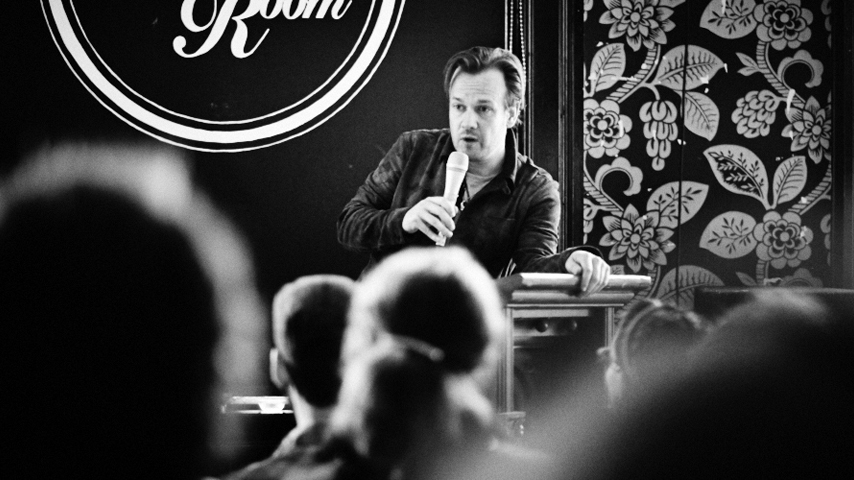
Eps 78 – Guest, Peter Rollins on Lacking the Lack, Fighting Ghosts, and Reveling in the Raveling

Welcome to Spark My Muse!

• Each FRIDAY I invite guests to have a conversation with me!
• Come back each Wednesday
(on “Hump Day” aka Midweek) for a brief Soul School “lesson”.


HOW FUNDING WORKS:
The difficult truth is that even though listening is free, Spark My Muse costs hundreds of dollars out of my own pocket each month to create, produce, and host online–and takes 25-30 hours of work per week to keep it afloat–which keeps me from making income to pay my own normal bills like electricity and waterThe good news is that Listeners give so kindly (at over 3 times the average!!) to support the show–not just because my particular listeners are high-quality people (they are!), but because of that awesome feeling that happens each time we help out someone else when they need it most. $5 or $10 makes a BIG difference – Thank you for helping too!

paypal


(Want to have the power to share Peter Rollins audio for yourself? Just use the Clammer app below to select a snippet! Click the red and white logo.)


SHOW NOTES:
So many show notes!

Peter Rollins
Peter Rollins

MIN 1:30
How the use of story enhanced Peter’s talks.

Video Example:

The Power of Parable from Peter Rollins on Vimeo.

His book containing parables:

His “friend” Sheamus

Pints and Parables events

4:30
Pub culture in Ireland and not running from doubts and pain.
(Repression is the term in psychoanalysis)

Sharing in each other’s suffering.

[ictt-tweet-inline via=””]Parables are a technology that help us look at painful things not directly so we can cultivate a grace in our lives and toward other people.[/ictt-tweet-inline]

(You can instantly tweet this quote above by clicking the blue bird. Look for other blue birds in these show notes.)

9:00
JRR Tolkien
Eucatastrophe  (a good undoing, like the kind that happen in Fairy Stories)
Irish culture / music / art

Shane Tucker’s podcast

Green Belt Festival

The 18 foot woman in a dress at IKON. Ravel and unravel.

13:30 Pete’s Memento Mori

happyreaper
Pete’s Happy Reaper jacket pin

Something to remind you of death.
• Pete’s happy reaper memento mori.
• Lack and nothingness has a painful side but there is a way to find a fuel from it for life and living.

The painters called the Dutch Masters featured a theme: Vanity / futility of life.

Pieter Claesz, "Vanitas" 1630
Pieter Claesz, “Vanitas” (1630)

The authentic, lively and cohesive pub [juxtaposed with] the vacuous and lonely night club.

The IKON community

[ictt-tweet-inline via=””]We already are depressed and don’t know it.[/ictt-tweet-inline]

We say “Gone and not forgotten.”
The truth is usually “Forgotten but not gone.”

19:00
Believing in ghosts and hauntings.
A ghost is the presence of an absence.

Community can help us with our ghosts and make peace with them.

22:00
Friendly Fire Event (link)

Pyrotheology from Peter Rollins on Vimeo.

PyroTheology – Theory and Technology
5 academics

Engaging the Journal looking at the 5 critiques

Atheism for Lent course

Facebook LIVE events (link)
Philosophy for the streets

26:00
WAKE (2017) Festival in Belfast

Irish way to remember the life of the one who has dies and celebrate life for the living.

30:30
The Divine Magician (book link)


“God talk is often talk about ourselves with a megaphone “ -Karl Barth

The Vanishing Act of God the purposeful ambiguity in the title (Is God vanishing or doing the vanishing?)

Who is the magician? The Priest? The believer? God?
Liturgy is the technology of Theology.

The sacred object: The Forbidden Fruit is the first sacred object.

Video of Pete:

Tearing The Temple Curtain from Peter Rollins on Vimeo.

[ictt-tweet-inline via=””]God is not an object that we love. God is that which we find in the act of love itself.[/ictt-tweet-inline]

3 Elements of the magic trick: The Pledge (The Object), the Turn (The Disappearance), the Prestige (The Object returns as something else)

[ictt-tweet-inline via=””]The Eucharist includes the 3 parts of the magic trick.[/ictt-tweet-inline]

40:00
Pete’s event and speaking schedule

On naps!

45:00
Costs of living and why he lives in LA now.
Freedom from the pursuit of what will make you happy.

[ictt-tweet-inline via=””]The tyranny of happiness is at its worst in Los Vegas and LA[/ictt-tweet-inline]

47:30
The serpent says,
“If you eat the fruit then you will be like God.”
(To lack the lack that we feel.)

• The serpent is called the superego in psychoanalysis.

Crush the head of the serpent.

49:00
Why and how Pete jogs in LA

Some other books by Pete you should check out!

Thank you for listening.
If you enjoyed this episode, please share it with someone else
and leave a rating on iTunes so more people find it!


Listen to the some of the most recent episodes by clicking below.


Pick the best option for you below.

Eps 72: Deconstructionists RECAP with Adam & John on Jack Caputo

Welcome to Spark My Muse!

Thanks for your generousity.

Spark My Muse listeners hear quality episodes–twice, each week–and give what they can. YOU ARE THE VERY BEST.

paypal


THEY ARE BACK.
Adam Narloch and John Williamson of the Deconstructionist Podcast!

deconstruct

I put lots of effort into the show notes so they are amazing and helpful for you.
SO. MANY. LINKS.
Scroll down for those and enjoy the show!

AUDIO PLAYER:

(You can share an audio clip from the show by using the Clammr app below. Just click the red and white logo


Hear Adam and John the previous time they came on the Spark My Muse show: Episode 59.


SHOW NOTES for Episode 72

It’s a special podcast powwow with Adam and John as we deconstruct / unpack their recent conversation with remarkable guest John D. Caputo!
(often referred to as Jack)

Min 2
“What Would Jesus Deconstruct” by Jack Caputo

(John) On Jack Caputo and his work related to Philosopher Jacques Derrida

The Weakness of God – by Jack Caputo

Other books by John D. Caputojack_Caputo

MIN 3:30

The meaning of “Weak Theology”

(briefly explained)

Tragedies bring out the questions of Theodicy (or so-called “weak theology”) and the questions of why good God would allow humans to suffer. We talk about how we perceive weakness compared to how God might encounter or solve that. It’s a loving term of weakness.

Looking at Jesus dying on the cross as a metaphor for weakness. (sacrifice)

Violence begets more violence.
The solution is a surprising one.

MIN 6:30

(Adam)

[ictt-tweet-inline via=””]Foolishness of God is the great reversal and is the premise of weak theology.[/ictt-tweet-inline]

Michel Foucault on knowledge and power

MIN 8:20
Why the Deconstructionist podcast is not heterodox or counter-orthodoxy or heretical:

[ictt-tweet-inline via=””]Theology isn’t something you can capture and freeze.[/ictt-tweet-inline]

Beliefs are constructed through history are relatively stable (this is why they last throughout time) but they are also relatively unstable then too. It’s both dangerous to mess with the beliefs and dangerous to keep them frozen too.

MIN 10

(John) The nugget John found in the conversation:

[ictt-tweet-inline via=””]Deconstruction is not a drive-by shooting.[/ictt-tweet-inline]

• Karen Armstrong’s work – (books)

Ancient people, scribes, leaders, and rabbi’s were always struggling with how to interpret scripture.

MIN 13:00
The cultural legacy of a modernity mindset is to think that the Bible could be seen as inerrant.

The re-imagining of the Scriptures.

MIN 13:30

(Adam)

Theo-poetics

It’s not that we have to destroy it but we have to continue to to image and expose the Scripture to its own future.

MIN 15:00

[ictt-tweet-inline via=””]If Justice or Hospitality exists, it calls to us. It’s something we imagine and pray for and long for. God doesn’t exist, God insists.[/ictt-tweet-inline]

MIN 16:30

“You can’t be a fascist of knowledge.” -Adam Narloch

MIN 17:30
Some people think deconstructing is negative and a dead end. Why deconstructing is not a dead end but rather life-giving.

[ictt-tweet-inline via=””]The desire beyond desire. It calls us to the next thing. We mistake desire for the thing.[/ictt-tweet-inline]

MIN 18:30

(Adam)

Further up and further in…

the thing calling us forward. The beyond the beyond. The deconstructive process continues and we have to keep opening it up.

MIN 20:00

(John) Being comfortable of the Mystery of God.

[ictt-tweet-inline via=””]Who created God? you realize is the wrong question.[/ictt-tweet-inline]

MIN 23:30

(Lisa) My own deconstructing the image of Jesus, of God, and the mystery of understanding how our brains understand reality through constructions.

MIN 25:00

(Adam)

The alien orb. Sphere a Michael Crighton novel.

The Anthropomorphic problem – people make things people-like.

Jewish people are iconoclastic. No graven images. Images don’t capture the meaning.

Jesus is iconoclastic because he comes as divine coming in human form.

The temple curtain is torn revealing that nothing was there behind it because there was more to be revealed.

MIN 29:00

(John)

[ictt-tweet-inline via=””]Pluralism helps us deconstructs and helps take us to deeper truth.[/ictt-tweet-inline]

MIN 32:00

(Lisa)
Wrestling with God is our “calling” (as humans). In other words, it’s our most basic human experience.

Hear Robcast with Rabbi Joel.

MIN 33 (Adam)

[ictt-tweet-inline via=””]Enlightenment has co-opted inside religion to take the wrestling [with God] out.[/ictt-tweet-inline]

MIN 33:30

(John)

on their podcast being referred to as “dangerous”

Heresy in the Middle Ages related to power and government structures (not spirituality).

The influence of the famous women mystics threatened power structures more than personal spiritual devotion in the lives of people.


MIN 36:00

• Revisionist History podcast Malcom Galdwell.

Do a revisionist history on the church heretics.

Check out Pelagius and see if maybe he wasn’t a heretic.

MIN 39:00

on Paul’s letters (which became part of collection of books now know as The Holy Bible) were the documents that were preserved the best (and most shaped what is now Christianity)

MIN 43:00

Paul’s authority.

The scandal of turning Paul’s letters into a new law would have deeply grieved Paul.

The Fidelity of Betrayal – Peter Rollins

• Peter Rollins’ books

Hear Episode 18 of the Deconstructionist Podcast featuring Jack Caputo here.


Hear the most recent episodes of Spark My Muse:


Pick an option below for the next amazing episode!

Soul School – Lesson 41: Self-Impersonation

Welcome to another Soul School midweek lesson!
Thanks for your generousity.
I bring you great things each week and you give me money.
paypal


Enjoy the show!

We all live lives of self-impersonation–trying to be what we think is best or acting in ways we think others want us to be in the world.

Here’s what can be done instead. Wisdom from Parker J. Palmer and other luminaries on today’s Soul School lesson.

mask


To share a snippet of audio, use the Clammr app below. Click the red and white logo.

SHOW NOTES:

To hear the episode I reference, (The One You Feed podcast with guest Parker J. Palmer) click HERE.

TOYF_Light_3-optimized

parkerjpalmer• Parker Palmer’s website

A Hidden Wholeness – Parker J Palmer

Dietrich Bonhoeffer
Dietrich Bonhoeffer

Life Together – Dietrich Bonhoeffer


Hear other recent episodes!


Pick an option below! A new episode comes out on FRIDAY!

Eps 70: Sexuality and Spiritual Formation, Guest Tara Owens

Thanks for giving a one-time gift HERE.

Giving is Fast. Easy. And doing it makes you feel SO good.


Today, my guest is anam cara (soul friend), Tara Owens, of Anam Cara Ministries.

Tara’s ministry exists to provide a place dedicated to the practice of soul friendship and coming alongside others in order to facilitate healing, wholeness, holiness and spiritual formation.

• We cover topics about embodiment, sexuality, sensuality,  body shame, body and brain disconnect, fear, technology, the vow of “staying with”, spiritual direction, holy listening and attending to others, and using an adult coloring book as a spiritual practice.

• SCROLL DOWN and click the AUDIO PLAYER to listen and to view Show Notes! biopic


• To support what I am doing on monthly basis, at just $1 (or more), just CLICK HERE.
• Sponsor at $9.99 and get this awesome inner circle REWARD travel coffee mug and no SHIPPING costs.
– Click here to get all the details.

SparkMug
SPECS: Stainless steel, insulated, tapered bottom, 14oz travel mug with highly desirable, super-duper cool Spark My Muse logo. Perfect for enjoying a beverage in your vehicle as you listen to Spark My Muse. Limited quantities!

AUDIO PLAYER


SHOW NOTES:

TARA OWENS
MIN 2:00
Conversations Journal – Spiritual Formation

4:00

In direction you receive the full attention of someone.

Holy listening and focused fully loving attention and being entirely listened to.

A long loving look at the real together.

5:30

Do homework to find a director that has the training to truly attend during your sessions.

The holy ground of the soul. Sacred space.

8:30

Who are the typical people who come for direction?

10:00

Working with Millenials

11:30

Crisis points in faith and needing a director.

Sexuality and Spiritual Formation

Embracing the Body: Finding God in our Flesh and Bones

part I Fears around the Body (we are our body)

part II Theology about the Body

part III Integrating our Body (shalom and the body)

God speaks to us in and through our body

[ictt-tweet-inline via=””]-[Mistakenly] We relate to ourselves as “brains on sticks” -[/ictt-tweet-inline]

Our beliefs about God come to supersede our experiences of God

15:30

We can be taught that the body is the entry point of danger and sin. (Lisa) This is the opposite of true.

Male and Female bodies and brains.

[ictt-tweet-inline via=””]“Shame disintegrates us.”[/ictt-tweet-inline]

(we are separated from ourselves.)

“Our bodies can’t lie.” 

MIN 18

[ictt-tweet-inline via=””]“Our bodies will tell us what we believe.”[/ictt-tweet-inline]

MIN 20 The brain and body disconnect. The silos we create.

MIN 21:30

Genesis 12

Vision and a word.

The fully-sensual nature and wholeness of being human and spiritual.

24:30

A walk being spiritual.

26:00

The Emmaus Walk and Prayer Walk

and other practices

Practicing really breathing

Attending to the “ruach” of God (Hebrew for breath)

We usually breath with just 20% of our lungs.

Blessing their body.

MIN 28:00

Body shame and self-loathing

[ictt-tweet-inline via=””]“Being willing to look at yourself with kind eyes”[/ictt-tweet-inline]

we participate in a degradation of our bodies and seeing what is wrong.

[ictt-tweet-inline via=””]We are conduits of God’s blessing.[/ictt-tweet-inline]

Bernard of Clairvaux

We are not a canal but a reservoir – give out of overflow after we have received from God

31:00

The truth about Selfies

[ictt-tweet-inline via=””][Selfies are] not vanity but a mask and fear.[/ictt-tweet-inline]

33:30

It is not good for humans to be alone.

35:00

Staying connected with people once it gets messy.

37:30

The tool of technology.

Skills for connection if you have gaps.

The vows of “staying with” and not leaving when it gets hard.

The discipline of stability.

39:00

The challenge of Embodiment.

Liturgy should involve: God, creation, and other people.

Communion is a tangible way to be physical and incarnate. (meals together)

No more tiny bits of Jesus.

43:30

Tara’s latest project:

At Play in God’s Creation:

Contemplative Prayer Coloring Book

96 pages!

anamcara.com

anamcaraministries

TWITTER:
anamcaraTO


Thanks for listening.
Please enjoy some of the other recent episodes!


Pick a subscription option!


Eps 65: The Myth of the “Lone Genius” – CS Lewis expert Dr Diana Glyer

“The Inklings” were a group of authors who met together, up to twice a week, for 17 years and included the likes of CS Lewis and JRR Tolkien.  Without the rigorous, encouraging, and collaborative nature of this group, great works like The Lord of the Rings and The Chronicles of Narnia might not have made it to final form.

Dr Diana Glyer’s scholarly work into The Inklings took her over 20 years to compile and craft into her dissertation published asThe Company They Keep. Her scholarship altered the prevailing notion about the group and how it functioned. Her more recent general-audience book, based on that scholarship, called Bandersnatch includes the most interesting stories about CS Lewis and JRR Tolkien’s friendship and explains how we can learn from the way the Inklings worked together. Today we talk about how we can apply that wisdom into our own creative endeavors and collaborations.

Thank you for listening today! Please pass along this episode to others!

AND Scroll down for plenty of show note details on the books and people mentioned.

• Will you send in a little support to pay for ongoing monthly audio media space costs for this episode?  Just click HERE.  


dianaglyer
Dr Diana Glyer


SHOW NOTES:

MIN 1:30

Diana’s first introduction into the world of Tolkien.

2:30

Wondering what the conversations of Lewis and Tolkien were like and how they influenced each other.

[ictt-tweet-inline via=”dianaglyer”]Our conversations become the spark for creative breakthrough.[/ictt-tweet-inline]

(That’s a cool quote from Diana and you can Tweet it just by clicking it. It’s like Elfin magic!)

3:30

No one had researched and written about their relationship of collaboration and influence from the inside–like a fly on the wall.

5:30

How we think about literary influence and collaboration. Process influence versus product influence.

The role of creative input and question-asking during the initial period of creative inspiration.

MIN 7:30

Looking at dairies and primary documents and drafts and the detective work of Diana’s book “The Company They Keep”.

8:30

Some examples of how Lewis and Tolkien made changes in their work because of the input of the Inklings writers group.

11:00

The myth of tortured artists and creative luminaries and how excellent creative work really happens (nearly always) by the people we admire most.

13:00

Having conversations and interactions about our creative work.

For creative geniuses and highly productive artists throughout the centuries it is NORMAL to be collaborative and interactive during the creative process.

[ictt-tweet-inline via=”dianaglyer”]The Hollywood construct of lone creative genius is highly abnormal and unhealthy.[/ictt-tweet-inline]

(That’s another cool quote from Diana and you can Tweet it just by clicking it.)

14:30

How Bandersnatch got written.

17:00

What do you do if you’re scared that your work stinks?

Inviting a bigger look at what collaboration means.

Involving others into every stage of the creative process.

21:00

Guidelines for critique:

First, know what you are looking for then…

Remember 2 things:

1. A good critique should not end up being discouraging but make you excited to go back and work on it and restless until you do.

2. Ask specifically what you need. Example (Is there too much description? Is it too wordy? Is it too formal? Is pacing okay?)

CS Lewis sent his work to friends with a note, “Is this worth working on some more? Or am I on a dead end?” The Chronicles of Narnia was almost never written because he was discouraged.

MIN 26:00

The huge importance of encouragement.

Be courageous in sharing our messy unfinished work.

MIN 27:30

The Company They Keep

Bandersnatch will be available in Fall 2016 as an Audio Book

IMPORTANT LINKS:

AUTHOR page: dianaglyer.com

(FACEBOOK page) Bandersnatchbook

BOOK PAGE: bandersnatchbook.com

• CS Lewis wikipedia page

• CS Lewis Foundation

• JRR Tolkien society website


THIS WEBSITE:
Poke around and listen to other episodes and please subscribe to get the next episode of Spark My Muse!

Spark My Muse comes out twice per week and is LISTENER supported!
Without YOUR help, I’ll have to stop, soon, when the money runs out.
Will you help?

To be a part of the support team and get lots of insider extras and rewards too, CLICK here to get info.