What Laws did Christ Fulfill? (Or, should we follow ancient Hebrew laws?)

Thou Shalt Not (Moses Heston)

Have you ever heard someone say, “The Bible says you can’t get a tattoo.” or “God’s law says women shouldn’t dress like men,” or made some truth statement about Christian conduct based on The 10 Commandments, or one of the laws from Leviticus or Deuteronomy?

Can New Testament Christians (most of us reading this) spurn these laws, since they were written for West Semites of long ago? Or, on the other hand, which Biblical laws must apply to Christians today? I’ve noticed a bit of a pick and choose sort of thing, have you?

Paul says Christ fulfilled the law…but how does this play out practically in Christian living?

Opinions vary. Culture or our experiences can overshadow our decisions on this stuff. It doesn’t just break down into categories of legalist vs. lawless.

I’d like to address that today.

I won’t do it alone. Instead I’ll defer to a far smarter person than me. A helpful PDF document here, from my professor at ETS, Dr. David Dorsey, may inform your study of God, and improve your Christian living or outlook.

Try to muscle through the academic nature of this excerpt. Highlighted words are linked to definitions, if you need them.  And please comment or respond in some way.

David Dorsey– An excerpt from last page of article:
[JETS 34:3 (September 1991) p. 312-322]


I would suggest the following theocentric hermeneutical procedure for applying any of the OT laws, whether the law be deemed ceremonial, judicial, or moral:

1. Remind yourself that this law is not my law, that I am not legally bound by it, that it is one of the laws God issued to ancient Israel as part of his covenant with them. When I look at this law I am looking over the shoulder of the Israelite (just as I am, for example, when I consider one of God’s messages through Jeremiah to the inhabitants of Jerusalem during the final days before the city’s fall).

2. Determine the original meaning, significance and purpose of the law. What was its point? Why did God issue it? What apparently were his motives in giving it? (Allegorizing, spiritualizing and typologizing here are counterproductive, succeeding only in obscuring the original significance and purpose of the law.)

3. Determine the theological significance of the law. What does this law reveal about God and his ways? A law, as mentioned, reveals a great deal about the lawgiver. What does this law reflect about God’s mind, his personality, his qualities, attitudes, priorities, values, concerns, likes and dislikes, his teaching methodologies, the kinds of attitudes and moral and ethical standards he wants to see in those who love him? In spite of the fact that these 613 laws were issued to another people who lived at another time under very different circumstances than ours (again, like the prophetic oracles of Jeremiah), they come from the God whom we too serve, and they represent a vast reservoir of knowledge about him and his ways.

4. Determine the practical implications of the theological insights gained from this law for your own NT circumstances. To take an example from the civil laws, Exod 22:25 states: “If you lend money to one of my people among you who is needy, do not be like a moneylender; charge him no interest.” First, this law is not my law. It was part of Israel’s covenant with God (Christian bankers can relax—for a moment). Second, as far as the point of the law is concerned, it forbids the charging of interest when lending to a poor person, presumably to assist the person who is in a financial crisis in such a way that his recovery will be possible and the repayment will not be overly burdensome. A second purpose is undoubtedly to encourage the individual Israelite to be openhanded and generous, to be sensitive to the needs of the poor, and to be ready and willing to help needy people in practical ways even when it will not result in one’s own financial gain.

What theological insights come from this law? The Person who issued this law is obviously concerned about the physical and emotional well-being of the poor. Moreover he apparently wants his people to have a similar sensitivity toward the poor, to be willing to help the needy sacrificially.

If you are interested, read the full document here. (10 pages)

Have you thought about the Bible this way? Share something.

End of the World Questions…

Congratulations are in order for NEW ZEALAND, where it is now Sunday. You have survived the apocalypse! Well Done.

The rapture of clothed people

Sometime today, says Harold Camping–a serial End-of-the-World date setter-a massive earthquake will destroy the world. Oh, and the rapture of the saved will happen.

Instead of shredding Camping (this time), I’ll just put this out there:

If you KNEW the world would be ending tonight, would you make amends with anyone? Would you try something you’ve never tried? Would you behave like a better person? Would you give your natural desires free reign?

Most of us are not faced with these sorts of all-or-nothing life decisions. I’m reminded of the stories that came to light after the Titanic disaster. Some became unlikely heros, some reprobates. Some saved lives, and others sacrificed them for their own survival. Some died singing or playing hymns. Some died in bitterness. Some died more peacefully, accepting their fate, and trusting in God’s grace. Stress has a refining way of testing our character.

Consider your “End of the World” desires. Question them. What do they reveal about you? And how can we use this threat of apocalypse to improve ourselves, or be nobler…no matter what happens.

If we’re all here tomorrow… (ugh…whatever) I hope you weigh in with some of the strange or interesting comments you noticed relating to Camping’s dire prediction.

Also: I was amused by this actual (and strangely humorous) interview with Gunther von Harringa, Sr., President of Bible Ministries International conducted by the folks at “The American Jesus” website.

Checkmark Envy: How the ‘M’ word tells the truth about vanity

I’m warning you, right from the start. I’m going to use a word I haven’t used before when blogging, and maybe only 12 times otherwise. It’s one of those words that could make me lose all my readers, maybe even you. But, I’m going to do it, because I have to tell the truth.

I have “checkmark envy”. When I see the Verified Twitter Account, the checkmark reversed out of cyan, I want one, too. Badly. It’s been going on for about three months. It has everything to do with feelings of self-worth. Important people have Verified Accounts. People that matter. Wanting it has everything to do with sensing my value, and worst of all vanity.

So, I realized something, Vanity is spiritual masturbation.

Now that I said “the M word”, I want to unpack what I just said, so we don’t miss the forrest for the trees.

Some people think masturbation can make you blind. Do people still think this? This obviously reflects poorly on blind people. It’s made me question Stevie Wonder, for instance. Well, not really. (After I wrote this, I found out it’s Stevie’s birthday today…what a “God thing”, huh? I mean, sorry Stevie for that extra weird bit of undue attention on your special day.)

Some people think it’s perverted. Some think it’s necessary. Some think it’s just plain fun. Some say, when in doubt, do it. Like Nike, right? Never mind.

Here’s what it really is. It’s a reduction and diminution of a real and powerful thing. The goodness of sexual intimacy is given a shabby surrogate. It’s not more or better, it’s less. It’s a shortcut that cheats you–producing fulfillment temporarily, but soon leaving you feeling more isolated or lonely; even trapped, or increasingly compulsive.

Vanity is the same way, but more thoroughly. It holds hands and makes out with shame. It’s focused on sensing worthiness in a weird, circular, and disappointing quest.

I learned a lot about these sort of pitfalls of shame (a.k.a. “hame”. Yeah, refer to Brown video) yesterday, from Dr Brené Brown in this amazing (20 min) video about so-called “shame studies”. Watching it could change your life.

It’s given me the courage to admit this kind of spiritual masturbation addiction I avoid revealing.

I want to be somebody. God’s answer (healing) for this is to be thoroughly aware of being known and loved ever still in him. It’ll take my whole life to fully get there. This is but one of my forward steps.

Do you feel the need to be “verified”?

Mother’s Day Wkd madcap recap, 10 things I learned

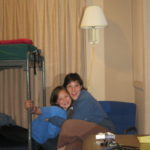
Friday and Saturday I took off to the Poconos with my daughter for a mother/daughter retreat. The whole getaway sneaked up on me, and I realized about an hour before we had to leave that we were due to attend this overnight cabin camping getaway.

Ten things I learned from my getaway:

1. When a female retreat speaker likes to take off her shoes (and has toes that look like man fingers) I have trouble concentrating.

2. Camp cabins have a wet sock meets wet canine smell. This is normal.

3. A retreat menu consists of 300% of one’s daily requirement of carbohydrates. (MMM and uh-oh.)

4. A camping getaway is not complete unless several bugs are captured and treated like members of the family, before they die in captivity.

5. Turkeys wake up at 4 a.m….vocalizing.

6. Even if a mom/daughter hike includes spotting deer up close, friendly fowl, and indescribable beauty, wet pants, shoes, and socks will incur massive amounts of overshadowing whining.

7. Staying up past 11 p.m. for its own sake makes an eight year old immeasurably ecstatic and then immeasurably exhausted 12 hours later. Usually there is crying involved.

8. Apparently, when camping, there’s no such thing as “too much candy”.

9. Unspoken camp rule: carbonated beverages are a right, not a privilege.

10. Mysterious forces beyond one’s control cause one’s washcloths and towels to dry in no less than four days.

What are some things you’ve learned from camping?


photos of our time away.


MAGIC Mellon!

Look what I found when I cut open this cantaloupe (or for you people in Iowa, think: “MUSK Mellon” ) .

So, maybe Voldemort practiced on fruit before he got to Harry Potter?

I know what you’re thinking, “Magic!”

Lightening bolt scar on Harry Potter's mellon.

Upon closer inspection I saw the cause of this odd lightening bolt phenomenon. A seed. A seed braking free!

My knife cut the seed in half to best reveal its strange path “toward the edge”. I’ve never seen anything like it, have you? I nearly starting dialing J. K. Rowling for an explanation.

Sometimes leaving the safety of the group, to make a break for it is downright magical. It’s extraordinary. Have you ever had to make a “magical moment” happen?

YOUR mission: Tell me something “magical” you’ve seen lately! I’ll give you until the end of the day!