Some of us don’t fast. Some of us fast for the wrong reason. This is the first of a few posts on FASTING. Bring your thoughts to the table, and stick with us until the end. I promise, you’ll see Fasting in a new light.
Here are 5 Poor Reasons to Fast, and the “inner monologue” that may follow one’s rationale. Can you see yourself or someone you know in the following?
1. To lose weight.
(inner monologue) Oh, if I could only lose these last 8 pounds. I know, I’ll kill two birds with stone, and fast. It’ll be like a diet, only it’ll make God happy, and me feel better about myself at the same time.
2. Because other people are fasting.
(inner monologue) I’m going to look like such an pathetic loser if I don’t join in this fast with my group. There’s going to be an awkward silence if or when I don’t have something to say amazing to say about my fast.
3. To prove something to yourself.
(inner monologue) It’s just time for a change. I’m ready for God to do something BIG. Really Big. There’s nothing like fasting to give God the signal that I’m ready to follow his lead. This time I’ll try for 5 days.
4. To attract positive attention.
(inner monologue) I like to tell my friends when I fast…to keep me accountable. But it makes me feel encouraged to just tell them about it, I must admit. Hopefully, it encourages them.
5. To feel more spiritual.
(inner monologue) Sometimes when I’m going through a dry period spiritually, I like to crank it up a notch, and give food the boot for a while. I want it to sort of give me a boost, and start a fire for God in my heart.
Have you ever thought any of these things? What has been your inner monologue, or dubious reasons you’ve heard for fasting?
I’ll be address each one of these, and your comments, in the next post. Can you think of a bad reason to fast?
TO BE CONTINUED…
So-Don’t miss the important conclusions on this topic in the upcoming post. Sign up to get an update notice as soon as it’s posted.
We’d like to think idol worship isn’t something we practice. We don’t bow down to manmade gods like the foolish people of old we read of in the Bible, right?
Not so fast. (I think we do)
Probably, if we can’t live without something invented in the last 150 years, it qualifies as an idol–Yes. A full-tilt false god.
If we have a trust and loyalty to something we assume is a necessity, I think we should challenge this devotion.
Here’s the ugly truth. You probably worship your computer, your Apple product, your GPS, your phone, or your car. (Our association with technology is the modern equivalent of Old Testament style idolatry.)
A “long ago” 2007 British study of 1,256 people showed that 1/3 of those asked would pass on $2 million to keep their cell phone. 85 percent of those studied said that having a mobile phone was “vital to maintaining their quality of life.” The statistics are likely far higher now, almost 4 years later.
So, it’s simple. Tech = Baal.
Now, will you give up your false god?
At first we rebuff this allegation of idol worship. We’ll think of ways that the things we adore are for safety, common sense practicality, or we’ll come up with a rationalization for why our devotion isn’t really so bad.
The prevailing idea is that if the technology is available, there’s a kind of moral imperative to utilize it. “If it’s possible–it should been done.” Hence, things like octoplets, an artist being fitted with digital camera skull implant, and decades-long life support situations happen. (Can you think of another gross abuse of technology?)
What of ourselves is lost because of these unnatural loyalties?
Probably, a basic part of our humanity.
Sound overblown?
Let’s be serious: We become what we serve. We are enslaved to what we worship. What are the repercussions for serving technology?
Here’s a case in point:
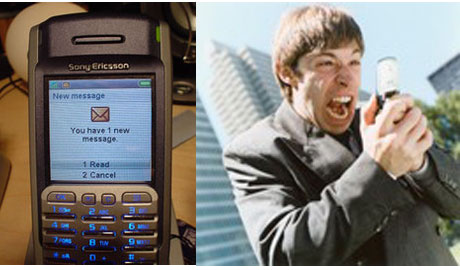
It seems no one (especially under a certain age[?]) can image going without a mobile phone, or internet capabilities for a few hours, let alone a few days. Could you give up technology that’s been created within the last fifty years for a full week? Would it cramp your style, and make you grouchy? (Signs say yes…that’s old school tech…the 8 Ball.)
281 million youth have cell phones. I admit I have withdrawal symptoms without access to the internet for more than a day. I get twitchy. It’s uncomfortable. And no, I don’t like it.
So, I think we have to be honest and address this. What do you think about it? When have you worshiped technology? What do you think you do about it?
Is there a Christian spiritual practice that can help us?
Absolutely. It’s called fasting. Prayer, fasting, and giving to the poor are the pinnacle of Kingdom of God living, according to Jesus in the Sermon on the Mount. Without these things, we are not living as a follower of Christ as he laid it out.
A Tech Fast should be part of your spiritual practice, because it will get your attention better than most things will. This will create growth and maturity.
Fasting challenges our loyalties.
(Read that again)
When we desire the thing we fast from, it creates a space to concentrate and reflect. It re-proritizes our habits, calls them into question, and helps us sift through the what we we should hold dear versus what should be leashed and subdued. When the pang to digitally connect, shout out our thoughts to the masses, or get instant information strikes, we can train our hearts as we place prayer and worship in that void that feels like need. The point isn’t to prove our righteousness by going without, but rather to create time and space for heightened refocus and Christian spiritual practice. God has us engage in fasting for our benefit, not his. It’s a training method…a.k.a. a discipline. It’s a command to fast. (Sorry to break this to you.)
BUT GOOD NEWS: The effect is refreshment, and quite likely a more informed outlook on our lives.
Will you take the TECH CHALLENGE? Is the next 2 weeks fast 3 times from technology. Start off with a few hours, or half of a day (if you’re ready for THAT-gulp), and try to build up to 2-3 days by the end.
The ones with “*” are just made up for the sake of humor. (Let’s just say, I like to insert humor, and yet be an insightful resource for you. Your welcome people of earth.)
THE TEST
Answer yes or no:
1. You spend more than two hours a day interacting with/using technology.
2. You have extraordinarily strong thumbs compared to an Amish person.*
3. You have a short attention span, which has gotten shorter. (Finishing this self-test even seems like a challenge at this point.)
4. You have trouble sleeping at few times per week.
5. Your short term memory seems to be suffering. (Like right now, for instance, you might even have to concentrate to remember why you wanted to take this self-test in the first place).
6. You like to change channels on the tv a lot, and you bounce from thing to thing online, at work, and at home.
7. If you set out to do something, and get online, or start texting, you tend to get distracted from your original task or objective. (Maybe-just now-you were checking on the news, email, or something, and whoops here you are taking this test, ’cause, “heck, it’ll only take a minute!”)
8. You get more than 1 headache a week.
9. You’d contemplate enhancing your brain with extra RAM or flash memory, (if it were possible.)*
10. 48 hours with no technology seems quite unlikely, or basically a bad idea.
HOW DID YOU DO?
1 or more YES answers mean your thought patterns (and your actual physical grey matter) is being altered by the “cooperation with technology.” So, basically you could be “less human” than you were just a short while ago. Okay, I just made all that up about the test answers. It’s not scientific. Nevertheless, beyond the silliness, the point stands: What we do and think thoroughly (mentally, emotionally, spiritually, and physically) changes us. For real.
Please post your results, out of 10. Let’s see how we all stack up.
(My number is 10 of 10…usually)
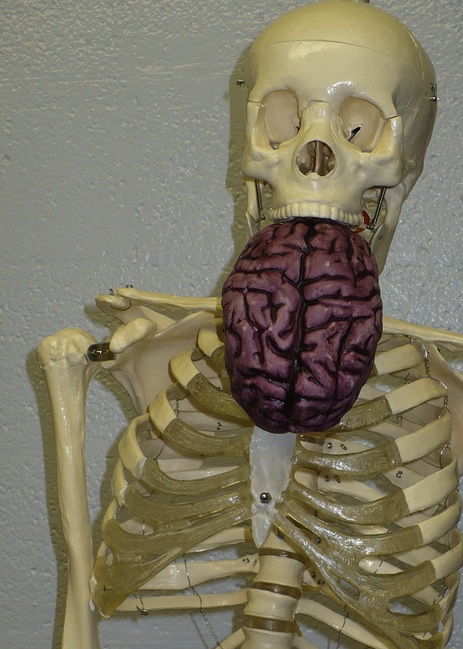
From studying the brain, scientists have found that repeated thoughts and mental or physcial actions (like texting, reading, speaking, running, etc.) actually create physicalgrooves in the brain, not just faster neuron pathways. When we practice a skill, learn a sport, or study facts, a little trench is carved into our brain tissue. This is also another reason it is hard to break a habit. A habit is physical. One must make a new brain groove to break a habit. By 21 days, a habit is well-formed.
This natural condition of the function of the brain helps us to learn–in the best-case scenario. In a worst-case scenario these thoughts become ditches of obsessive thoughts, vices, bad habits, sin, and worse. We learn to be bad, better. And, with all the technological interaction, we become more ill-at-ease, tired, nervous, restless, and unhappy, in fact. There is a physical change detectable on brain imaging equipment because of it. (So, you could say, it’s not just “in your head”. ha. groan. sorry.)
Food for thought? YES. Think about all the negative chatter that goes on in the mind, for instance, everyday, or even every hour. A person thinks about sixty thousand thoughts each day. Many are random thoughts and many are negative. Have you ever taken an hour and made a hatch mark for each non constructive or obsessive thought that comes to your mind? You could get a hand cramp!
There’s that song, “Be careful little eyes what you see…and little hands what you do…and little ears what you hear…” Well, yeah. Be careful. It matters.
We must watch our thoughts and actions, because they actually make up who we are.
Also if you feel a specific pattern occurring in your life, or notice habitual unhelpful thoughts afflicting you, you can know for certain they are creating an actual trench in your mind. So, take it as your own “red flag”.
See if you can “get a new groove” going. Consciously fasting from technology, even for a short bit, can give your groove-producing brain a well-needed break.
My friend Ed, recommends a needed 5 minute retreat, here. Good stuff!
The expression “a one track mind” is truer than we ever believed!
Here is the much-anticipated interview with Brett McCracken, author of Hipster Christianity: When Church and Cool Collide. Thank you, Brett! This was fun.
Brett's face in the City
5 Questions for
Brett McCracken
1. Does the hipster Christian phenomenon pivot on the “Be in the world, but not of the World” Scriptural directive?
I think the hipster Christianity phenomenon is absolutely about this notion of how to be in the world but not of the world (with emphasis, perhaps, on the “being IN the world” part). Christian hipsters want, above all, to engage with the culture at large. They want to have a meaningful dialogue and cooperation with the wider world, rather than being cut-off or segregated from it. Rather than having a Christian music industry, a Christian movie industry, Christian this-that-and-the-other, these Christian hipsters long for a faith that is relevant in and among the culture. They don’t want to be set in opposition to the culture, but rather they want to be productively engaged with it. Their instincts tell them that if Christianity is true, it is not something meant to be separatist, overly legalistic, and anti-everything. Rather, it should be something that speaks into every aspect of life and illuminates the beauty and wonder of existence. They resonate with the famous C.S. Lewis quote that says, I believe in Christianity as I believe that the sun has risen. Not only because I see it, but because by it I see everything else.
2. If you could communicate one thing to your readers that they would remember forever (and in so doing, change them forever), what would it be?
Wow, that’s a big question! I guess I would want to communicate the notion that the “coolest” thing about Christianity has little to do with how trendy, cutting-edge, and “of the moment” it appears to the culture, but has everything to do with the transcendent truth of a Gospel that changes lives.
3. Every writer has “haters”, what do yours complain about? (Mine complain about nipples, but that’s a rather long story, and this interview is about YOU.)
A lot of the critics of the book suggest that I’m not giving enough due to the cultural context and “mode-of-delivery” through which the Gospel is communicated. They maintain, rightly, that the Gospel always has to be presented in ways that are embodied, formed, packaged, and specific to the context/audience in which it is being presented. I totally agree. I’m not suggesting that the Gospel is just some nebulous cloud of ideas or concepts that we can communicate apart from form. Of course we have to consider the medium, the context, etc. All I am saying is that form influences content, and we have to be careful that the various new strategies we are undertaking (placing tons of emphasis on looking cool, cutting-edge technology, etc) are not negatively impacting the content of the message or distracting us from making sure we are communicating a deep, rich, transformative message. At it’s core, my caution in the book is that we not get so preoccupied with hip/cool/attractive packaging that we forget what is actually rich and powerful about the message itself.
4. To you, is “cool” more of a state of mind than anything? Why or why not?
Hmm, that’s an interesting question, because I think it is and it isn’t a state of mind. In the sense that the pursuit of “cool” is very self-conscious and a sort of existential endeavor to be “in the know,” I definitely think it is a state of mind. But then again I think that there are plenty of “naturally cool” people who never really think about or try to be cool. It’s not something they consciously strive for as much as it is just a side-effect of them truly liking certain bits of culture that happen to be fashionable or appear cool in a given cultural context.
These days, it’s hard to tell where “cool as a self-conscious state-of-mind” ends and “cool as a natural outgrowth of who one is” begins. The problem is complicated by the fact that cool today (as in, “hipster” cool) is largely defined on the superficial “how one dresses” level, so you have “true” hipsters who dress in a certain way but then you have the “I want to be cool” hipsters who can simply purchase the exact same look at American Apparel or Urban Outfitters. On a phenomenological level, there is no difference between the two. Both types signify “cool,” which we take to mean “elitist/snobby/annoying.” So whether one actually IS elitist/snobby/annoying doesn’t matter, because “the look” communicates this regardless.
5. Have you ever considered offering McDonalds a signature menu item? (For instance, like the McCracken Sandwich: 8 crispy strips of bacon, melted sharp cheddar cheese, and sweet horseradish sauce on crispy, lightly toasted Sourdough bread pocket.) [Seriously, that whole thing came to me in one package like that. It must be a God thing.] If you have not, this could plague your mind, and I’m sorry about that. I too am feeling hungry.
If I were to have a McDonalds signature item, it would probably include arugula, grass-fed beef and raw goat cheese, just to cover my hipster bases.
No one will ever confuse me with Lifestyle Design guru, and polymath Tim Ferriss, but I have a cool tip that could save you a bunch of time if you own a mobile phone.
Messages...messages...messages AHHHHhhhh
Have you ever tried to reach someone quickly, and had to call every phone they have? As you hear the ringing sound you basically shoot up little prayers, in hopes they will answer, “Oh, God, please God, let her pick up!” It’s got begging written all over it. Then you end up leaving one message per device, and wondering if or when they’ll get the message, and which one message will it be. Was the first one too frantic? Did you skip any info. on the third try? And when might they call you back? Yikes~”What if he left his phone in the car, and doesn’t get the message until he gets home? Ahhh.”
This JUST happened to me as I tried to contact my son’s autistic therapy program manager. I still haven’t heard from her. It’s a crap shoot…
Well, in typical fashion, Google as a free way to streamline and simplify this whole system and situation, seamlessly. The application will even turn phone messages into texts and send them to you. I like that one! I’m about to give it a try, if you do, let me know. If this seems like a helpful idea for your life, you might want to check out their short info video, and be dazzled by the wonders of technology, here –> Google/voice