
How New Advancements in Neurology are Changing our Minds

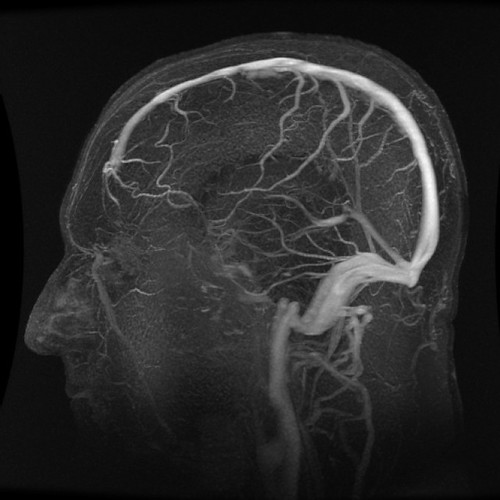
Annotated Sagittal ATECO MR Venogram

Reigh LeBlanc via Compfight

New 3D brain scan technology has changed even recently-held theories about how the brain works.

On the positive side, many brain injuries, learning disabilities, paralysis from strokes, mental disorders and addictions can now be treated with targeted exercises that cause brain re-mapping. The subsequent brain scans evidence the improvement.

Also proven: Things like prayer and meditation are verifiably shown to improve not only health and well-being but to alter brain mapping not just down to the cellular level but to the level of DNA itself.

The area of study is termed neuroplasticity.

Even into very old age, the brain now shows us its ability to continually adapt to the environment, and improve depending on how it’s utilized. Certain thoughts alter us. The proof is empirical.

On the negative side certain things the brain engages in make future change very difficult because chemical changes from events can permanently alter the brain’s structure. Nevertheless, the idea that the brain works like a computer or that it “hardens” like wet cement at around age 6 have been debunked.

Of course most of us already knew at some level. In spiritual formation we study this historically as well. The anecdotal evidence has always been there.

Proverbs 23:7a “For as a man thinketh in his heart [mind+will], so he is.”

In his book, Dr Norman Doidge gives us many case studies that appear simply miraculous at first blush. It’s worth the read.

• An eye surgeon paralyzed by a catastrophic stroke is give a rehabilitative treatment that allowed him to be a successful surgeon again.

• People born with congenital blindness are able to re-map their brains and perceive vision through through–of all things–their tongues!

• Wounded soldiers with phantom limb pain find relief for the first time.

(and much more)

Re-mapping is not science fiction nor is it fluffy positive thinking. Re-mapping just requires effort and specific therapy.

So if you could re-map your brain what would you like to change?
Don’t give up.

Did you like this post? Please share it.

More soon. Don’t miss the next one: Take just 4 seconds and sign up for a direct delivery in the sidebar.


Likes VS. Hugs: Upgrade your Reality

I’m not sure there’s any number of Facebook likes that can replace a hug. –Seth Godin

It’s true that as real life plays– out not in the hard scrabble face-to-face ways, but through pixels and clicks– that we grow not just a bit more jaded but also less human.

Typing away about our problems and working on getting noticed for what we think can fool us into thinking that this is normal or optimal human behavior. It’s not. It’s distancing behavior. It’s the kind that can’t stand under the weight of true in-flesh reality, and makes us less ready to do the real and messy work of grace and friendship. Or, reap their invaluable rewards. This stuff of the inter webs is  not the kind of being that often propagates a compassion that breathes real life into our souls and health into our bones, at least not like the solace that in-person camaraderie can.

If reading your screen is making you often angry or upset it could be making you sick. Maybe physically but surely in your soul. And it should be well with your soul.

Write out some of your frustrations for no one to see.

Distance yourself for a bit from the thing that distances you from other humans or too often makes shallow mockeries of fellowship and communion.

Unplug and be well.

embrace

Protected: Discernment Series: Lent, Fasting, and Discernment, part 1

This content is password-protected. To view it, please enter the password below.

The Spiritual Guidance for Bloggers Series: An Introduction

Click for Attribution link.

If I were to caption this photo for the project at hand, it would say,
“Sweater cubicle? or are bloggers too isolated for their own spiritual good?”

As I promised on Timothy Dalrymple‘s blog a bit ago, I am covering the topic of spiritual guidance for bloggers (as a series). Thankfully, some talent bloggers are joining us, too.

In plenty of ways technology has outpaced our spiritual reflection. The needed inner gaze at the practice (spiritual or otherwise) of blogging itself has not been encountered effectively. Bloggers have specific spiritual needs and encounter spiritual pitfalls that are under-addressed…even on blogs themselves, where you’d expect them to be handled. Well, no more.

In the next few weeks, I’ll lay this topic out and do just that, with the help of some talented bloggers as featured guest contributors.

For me, it’s an EPIC mashup of blogging experience (since 2006), and three scores of credit hours with my seminary education (M.A. in Religion, Spiritual Formation concentration) cross-fertilizing at the perfect juncture to rock this thing out. Boom. Pow!

For example:
Pitfall #1. Bloggers can be grandiose when introducing a new series.

If you are a blogger, this is especially for you. You and I both need this.

If you know someone who blogs, please send them over. Encourage him or her to read and participate in this series. If they seem reluctant, or just too busy, just say, “See, that’s exactly the whole point!”

A peek at some of the upcoming themes:

  • Seductions Specific to Christian Bloggers and What to do About it
  • Overcoming the Spiritual Pitfalls of Blogging
  • A Writer’s Mistress is a Blog (humor)
  • The Best Spiritual Disciplines for Bloggers
  • Blogging and Community: The Good, the Bad, and the Ugly

Plus, Articles from fantastic Guest Writers:

Thom Turner

Joy Bennet

– Ed Cyzewski

Anita Mathias

Jennifer Luitwieler

Sarah Bessey

Warwick Fuller

Ray Hollenbach

…and others.

Mental Illness Awareness Month (Moody & All-or-Nothing Thinking)

Photography by Andreas Stridsberg

This month, I’ve been focusing some posts on mental health.

Today, it’s Borderline Personality Disorder. Sounds like something really weird, right? It’s surprised me to learn about this.

It’s a love/hate thing, and I think it’s a bit more common than either one of us realize. The description may surprise you, too. When you read it, co-workers, family members, friends, acquaintances, neighbors will come to mind, and you’ll think, “Whoa, you can diagnose this, for real?”

Wikipedia describes BPD as a prolonged disturbance of personality function characterized by depth and variability of moods.[n 1] Usually the disorder involves unusual levels of instability in moodblack and white thinking, or splitting.

The disorder often manifests itself in idealization and devaluation episodes, as well as chaotic and unstable interpersonal relationshipsself-imageidentity, and behavior; as well as a disturbance in the individual’s sense of self. In extreme cases, this disturbance in the sense of self can lead to periods of dissociation, self-harm, or violence.[1]

BPD splitting (all-or-nothing thinking) includes a switch between idealizing and demonizing others. Obviously, this, combined with mood disturbances, can undermine relationships with family, friends, neighbors, and co-workers.

Sound like anyone you know?

Does this mean extremism is a mental disorder? hum?

Some Symptoms:

  • Fear of being abandoned
  • Feelings of emptiness and boredom
  • Frequent displays of inappropriate anger
  • Impulsiveness with interests, money, substance abuse, sexual relationships, binge eating, or shoplifting
  • Intolerance of being alone
  • Repeated crises and acts of self-injury, such as wrist cutting or overdosing

Treatment and medication are helpful.

More here:
(National Center for Biotechnology InformationU.S. National Library of Medicine)

Did you find this information interesting? Let me know.