Amy Banks, M.D., was an instructor of psychiatry at Harvard Medical School and is now the director of Advanced Training at the Jean Baker Miller Training Institute at the Wellesley Centers for Women. She has a private practice in Lexington, Massachusetts, which specializes in relational psychopharmacology and therapy for people who suffer from chronic disconnection.
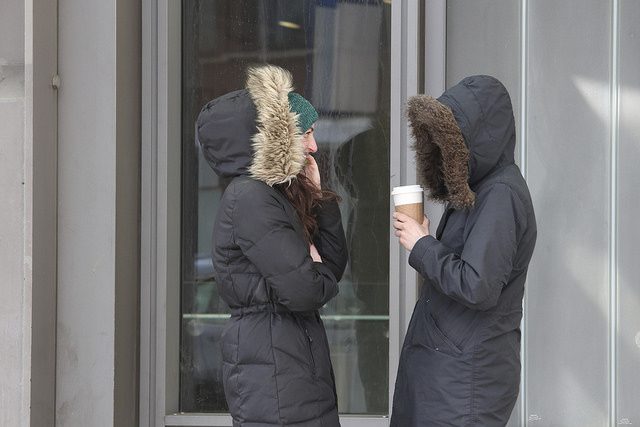
(The featured image of two women talking is a Creative Commons image taken by Tina Leggio.)
For more information, important LINKS (like the FREE Relationship Assessment tool, websites, etc.), and detailed notes from the show, click here!
Get Dr Banks’s book!
• Extras! Get Today’s SHOW NOTES, plus the Access Pass, too!
The Access Passunlocks Show Notes to previous episodes and includes Show Notes for the rest of May 2017, too.
• SHOW NOTES are just $1 (per month) and you can cancel anytime.
If you like the show, please share it with one other person TODAY, OR write a review on iTunes. Don’t know how to write a review on iTunes, exactly?Here’s a short how-to video:
What did you like about this episode? I’d love to hear from YOU!
Welcome to Spark My Muse! • Audio is released each Wednesday.
Scroll down for the AUDIO PLAYER to hear the latest episode!
• If you appreciate the show, please help with a one-time gift (of any amount) through this secure PayPal link (credit cards are also accepted through this secure link).
Today my guest is New Zealander, Barry Pearman. He’s a former-Chaplain to people with dealing with mental health issues, a gardener, and a writer (among other things). His work centers around helping people find healing and mental wellness through connection and spiritual formation. He too struggles with depression. (The beautiful garden image featured is some of Barry’s gardening work.)
For more information and show notes for today’s show, click here!
If you like the show, please share it with one other person TODAY, OR write a review on iTunes. Don’t know how to write a review on iTunes, exactly?Here’s a short how-to video:
What did you like about this episode? I’d love to hear from YOU!
Another Wednesday Audio delivery!
This is Soul School Lesson 67 (SSL 67)
The human brain is a “soup” of chemicals (the consistency of soft butter) encased in the bone “bowl” of your skull. This gelatinous cocktail needs to stay in balance for optimal mental and bodily health. Today, I’ll talk about serotonin and dopamine and an experiment I’m taking during February that you might want to try too. (scroll down for the AUDIO PLAYER)
• Be an influencer and share what you’ve found!
Send out a Tweet-just like magic. Just click below:
[ictt-tweet-blockquote]I found an audio episode at Spark My Muse on power and corruption-I think you should check it out![/ictt-tweet-blockquote]
Please enjoy the program. If you’d like to give a gift to help the show, you can use the PayPal button below.
Thank you.
Today the show notes will connect you to the scientific studies, resources and articles related to the topic of this episode on brain chemicals.
(Just $1 per gets you these Show Notes, AND the rest of the Show Notes for the whole calendar month-FREE. ! PLUS a coupon for $3 off the clothing and mugs below.)
Money from this sale -which ends FEB 4- helps the show!
Shownotes: PART I
A conversation (in 2 parts) with
the author of Vulnerable Communion: A Theology of Disability and Hospitality, by practical theologian Tom Reynolds
Bio:
Tom joined the Emmanuel College (part of the University of Toronto) faculty in 2007. He is committed to an interdisciplinary, practical, and relational vision of theology, his teaching and research address a range of topics related to constructive theology (particularly the doctrine of God and theological anthropology), theological method, intercultural and interfaith engagements, contextual theologies and globalization, philosophical theology, disability studies, and the thought and influence of Friedrich Schleiermacher.
Incorporating the theology of disability into his work training pastors at Emmanuel Seminary, because theology is personal, and not disconnected from the real world concerns of the church and people living their lives.
4:30
About his son Chris sparking his interest and work in the theology of disability.
5:30 Learning that disability isn’t a problem to figure out, but rather it’s about a person who I love and live with, and care with and for, which radically reoriented my perspective on theology.
5:50
Disability and God’s Providence
(Questioning does God “cause” disability as a curse or opportunity for healing…or a kind of moral lesson…)
6:30
His son exploded the theological categories (and assumptions) pertain to Providence…making everything confusing and needing to be re-thought.
7:00
What is abnormal? What is “faulty” humanity?
Amos Yong, Hans Reinders, John Swinton writing on the topic too.
8:15
Tom details the new book on the Theology of Care which builds on the first book.
8:40
Some churches stress Cure over Care in terms of disability.
8:50
(Lisa) My visit to a church where the leadership was interested in healing my son from his non normative experience of the world.
10:00
The range of responses churches have when encountering people with disabilities.
The church’s “urge to cure” is better than outright exclusion, which plenty of families have encountered.
11:00
It comes from the the idea of remaking and fixing someone in a way that is more comfortable for non disable people and normalcy (what they consider normal). Not helpful or Christian.
12:00
About the church that didn’t want his son as a disruption and a church that did receive them.
13:00
“How can we help you?” was water for his parched soul. How the church accepted and welcomed the uniqueness of his son.
14:15
Hospitality vs. a narrow view of what is preferred.
15:00
The messiness of various kinds of people, in general, means we have to expand our view of grace.
15:30
Who gets to be a full-fledge member of the church community?
and the “mascot syndrome” for those with disabilities.
16:30 – 17:50
Levels and types of responses:
• Tolerate disabled, but they do not get to be a true part of the church.
• “Inclusion” sometimes means means the the “outsiders” get invites to the inside group based on the good graces of the in group, but are still treated as problems to be solved, or people that are to receive the gestures of charity from others (people for whom things are “done for (them”)”. Doing for instead of “being with”.
18:00
What is access? In is not just accommodations (i.e. ramps and special bathrooms) and alterations but ongoing…
Faith communities may be not expecting and not ready to receive those with disabilities.
18:30
It’s not an issue about outsiders, because disability extend to a broad range of issues, both visible and not visible, including mental health challenges that are already there.
18:50
Thinking of the word “BELONGING”
as in “to be longed for when you aren’t there in the fullest sense.”
John Swinton and belonging
19:40
Jean Vanier “In giving and receiving do we really thrive as people”
20:30
Unconscious bias that includes “fear of the stranger” and “fear of the stranger within”.
21:00
We fear weakness and vulnerability.
21:30
Before “mainstream”…the stigma of “retard”…and fearing and disposing weakness.
22:20
Nathan means gift. (Lisa) I learned that I had to recognize weaknesses (shortcomings) in myself the I saw reflected in my son…and communities can do the same type of thing unconsciously.
23:00
“The encounter with disability punctures the illusions of what we think of as our own strengths.”
23:50
The journey with a child with disabilities is isolating.
25:30
Societal epidemic that fears being vulnerable or perceived as weak or unable to perform in ways that are considered valuable by society.
26:00
We have to see what are myths about autonomy, independence, and productivity where are assume we are self-reliant and these qualities are prized so highly. “Able-ism” (The idea that being able in body and mind is normal and most vital which serves as the lens by which we see and judge the world and others outside those parameters as faulty.)
27:00
Tom’s latest work called “A spirituality of attentiveness”. Christianity: St Paul’s strength in weakness serves as a prophetic witness against a society that prizes the strong as the main thing of value. 1 Corinthinians pretense of strength undercuts our ideas of grace)
29:20
We are all only temporarily-abled. (Lisa).
31:00
On hearing “You must be so blessed to have a disabled person as a teacher.” Is this sometimes a reframing of the situation that spins the situation to be more palatable? A glossing with spiritual truths and making it about spiritual growth.
31:20
Instead, Chris’s life seeks its own flourishes, and he may at times function as a teacher.
33:00
Thoughts on intellectual ability (or inability) and belief in terms of Salvation.
God’s works God’s own path in different ways and in different capacities with people. This undercuts my arrogance (as a theologian), so I don’t think I can so easily map it out definitively and universal for all people in all places.
34:00
His son’s atheism (who is the God he doesn’t believe in)…and how that challenges our presuppositions about God.
34:50
“It is in the kind of relationships of mutual belonging that the full image of God is borne out.”
35:30
(Lisa) To my son I said, “when you see someone who is loving you, you are seeing God.”
(Lisa) On how I changed from thinking “right belief” as the way to understand God was central. Our intellectualizing what God has done is not salvific.
38:00
Martin Luther’s theology of the Cross:
The pretense that we know exactly where God is and how God works. Where God is most hidden is where God is most vividly revealed in saving ways.
38:30
“Who I am to declare that God’s grace only works in some ways? and the God’s capacity and God’s own mystery is limited to what I would deem and my community would deem adequate.”
39:30
What the practical theology of disability tells us about Grace with God and relationships with others.
40:00
“The longer I live and work as a theologian the more I realize the limitations of theology and the true infinite mysteries of God.”
Jesus was disruptive to religious pretense and suppositions. “You say this..but I say this…”
Theodicy – The question of why does God allow suffering and how should we think about suffering.
How Tom, as a theologian, answers the question,
“Why would a sovereign God allow a person to be born disable and encounter such suffering?” (This is great!)
The best is yet to come! Come back for part II next week.
Will you help me meet my goal of raising $100.00 in August to keep Spark My Muse going? Use the Donate button on the left sidebar. Thank you for being a big ball of love!
In the latest issue of Harper’s Bazaar, actress Demi Moore replies to the question, “What scares you?” by saying,
“If I were to answer it just kind of bold-faced, I would say what scares me is that I’m going to ultimately find out at the end of my life that I’m really not lovable, that I’m not worthy of being loved. That there’s something fundamentally wrong with me … What scares me the most is not knowing and accepting that just about everything is not in my control. That makes me feel unsafe.”
Some people may claim the Hollywood starlet is speaking of a “God-shaped void” as Blaise Pascal once referred to it. But wait just a minute…
Not everybody will admit to this sort of thing. Some never gaze inward long enough to see it. But there it is. While many won’t realize what what the jilted Moore is talking about for themselves, I think this women has hit on a fundamentally human frailty fraught with universal relevancy. (And it has virtually nothing to do, in fact, with a certain shaggy-headed addition to the Two And A Half Man sitcom.) This frailty, I might add, is not actually negative, as we might first imagine, but rather part of the vulnerability that is the stuff of being human.
It’s these same underlying and exquisitely human fears that we mask, medicate, bury, avoid, deflect, or anesthetize, that cause all manner of destructive behaviors and coping mechanisms. For Demi, who was just hospitalized for stress-related health issues (namely exhaustion…and likely malnutrition), it can create potent consequences. It’s something wealth, influence, fame, accolades, and beauty doesn’t seem to ameliorate. Curious, no?
For many religion or spiritual practice helps to blunt the reality of our human predicament, but clearly that alone doesn’t seem to actually mend the situation. I refer not to just the situation of being mortal, but of being fundamentally impotent. Rarely is this gnawing sense placated for long. Demi, for one, is connected to the practice of Kabblah, but it hasn’t helped this core need.
Though her vulnerability and frailties are up for public scrutiny, many possess the same sorts of fears and maladies, and even despair, but go unnoticed.
To me, our condition seems unmendable…purposefully, that is.
Christians may argue they are the exception; they feel a great sense of hope because of belief in Jesus Christ, arriving to our world as the incarnation of God to make a pathway back to God. Alas, Redemption! Closure, right? Yet a cursory survey of believers (even 3 minutes scanning twitter feeds) show they too are rife with the same sorts of problems as Moore, and Jesus hasn’t seemed to fix that for them.
(The particulars of why are widely speculated and even hotly contested. Some call for more faith and prayer, while others osmotically move into greater embracing of “the mysteries”.)
The funny things is, I get Demi. I feel those things too. I wrestle with them, and I’ve taken up the journey to walk through all the rough patches, which are aplenty.
I think it’s high time to bring what it means to be human out it the open.
A kind of unlearning happens as we grow wiser, and the sort of acceptance of our weaknesses may take hold as we become more acquainted with our human condition. Maturity I think it’s called. The “Will we ever get there?” question lingers.
What do you think about Demi’s quote?
Do you relate to her, or do you see things differently?




![The Straight Dope (on your brain) [SSL 67]](https://lisadelay.com/blog/wp-content/uploads/2017/01/braincomputerscan.jpg)