Everything…but connection

chianlink

My friend Kayla visited her parents’ church over her summer break for 10 weeks or so.

They were attending this suburban church with a large attendance each Sunday morning and I thought she’d really enjoy the change. Maybe she would be disappointed to come back to her normal, small-town life.

When I asked her about it, she said, “I should have loved it. The music was amazing; the people friendly. They had lots of youth programs and small groups going, and the pastor chose meaningful things to teach. I should miss it, but I don’t.

This surprised me, so I asked her why she thought this was.

She said something so simple that it gave me a punch of profundity.

“You don’t miss something you don’t feel connected to.”

I started to wonder about the people I’ve lost through death, circumstances, or diverging paths.

Some I missed and some I rarely thought of. Those I did not miss much weren’t really all too different (in general) from the ones I did miss. It didn’t directly reflect the quality of person they were or if we had a lot in common. Like Kayla pointed out, I missed the ones I felt connected with and to. Reflecting on that, the ones that had stronger bonds created more longing or loss in the void of their absence.

That may seem pretty obvious, but the critical gap comes in when we miss why we are connected and what it means to be available and vulnerable on a regular basis with others you can trust. Apart from that, you won’t miss much.

I sense something has been lost in many communities of faith and in many other places because we are so much more amused by our distractions than we are connected in deep ways.

Human connection is never really about measurable stats. We already realize this. It’s about investment in others, sure,

but it’s also about the reciprocity of that investment. It’s always a two-way street.

Some people are wonderful and you invest and hope for a harvest–of some sort–where you both benefit, and you assume they do too, and then it doesn’t happen. The fruition doesn’t manifest or withers on the vine. Maybe the soil was bad, maybe a storm came or drought, or pestilence, maybe something else thwarted success. Sometimes it’s obvious and other times you just sense something is wrong that is hard to make right again. Sometimes you just need to move on and other times, you have to try again in a new season with different seed.

That happens in faith communities and in interpersonal relationships. It happens in business and in extended family life.

If the connection is lacking you won’t be missed. And you won’t miss them. It’s likely that you will feel disappointed about that.

We overlook the idea and process of true connection even as we want it the most.


Is there some thing or someone you’d like to feel more connected with?

Oh,
3 more things.

1. I will be posting a “spiritual-themed” topic about once per week. The other times I will concentrate on other ideas depending on what strikes me and will often concentrate on topics related to helping you create and communicate better.

2. I really am excited to see what this year brings and I’m really happy you came today.

3. Check the top right sidebar to get the next post sent to you through Feedburner!


It’s Gourdy!

gourdy

I’d be lying if I told you that this didn’t make me smile.

I wasn’t allowed to carve pumpkins (or gourds, fruits, or vegetables) as a kid in October. It never occurred to anyone to try a different month for that because my parents thought it would honor Satan or something.

The Fall harvest time is full of pumpkins and there are plenty of fun things you can do with them. I realized this doesn’t hurt anybody. My kids have it differently than I did.

It’s never to late to have a better childhood.

Trick-or-treat night in our neighborhood is the most hospitable night of the year…strangely, even more than Christmas! I wrote about that here.

Leave links in the comments section to the coolest things you’ve seen done with pumpkins!

Storyless (Guest Post by Ross Gale)

(Ross is the one in the hat)

Storyless
-by Ross Gale

I have a friend whose mother tells a story of her as a child: when studying for a third grade test using flash cards, my friend strained to think about the answers. Sometimes her mother would have to say the answers out loud, but even then my friend didn’t seem to connect the dots. She’d keep thinking, the answer too far beyond her. Her mother laughs a bit and says, as a child she was a little stupid. This is the story my friend tells herself, that she is stupid.

When she was in junior high and missing school from an illness, she’d beg her mother to return her to class because she needed to get smarter. She loved school. She did not like being stupid.

She is in her twenties now and the stories her parents tell her influence her. She is an over-achiever in the sense that grades matter to her because they reflect who she is. She’s always trying to prove the story wrong, but she also seems to believe that she’ll never be able to prove it wrong. She’ll always be stupid.

The story my father tells me is about when I was three and he was sick in bed with the flu. Everyone was out of the house for the day so I stayed by my father’s side. I didn’t cry or fuss or ask for anything. I just stayed there because he needed me. My father says I have the biggest heart of anyone he knows. The story tells me something about myself. This is who I believe I am.

The stories parents tell their children about them are stories that shape their identity and purpose.


When Mary and Joseph take their son Jesus to Egypt, I imagine them telling him the stories surrounding his birth, the reason they weren’t living in Palestine, and what the angels had each pronounced to them. Before he knew who he was through Scripture, he knew who he was from his parents’ stories.

When a child is disabled like my brother KC, who had a traumatic brain injury at three, the stories my parents tell are stories about a different boy, they are stories about a boy without a disability who doesn’t have seizures, who can run and play sports, who can graduate high school, who can annunciate his words, and speak clearly. They tell stories about a boy with athletic prowess and a stubborn attitude.

An accident like KC’s, however, renders the stories meaningless. With an accident like KC’s he becomes a storyless boy. How do you shape the identity and purpose of a storyless child? This is the tragedy of tragedy; it robs the power of story.

We have a God who gives us this purpose and identity so even when our stories are harmful or meaningless or shameful or stolen, we can become a part of a new story. God’s story. A story of hope, redemption, and meaning.


Ross Gale is a writer and editor from Oregon. His work is featured in Burnside Writers Collective, Antler, Relief Journal, Archipelago, and he contributes to MagicalTeaching.com. He earned his Master of Fine Arts in Creative Writing from Seattle Pacific University. He blogs at rcgale.com where he’s editing the “Bereshit Bara Creativity Series” which asks 13 Creatives to wrestle with questions about what gives them the courage to create.

Heaven is For Real, but is it as silly as they say?

On the recent topic of Heaven (and soon, Hell) here at the old blog, I must bring up the baffling and sappy rendering of the heaven that we hear about quite a bit in conservative North American Protestantism.

If a boy nearly dies, and then tells you details about heaven exactly as you have taught him, what’s next? I’ll tell you what, a best seller (for people who need a spiritual vitamin B12 shot for their excruciatingly literal translations of biblical passages, and who pay no mind to historical context, linguistic idioms, let alone Hebrew and Greek).

Now, I realize young children tell silly stories. That’s part of their job. The trouble comes when the stories get massaged and coupled with a near-death tragedy to elicit a faith response from the more gullible among us. I do want to think the Burpos are on the up-and-up, but something stinks.

I heard Pastor Burpo and his little boy on a television program. What a cute kid. Some of the story seemed amazing, if not miraculous, but I got a bad whiff of something when Colton (really his dad) detailed heaven as, well, super lame.

People get around on their huge wings. Okay, I hope that’s not how it works. Boobs have been bad enough. The proverbial pearly gates make an appearance. The word “wicked trite” comes to mind, but maybe I’m just too cynical. A blue-eyed Jesus wears a purple sash over his white robe, and rides a giantic rainbow colored horse. Okay, bad wardrobe, and how could the genuine biblical Jesus from the ancient Semitic region possibly possess a double recessive gene for blue eyes? (And don’t say, because both Mary and the Holy Spirit had blue eyes, ’cause I’m not buying it.)

I don’t think Jesus rolls like that. But, I give the kid credit: An elephantine rainbow horse is pretty cool. Of course, I would have to know if it pooped rainbow too. That’s awfully critical info. God (the Father) has a body and sits on the throne, with Gabriel serving as a kind of right hand angel man on his left side, in a smaller throne…as we might expect, right? It all sounds like a bad Star Trek episode. Well, sort of.

Reader reviews often complain that only 3 pages of the book speaks of heaven in any details. But the book has done well. Very well. It spent 52 weeks on the bestseller list, and the family has since produced a children’s picture book, and you guessed it, and movie rights have been purchased by Sony. Pretty sweet deal!

Possible movie title: “Heaven is for Reel: One Boy’s Near-death experience as re-told by his literalistic dad”

When the parents are asked about authenticity, their answers center on referring to the hope the story brings. This begs the question, is the point of the book to create hope in a plenty of people already know what they want heaven to be, instead of a faithful depiction of God (who, by the way, is non corporeal) and the Bible? (Which would be far more confusing.) Both can’t be true.

If you want to read a copy for yourself, and decide, here it is.

But, I offer you some thoughtful reflection on the the topic from arguably the foremost New Testament scholar alive today.

Halloween Night: A Christian Spiritual Practice?

Porch Party 2011
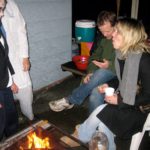
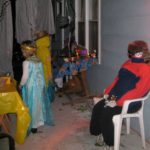
We have a rather long side porch. On trick-or-treat night, we fixed it up in creepy fashion. I stuffed pants and shirts and placed them on chairs to look like scarecrows. Plastic spiders, snakes, and mice were peppered near candy bowls. Votive candles and illuminated pumpkins lit the way. We used the internet to stream in 50s-60s themed music (Think Monster Mash and the rest). Out in the back, our fire pit made a toasty atmosphere on a chilly night; and coffee, warm cider, and cookies added to the warmth, on a few levels.

The most fun was meeting new neighbors, re-connecting with known neighbors, and talking with them. I realized that there isn’t another “holiday” like this one. Thanksgiving, Christmas, and Easter usually involve travel, plenty of food prep, and a different schedule for school or work. Not Halloween. What other time do you have dozens of neighbors interacting with you on your property…at night? It’s a unique night. It’s an opportunity.

Our visitors and friends loved the decor and seemed touched by the effort. Can I say there was joy? Can I say that, for this sort of thing? Well, there was.

I had more time this year, so I sort of “caught the bug” and went all-out. I don’t think is was the Halloween spirit either. It was the Christmas one, arriving early…like department store merchandise. And in the middle of all that good cheer, I wondered, why don’t communities, groups, or Christians team up more often create a safe, fun, and loving atmosphere for these kids and families that come to visit every year? That’s a wasted opportunity, is it not?

I learned some other amazing things:

1. When you prepare to love on people, they “get it”. (Open appreciation: Everyone wore smiles, and said thank you–a lot! It was a delight to just be giving. I got more than I gave. Seriously.)

2. Being welcoming doesn’t take much money. (I was planning to buy candy for trick-or-treaters anyway. I used things I already had to decorate, and my neighbor joined in–donating decor, and cookies.) Pretty cool, huh?

3. My kids love to host and create community. In this way, they learn compassion and kindness. All on their own, they handed out treats, informed visitors of our “amenities”, interacted with the children, and helped people find their way around. How else would I have gotten to see this?

4. It’s only 2 hours. While some parties can linger, and take lot of food prep time, have logistic issues, trick-or-treat night is a specified time with a fairly easy menu. Most people make the time for it, somehow. For our neighborhood, it lasts from 6-8p.m. It’s not too hard to get some extra things ready to make it a more memorable and a special time for visitors.

5. It shines a light in the darkness. Times are tough, and there a lot of bad news and bad things happening in the world. It’s nice to give people something good. I find it totally ironic that this could or should be best served on Halloween. But why not? No day can shut out God’s Light and Love. (This also gives new meaning to the phrase “Take Back the Night”, yeah?)

Here’s some important background information
As a kid, raised in a very conservative (i.e. fundamentalist) Christian home, and my parents believed that going out for candy in costume on or near October 31st was colluding with the Devil. “It’s Satan’s Day,” I used to hear. Strangely enough, for all our protesting of it, the (unintentional) focus was more on Halloween and evil, than it was for any typical trick-or-treater. Now, that’s whack. Sometimes our efforts to be “righteous” (or whatever) have the opposite intended consequences. It seems we had it all backwards. Reinvention is key. Hospitality can happen any day or day. Take back the night with grace and love, or at least some goodwill to men!

Is Halloween a Christian Holiday?
Well, I’ll be honest and say I had no plans to hand out tracts, or influence a conversion experience on my porch. I wasn’t sharing verses or inviting people to my church. But, it was a rather blessed time. If anyone got the message that we made a spot for them in our week, then we accomplished a lot. Maybe a lot more than the typical church (which can feel like a club) can do most nights of the week.

I don’t think I’ve had the chance to touch so many lives in such a short time, as I did on that nigh. And to borrow Eric Liddell’s phrasing (think of the ancient “Chariots of Fire” film), “I feel God’s pleasure.” Parents and kids alike remember who was kind and who had a fun place to visit. And that, my friends, is shining a light. (The short answer is just, “Yes,Halloween is a Christian Spiritual practice–now“.)

Have you ever done this sort of thing for Halloween night? If not, give it a try. You can make some effort to spread more love and good cheer on this night too. If you do, let me know how it went.

Here are some photos of our night: