EPS 50: The Amazing Story of Bruce Van Horn

I’m excited to have Bruce Van Horn on the Spark My Muse podcast.

His story is inspiring and his coaching, his presence on the internet at his WEBSITE and social media where he is one of the most Retweet encouragers on Twitter, in books, and on his podcast heard in 194 countries (Life is a Marathon) he has been an encouragement to millions.

BruceVanHorn
His book “Worry No More: 4 Steps to Stop Worrying and Start Living” is an Amazing International Best Seller.


SHOW NOTES

MIN 5 Early in life Bruce got into Computers/IMB and tried to make his fortune and contentment externally.

Bruce losses it all at 27. At 42 loses it all again and feels like giving up.

MIN 10

How Bruce started to turn his life around and had his major epiphany.

How Bruce learned that the hardest part of running a marathon is the decision to run one (each day).

MIN 13

How Bruce applied his big success to all the aspects of his life.

MIN 15

How Bruce started to take responsibility for his whole life and take his thoughts captive and end negative self talk.

MIN 18

Peter Sage

“Complaints are the glue that keep you stuck to your problems.”

“Think and Grow Rich” Napoleon Hill

Express gratitude for what you have because it makes it easier to get what you want.

Making a list of things to be grateful for—which, at first, was insincere.

MIN 20 What would you miss if it was gone?

MIN 22

Making changes in life and relationships. Changing language like eliminating sarcasm.

MIN 24 Starting a life coaching relationship that led to jobs all over the world.

MIN 28

The stage four cancer that changed everything.

The surgery that went wrong and no pain medication to recover with.

MIN 34

“In this moment, if I can breathe, I have everything I need.”

Pain is not a curse. Somehow this experience is a gift. The story was a detour not an end.

MIN 36

“Worry No More” the book

Worry is like Mediation done wrong.

MIN 39

Experience is thought in this moment. We are telling ourselves a story. We can see another story. Worry is a story about what you don’t want to happen. and you can tell a different story.

MIN 40

Life is a Marathon podcast

Heard in 194 countries around the world.

Soul School – Lesson 19: When Spring is Underground

Thanks for listening to Soul School which comes out each Wednesday. Be sure to listen on Friday for the weekly guest episode too. This week (2/19/16), it’s the amazing Bruce Van Horn!

Today’s episode is about the lesser-known themes of Lent.

LENT means Springtime.
In much of the Northern Hemisphere of the world during this season spring has NOT sprung,
but it has started underground. This is a metaphor for our interior lives at times too, isn’t it?

When everything seems barren, rebirth can be right there underground.

Millions of people around the world focus on this nature of the human experience. The new life that comes after a time of dormancy and expectancy in the 40 days before Easter is celebrated each year. See how the themes can benefit you as you consider them personally, even if you don’t follow the liturgical calendar. 

Want to encounter this season more deeply and transformationally than ever this year? 

I’ve been work at work to make that possible.

This lesson comes with a lot of extras! I made a great video lesson, I’ve included some fantastic resource links (including my favorite audio devotional link I’m using this year), and I made a companion worksheet to enhance the lesson that YOU WILL LOVE.

To access them, just go here to Varsity Club and be patron and get access to all of it. You’ll get lots of bonus material, not just this week, but each week.

And, your contribution will help defray production costs of creating the show as well. Thank you!

xo
`~Lisa


Never miss a thing!

You can get the Friday Newsletter that has links to everything I’ve done that week (not just audio episodes but live events too. SIGN UP HERE.

Or get new episodes by subscribing:


EPS 49: The “Death Class” Trend – Guest Erika Hayasaski

Welcome to Spark My Muse!

Every Friday is a conversation with a guest. My guest today is Erika Hayasaki. She teaches workshops in nonfiction writing and classes in digital storytelling at the University of California, Irvine, where she is an associate professor in the Literary Journalism Program.

In her career as a journalist Erika’s seen many tragedies, but it was her involvement with Norma Bowe, the instructor of an unorthodox and very popular course at Kean University called “Death Class”, that showed her a completely different way to think about death and living and initiated her celebrated book project by that same name.

Erika’s website is here.

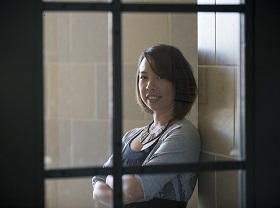
GENERIC CAPTION hayasaki_091123_sz.jpg date shot 102909 photo by Steve Zylius/University Communications Erika Hayasaki arrived at UCI in September. She joins the faculty as an assistant professor in the Literary Journalism Program after working for the L.A. Times in their New York bureau.

Her book based on the Death Class.


SHOW NOTES

MIN 1 [Feb gift giveaway Facebook.com/sparkmymuse]

MIN  3 Erika’s journalism career and background.

MIN 7 Her spiritual religious context and upbringing / objectivity

MIN 12 How she was introduced to “Death Class” at Kean University with Norma Bowe,

and how the book about “Death Class” came about.

MIN 16 Field trips, general interest, fear of death, loss of a loved one, coming close to death are reasons people take the class.

 MIN 19 Seeing an autopsy and death up close and how that changes you.

MIN 21 A renewed appreciation and outlook on life and the preciousness of living. Less anxiety around death and disaster after the class.

MIN 23 How we get exposed to death or stressful things in life and how we can process the scary things in life better.

MIN 25 Death anxiety is relieved more when people process through the ideas around death.

MIN 26 The afterlife and processing death in social contexts.

MIN 27 The “Death Salon” or “Death Cafe” or “Death Dinners”

exploring with art, socially, and with food the concepts and reality of mortality.

MIN 29 Alternative burial movement happening. We have become removed from the entire process like we used to be from the birth process.

MIN 30 How we grieve a loved one. How the Amish care from their dead.

MIN 32 Being with someone as they die.

MIN 34 CLICK for death salon reading list

MIN 35 Her uncle’s near death experiences.


Thank you for listening!
I hope you come back Wednesday for a new episode called Soul School.
If you enjoyed the show, please poke around and listen to other episodes and share the show with a 
friend!

xo
-Lisa


Soul School – Lesson 18 – What you don’t know about Intuition

Thanks for coming by to listen to Soul School today. You can scroll down to the “Click to Listen” button below.

• Each Wednesday is Soul School! And now, if you want to go deeper, I offer something more: a video class based on the Lesson. To take part in that, you just subscribe as a supporting patron.

It’s called “Varsity Club”. As a clubber, you get extra material, like worksheets to enhance the lesson, extras/other resources, reading recommendations, and a video class component straight from me. I’m so excited to take it up a notch!

It’s like going from a bite of cake to a whole slice.


• GUESS WHAT?! IT starts NOW.
There is extra material for THIS LESSON! A short video and a worksheet:

soulschool18
Video – lesson 18 [VARSITY CLUB] -click here
lesson18worksheet
Worksheet – lesson 18 [VARSITY CLUB] – click here
 

Interested?
Be a VARSITY CLUB patron– HERE, right now, and get started TODAY. Then, enjoy video classes, worksheets, and extras with each Soul School lesson from now on.


On Friday, stop back for the next episode release of the week–a conversation with a special guest!

This time writer and award-winning journalist, Erika Hayasaki on the fascinating rise of “Death Salons” and the increasingly popular classes in Universities across the United States related to death. These trends reflect a cultural shift of people trying to get better acquainted with their own mortality and ease the anxieties that come with being so separated from terminal illness, end-of-life, dying, burial, and grief processes common in modern times and affluent cultures.

• Never miss out on a new show!
Get the direct links sent to your inbox each Friday afternoon by signing up HERE.

Any questions? I’m happy to help.

OR, just want to say “hi”, “You’re awesome” or “great job!” Go for it! HERE

xo
Lisa

EPS 48: Free Will, Luck, and Psychopaths- Guest Diana Hsieh

Spark My Muse releases two audio episodes per week. 
WEDNESDAYS are SOUL SCHOOL episodes ( power-packed short episodes for everyday life. )

FRIDAYS are conversational interview style episodes with guests from a wide variety of backgrounds on interesting topics to get you thinking.


Today we are talking about control: Free will, luck (chance), and the power of nature versus nurture in how things in life turn out for us when it comes to these sorts of things. If you enjoy the show, share it with someone, or write a review on iTunes!

Today’s guest is Diana Hsieh, PhD in Philosophy, University of Colorado, Boulder

© Mark Stevens 2010
© Mark Stevens 2010

SHOW NOTES

MIN 6:30

Aristotle’s Ethics

What control in life entails.

MIN 8:00

The power to do something or not do something.

The conditions for moral responsibility and the knowledge of what we are doing.

MIN 10

Psychopaths and DNA. Nature, nurture, and moral responsibility.

James Fallon. Smithsonian Magazine article.

MIN 12:30

Environmental conditions and choice.

Maybe nature and nurture is a false dichotomy.

Blaming people who are raised in tough circumstances and keeping people accountable for their choices too because they know the consequences.

MIN 16:30

Common sense view that you reach an age where you know better.

MIN 18

Self knowledge is powerful. We all have tendencies we have to overcome.

MIN 19

In character building it help when we understand what we have control over and what we don’t.

Know what alternatives there are.

MIN 22

In defense of praise and blame. (How we can improve and be morally responsible.)

MIN 23

Make progress as best as you can.

MIN 24

Is morality relative? Whose morality is right?* (see my note below)

MIN 26

Looking at the practical effects of morality.

Value-based morality.

MIN 28

philosophyinaction.com

philosophyinaction.com/moralluck


*my note: This line of inquiry poses something interesting about a common worldview (though largely an unconscious one) in American culture and it is a discourse quite popular in some circles also about “culturally relative morality” vs. morality sourced and referenced in a Creator who is objectively good and perfect. C.S. Lewis reflects on this in his book “Mere Christianity”. If you are interested in commenting about this in any way, you can do so at the FACEBOOK group PAGE here.