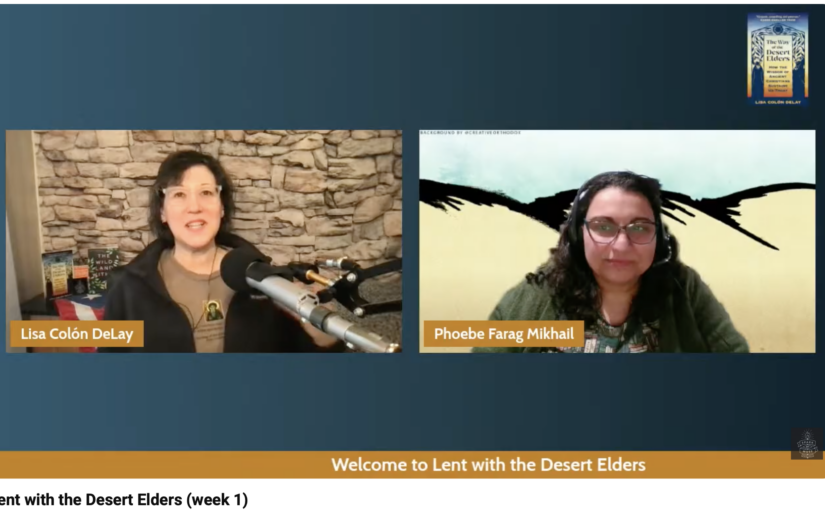
Maybe you missed WEEK 1 of Lent with the Desert Elders that was live on Substack, YouTube, and Facebook. Phoebe Farag Mikhail was my co-host and her perspective as a Coptic Christian is really informative. The Coptics claim the Desert Elders of Egypt as their direct heritage.
I choose a few short clips to whet your appetite, leaving the best parts for you to discover at the YouTube Channel (youtube.com/@Sparkmymuse).
Subscribe to the channel to be a part of the other weeks, or check back to watch the replays.
Besides getting a copy of my book on the Desert Elders, don’t forget to find Phoebe’s work, especially the Lent-related book she wrote called Hunger for Righteousness
Today a portion of a lesson I presented this past Sunday at my church on Psalm 51 a lamenting and remorseful poem/song and the background and story of King David’s epic treacheries. It might surprise you.
FIND related slides, images/art including a schematic of an Iron Age home that Bathsheba would have had and the interior courtyard area where she would have bathed or washed anything, plus other extras you will like at the PART II page: https://sparkmymuse.substack.com/publish/post/149978108
Find me also on YouTube and subscribe ⭐️go here or subscribe at the main channel HERE, especially if you already find yourself poking around YoutTube.
What a Spiritual Challenge this month with some accountability? It’s not very strenuous, it’s free, it’s a way to get us thinking, dialoguing, and moving toward better ways of being.
My conversation today is with Marlena Graves about her book “The Way Up is Down: Becoming Yourself by Forgetting Yourself”. (Like me, Marlena is originally from Puerto Rico and grew up in Pennsylvania. Her Spanish is way better though.) She’s a professor, an activist, has worked in ministry, and authored a number of books. Now working on her PhD. at Bowling Green University in Ohio.
Stop by the extras page to get all the show notes and links HERE: https://www.patreon.com/posts/39670162😃.(patreon.com/sparkmymuse | Episode 181)
Listen now with the AUDIO PLAYER:
• SparkMyMuse.com contains over 340 audio episodes, an online store, and many resources. Visit. Roam. And Enjoy!Pay what you can to help keep this weekly program running: PayPal.me/lisacolondelay
Listen to a recent episode:
• You can help Spark My Muse thrive in these two ways:
1. Share the program with another person today.
2. Leave a Rating/ Write a Review on iTunes HERE.
Don’t forget to pick an option that is best for you below:
Today’s Soul School Lesson contains some snippet readings and reflections from the book “The Artist’s Rule: A 12-week Journey-Nurturing your Creative Soul with Monastic Wisdom”, by Christine Valters Paintner on the powers of rightly aligned humility in the spiritual life and what toxic versions of it look like too. [See the audio player below.]
You can hear my interview conversation with Christine – here• Chip in and see extras for today’s episode and dozens of other episodes and postsHERE.
• Learn about the Sacred Spaces experience coming soon.June 5-7, 2020• More information and tickets can be foundhere.
Your help matters! Give a one-time gift at PayPal.me/lisacolondelay, or use the button below .
Listen to a recent episode:
Want something fun to wear? Visit the Spark Store and see the new designs (including the Baby Yoda for President items) HERE.
• Make it possible for Spark My Muse to grow…
…help in these two ways:
1. Share the program with another person today.
2. Leave a Rating/ Write a Review on iTunes HERE.
Don’t forget to pick an option that is best for you below:
Today my guest is
Dr Stephen Porter who is the Founding Director of the Centre for the Advancement of Psychological Science & Law at the University of British Columbia and he is a Registered Forensic Psychologist.
I know you will really enjoy this episode.
You’ve been a big help.
SHOWNOTES
(Scroll down to find links, highlights, and details from the show)
MIN 1
Dr Porter started his career among the prison population in the field of forensic psychology.
His two main topics of research in the last 15 years: The nature and fallibility of memory (false memories) and deception detection.
He wanted do study memory empirically and he set up the Centre.
MIN 3:30
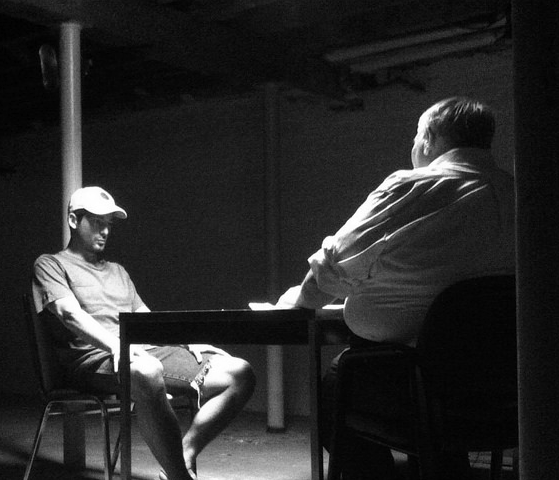
Why would somebody ever confess to a crime they haven’t done?
1,000 years of judicial systems have held the assumption that a confession of guilt is to be believed unless the person is deranged or they have been tortured.
In the last 30 years we now know this to be very false.
MIN 5:00
Studying people who believe they have actually committed a crime (and have a false memory of the crime) when they haven’t down any such thing.
70% of study participants were implanted with memories. They were convinced and falsely remembered committing a serious crime when they were teenagers in just 3 interviews for an hour each.
MIN 8:00
Events we remember are slightly or majorly different from the last time we recalled it.
A true memory is recalled almost exactly the same way in the brain as a false memory.
The systemic issue in the criminal justice system arises when a lot of time has elapsed and also when interrogators can and are allowed to ask [questions] in very inappropriate ways that really mess with a person’s memories.
MIN 12
The implanting of memories studies.
The 1990s “repressed memory era”
MIN 14
The role of emotion, negative events, and authority figures in implanted memories.
![Treachery and Remorse [SSL 324]](https://lisadelay.com/blog/wp-content/uploads/2024/10/nathan-and-david-825x510.png)

![Descending and Ascending [SSL151]](https://lisadelay.com/blog/wp-content/uploads/2020/02/lament-825x510.png)
 Today’s Soul School Lesson contains some snippet readings and reflections from the book “The Artist’s Rule: A 12-week Journey-Nurturing your