
ESP 23 The hidden “family rules” that have shaped you (and still impact your life)

familyfightDid this ever happen to you? You think the way your family (of origin) does something is normal, and then, suddenly, you find out it isn’t?

Usually, this happens when you form close relationships outside your family of origin. Fireworks can ensue!

How your family dealt with conflicts, problems, shame, secrets, and tragedies shaped you and learning relational and loyalty dynamics from the previous generations in your family can bring relational repair, health, and hope.


That’s what today’s show is about. I’m glad you can listen, today.


Today’s guest is graduate school professor and marriage and family therapist in private clinical practice, Janet Stauffer, Ph.D.

Stauffer-J-038-e1422044242927

JANET’S BIO:

Dean of Students, Evangelical Seminary

Professor of Marriage and Family Therapy

In addition to her work at the seminary and her clinical practice, Janet is vice president of the Board of Directors at Philhaven Behavioral Healthcare facility. She has led retreats, presented at professional conferences, and published articles in a number of journals. She is a licensed marriage and family therapist and approved supervisor and clinical member of the American Association of Marriage and Family Therapists. She also holds membership in the Christian Association for Psychological Studies. Her research interests include genuine meeting through dialogical engagement, loyalty dynamics between and across the generations of the family, and the intersection of faith and therapy.


SHOWNOTES:

MIN

1:40

Each person is born with an inherent longing to connect.

2:40

Early childhood experiences shape who we are and how we relate to others.

Our ancestors deliver ways of being to us across generations:

4:00

What can be done if the early years weren’t filled with dysfunction and problems?

5:00

How relationship can alter the wiring and re-patterning of the brain.

5:30

Jim Coen, UVA – The Hand holding experiment.

7:00

In close relationships, we end up feeling–not only are you here with me–but somehow you are me. Somehow we are here together.

8:20

Before we can help others, we have to be open to ourselves and our own healing. Our wounds can remain as vulnerabilities and our greatest resource.

11:00

“I because who I am through my relationships with other people, so that more of me gets called forth as I respond to others in my world around me.”


The still face experiment:

12:15

“Foo-Poo” (FOO = Family of Origin) influences our current relationships.

12:45

The interconnectedness and “loyalty dynamics” between and across the generations and how during all our interactions we are holding something that has been passed down across generations and in the larger cultural dynamics.

14:00

Example from life (Janet, her husband and the Ford Fiesta). Naming the truth in our interactions and being curious about what we hold from generations before us.

16:00

Janet explored what anger was like for her mother and grandmother and discovered not just a family secret and the shame that was carried on, but also a a family norm relating to how pain is dealt with.

18:00

Family secrets and ways of interacting waiting like land mines that can sabotage our other relationships.

20:00

We can also end up carrying or holding visibly or invisibly things that our spouse (or other close relationships) hold as well.

21:30

There are options for growth and healing if we can be open, aware, curious and can find courage to turn and face [the other] and remember where our weakness are and admit them.

22:30

The power of naming what is happening for us emotionally.

23:00

“Honoring my personal truth, personal awareness, my being, and made a claim for myself has a profound impact in my own knowing.”

24:00

“Every one of us experiences terror at the thought of finding the courage to turn and face the other in a painful situation at some point in our life.”

25:30

A defend or fight mode should be superseded by the prevailing message “You and I are on the team team ultimately. We have a reason to connect and I long for you. But it’s been hard between and here’s something of how it’s been for me… and I want to know what it’s like for you.”

26:20

Yet, we cannot think what we say will always help because we cannot guarantee the other person’s response. So there is vulnerability in saying the truth.

26:50

Being calm, curious and compassionate even in the face of wounds and vulnerability.

27:30

Emotionally self-regulating and contending with emotional triggers.

30:00

(In marriage or close relationships) Learning self and other in a whole new way…in a kind of sacred space to grow through the most tender places that we hold.

31:00

Telling the other what would help in what feels like an unsafe place emotionally.

31:20

Learning to soothe one another.

32:00

On core lies we can believe about ourselves.

33:00

Honoring when emotional safety is just as important as physical safety.

34:00

What to do when it’s not safe to have important conversations.

36:00

Martin Buber-We live with an armor around us and bands around our heart and being closed off and unaware and unaddressed.

37:30

Asking questions of ourselves to create more awareness and realizing our thoughts and memories are not us.

38:30

We limit our imagination about the capacity each of us holds to respond the other, the world around us and ourself.

39:00

We can test our assumptions and plant seeds that bring new possibilities for ourself and others.

40:20

When we can’t yet name or isolate our feelings.

41:00

Giving permission and a soft demand to know what is going on with someone else and helping them find their voice.

42:30

The biblical tradition of the garden where God says “Where art thou?” a story about hiding. God’s longing for humankind.

44:00

King David in the psalms is modeling openness and receptivity…asking “What is in my heart?” “Who am I?” “What do I hold?”

46:00

Being open and still safe. Giving yourself warm, regard, and leaving the self-judgment out.

“Judgment limits the knowing.”

47:00

Being present to and growing in recognition of “here’s what I hold” or “here’s what freezes me” etc and asking “how can I be more free?” and then exploring new pathways and practices that go somewhere.

50:10

On the spiritual practices and things can people do to move forward.

51:00

These ways of understanding what it is to connect, grow and be human are universal and offer hope to those with varied religious tradition and no religious affiliation too.

53:00

The spiritual and the Other when it is not defined as “God”.

54:20

“God doesn’t limit God’s self to the church or the synagogue or the mosque and we can never fully describe God because God cannot be contained and is always more than what I can fathom or grasp”

55:00

Asking, “How do I understand the call before me and how do I invite others and find the place where they are experiencing call and longing and where is this work happening within them. What is being invited forth?”

56:10

How we can pass down the best of our generational dynamics and loyalties to our children.

57:20

On the invisible family rule of perfectionism and how it made Janet think she could be the perfect parent and how that idea was shattered.

58:30

How she approached her son after that point to understand what he was experiencing and being surprised by his reply.

59:00

We can never get it all right, but we can be willing to go to our child and ask them about their experience.

60:00

Inviting others to know themselves in whatever capacity to do that they can and hold what they say with care and honor.

61:00

Enacting moments and accumulating themes and transactions and happenings and asking “Is their a burden they carry or an injury of disregard or diminishment that was not theirs to carry?” which deserve address and caring and honor.

62:00

On having a commit to “I will be there for you, and I will be here for me, and I invite you to be here for me,” is a profound act that helps us for the long run.

64:00

Despite our efforts, outcomes are not guaranteed and each person has an opportunity to respond uniquely.

RESOURCES for further discovery:


Please subscribe to the Spark My Muse newsletter (HERE) to know about upcoming shows and new things in the works!

Think anyone else might appreciate the show? Please share it with that special someone! :)

 

REPLAY of the LIVE class (on Periscope)! with notes!

I was a sweaty, nervous wreck on my first periscope.

It’s comical…did anyone ever see Broadcast News (the movie)?
I needed two tissues for my sympathetic nervous system.

(Some technical difficulties threw me just before broadcast and I talked SO VERY fast.)

If you didn’t get to see it here you go!
(Twitter pulled the plug on this feature – sorry everyone)


NOTES:

THE #1 Myth about the SOUL…

is that we have one.

But first….we should get on the same page…

WHAT IS A SOUL?

(what are we talking about?)

This is how I’m describing it:

Titanic-style…

In the Old Testament the Hebrew word for soul is nephesh. We might use it this way, “1,517 souls were lost in the Titanic disaster.”

SOUL ≠ dead BUGS BUNNY …like a floating ghost and that sort of stuff.

Not a faint rendering of bugs bunny leaving his body to play a harp on a cloud with Porky Pig. Not something that is ghosty and haunting a house or helping Demi Moore on a Pottery Wheel. (Patrick Swayze-style..google it, young people.)


Ancients thought of the mind and heart differently (the will and the emotions)…

Maybe these verses come to mind…but you’ve been thinking about them in your own context instead of the ancient context from which they were written.


Remember this one?

The heart is deceitful and wicked above all things JER 17:9

(Guard your heart for it is the wellspring of life)

or Proverbs 4:23 

Above all else, guard your heart, for everything you do flows from it.

….The writers of these scriptures were not talking about emotions and feelings when they said “heart” (like we associate the heart today…they were talking about the HEART as one’s will and control center of a person…(the thing we now associate with the mind.)

For them, the emotions (the heart for us in our context) were associated, instead, with the bowels. Perhaps a bit gross..but there is some

MEDICAL TRUTH/correlation : anxiety and stress are closely associated with disease and problem that happen in the intestines…like….ulcerated colon, Irritable Bowel Syndrome (bloating, constipation, gas, and other fun things), digestion issues, food sensitivities and problems in that part of the body. These are extremely related to one’s emotions and levels of stress.


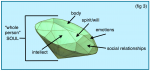
The GEM MODEL of the Soul (my version)


Think of the SOUL as a gem and the facets are ways to see the soul.

You can go as far as saying other things beyond these are facets:

family of origin, social economic situation, skin color (if that has been a defining factor in your life)

education, the country you live in,

Even Christianity is a facet. A worldview is a facet that we can gain a kind of look at who we are.

Grace is central to Christianity, for instance. We can look at our soul through the facet of grace.

When light is added to a stone you can see its flaws and imperfections and you can see its quality (color, cut, clarity, caret)

UGLY soul? Is that possible? what do you think?

In his book Care of Souls, David Benner writes, “We can define soul care as the support and restoration of the well-being of persons in their depth and totality, with particular concern for their inner life. Soul care is done in the context of community.”

The vantage point of Soul Care views struggle or failings not as fatal flaws or illness to be “cured”. Not therapy or self-help. 

It’s a sustaining endeavor for our interior lives and our relationships, like water and food is for the body. Incidentally, caring for the body falls within the bounds of Soul Care.

Ten Signs that You Need the Renewal of Soul Care 

1. Fruitlessness. Are there observable deficits in the enacted your Fruit of the Spirit? That means, is there any lack or slack in the


areas of love, joy, peace, patience, goodness, kindness, gentleness, and self-control? (If not, I think E.T. went home without you. Phone again. You might want to text, and retweet as well.)

2. You find yourself perceiving things others say as personally offensive, or as direct attacks. 

3. You are “venting” more in person or online.
4. You feel unloved.
5.You feel increased frustration, restlessness, or desolation.

6.Your fears and anxiety are more prevalent.

7.You have increased tension in relationships.

8. You struggle with one or more of the “seven deadly 

sins”: wrath, greed, sloth, pride, lust, envy, and gluttony. 


9. You have problems sleeping or bad dreams.


10. You’re in a creative slump. 

RECAP:

THE #1 myth about the soul is that…. you have one. You don’t have a soul you are a Soul. You have a body. George MacDonald, in 1892 (C.S. Lewis quotes him and the quote is mistakenly attributed to him sometimes)

Think of the Soul as “the real you” the essence of you. contained in a body, yes, but made up of everything about you in a pure sense.

Some might say the soul gets extinguished or goes to paradise or gets absorbed into the great Life Force (God) …but in terms of what you need…you always need Soul Care, because you are a soul and that include both the visible and the invisible.

All this more and much more is available in my book. Shame-filled plug.

Special “Ask Sparky” Episode: Responses to 5 Burning Question


Will you help support the show?
You can help me pay the bills by purchasing this useful and encouraging book!

(Already read it or feeling a bit more generous? Please use the donate button  (see left column) to contribute to the show. Help me make awesome things for your ears to hear each week. Much Love & Thank you! ~L)


Here, just the Father's beard could wipe out planet Earth
(Hey, God doesn’t have a body.)

Shownotes for the Special “Ask Sparky” Episode: Responses to 5 Burning Questions

MIN
1:30

1. It’s hard to pray to God as Father when you’ve had a bad dad. What should I do?

• How do we think about God? (usually like a human person or institution)

• God is Spirit not an old white man in the sky with a long beard.

What adjectives will help you connect with the Being typically called “God”

4:00

Hebrew word for God is a description too (yahweh “I am” a verb) that was not used. Adonai  was substituted and that simply means “Master/Lord” and is a term of respect.

4:30

It’s misguided to think that God can be contained or described well using a “Proper Noun”. God can’t be called a proper name/noun…like “Billy” (and that would make Jesus “Billy Jr.”).

Hebrew names are descriptive when referring to people (not how we use names to address people today).

5:00

YAHWEH (Hebrew word), means I AM (or “is”) and works like a verb denoting Presence an Love in Action. It defies typical proper names and descriptions.

5:50

2. On Forgiveness

“What should I do to forgive when I can’t forget?”

6:10

Forgiving is a continual process.

Thinking of forgiveness as transactional–a debt clearing mechanism. Be an accountant and don’t worry about your emotions being on the same page.

7:20

Remembering that you are not your thoughts.

8:00

What Justice is actually (Shalom). Making things right and reconciliation.

8:50

3. What to do about envying others (in this case writers in the field) and being jealous of their success.

9:15

Seeing the negative emotions as tools. Reframing them to use them to find our calling, gifts, and passions.

9:30

Not getting caught up in “should” and “oughts” and comparisons.

9:45

When you can say of your work, “Wow, I get to do this!” you can have enough gratitude to be comfortable with the success of others.

10:15

It’s common and normal to get feelings of jealousy. It’s only when the take over our hearts and mind do we need to reevaluate and recalibrate what we are doing and thinking.

11:00

Deciding that the options of other people and the opinions should have huge power is a choice we can change.

12:05

4. Getting over feeling guilt and shame that keeps resurfacing.

Daring Greatly Brene Brown (the difference between guilt and shame.

• Guilt is important so we can learn and correct and grow and become better people.

• Shame is a belief that something, un fixable, is wrong with you.

Shame whispers lies in your ears. Shame becomes a decision of who we are as person.

14:05

Being put to shame by parents and others.

14:50

A mistake isn’t part of who you are.

Redemption is always possible. You can start anew.

15:10

My caveat.

15:50

5. Church isn’t working for me anymore and I feel guilty leaving the church, but I don’t feel fed.

In the U.S. we often go to church as a consumers and look for what we can get out of it. Church can be piss poor.

17:00

Look for ways to give and minister and find connection in other ways.

18:00

For me, small groups were a starting point that lead me to seminary.

18:50

Bringing back the potluck and sharing life with people.

19:30

Sometimes we sense church isn’t “working” when meaningful connection is lacking.

20:30

“we” is better than “me”.


Thank you for listening and sharing the show with others. If you’ve gotten an enjoyment from Spark My Muse, come back every Wednesday for something new, or save your mental energy and subscribe!


Episode 2 (Wet Dog Fur Wine and Brene Brown)

Show notes:

Episode 2 (Wet Dog Fur Wine and Brene Brown)

Make sure your wine never tastes like wet dog fur. huh?


Spark my muse is The podcast for curious creatives types, wine newbies, and those willing to put up with my occasional silliness. Thank you so much for sharing your time with me.

Today:

How wine can go to the dogs and how to best store wine in the wine segment.

Plus, a bit about a topic and a book that has made a huge difference in my life.

This episode of the podcast is brought to you by:

Dog in the Gap

Having a pet in your care, who helplessly depends on your for life and well being can teach you a lot of things. 10 essays both funny and insightful written by 2 authors and plenty of memorable photos.

Or get the bonus addition for $1 more that has an extra essay and non public video links, and other assorted goodies.
Name Your Link

Today’s wine segment!

Why might your wine taste like wet dog fur….and what to do about it?

Basic Stats:
A wine bottle has 25.33 oz. (750ml).
A serving (a glass) of wine is 5 oz . (Half way up the glass is full. Where the glass is widest (aroma reasons in the design)
1 bottle = five glasses.

If your wine smells stale or like wet dog fur…it is Corked!

(The cork is not working and too much air has mixed with the wine.)

Wine last 24 hours if the air is pumped out
Here’s the one I recommend we use it at work. It pays for itself after two uses.

Wine lasts only a few hours if it’s not pumped. It’s not harmful, but it won’t taste its best. Pushing the cork back in won’t help too much because air is trapped in there.

Another reason Wine is stored on its side to expand the cork. A bottle corked with a plastic cork won’t be helped by horizontal storage.

On the next PODCAST – I’ll talk about my favorite tool for opening wine and why, and the bottle opening tools you should (probably) avoid !


Now to spark your Muse

Brené Brown’s work made its mark on me before she did her famous 1st TED TALK which lead to you famous ins TED Talk on her research about shame and vulnerability at the University of Houston.


The topics in the book and some of the passages I’ll read to you have really gained new significance  because putting up a podcast is risky. I feel vulnerable and I feel like I might get rejected. Some people won’t like it and I can’t change that. I don’t want to fail. And I don’t want to look like an idiot. And looking like an idiot is extremely probable.

When we are about to step out into unknown territory or if we doing something that makes us more vulnerable the two main things we think are “who do you think you are?” and “You’rd going to look like a fool” and I might add one to that “You won’t do it right” (it ’s related to the 2nd one) Maybe you can think of others that come to you mind.

We seem okay to handle other people’s vulnerability but really reluctant to risk that ourselves.

Excerpts from Daring Greatly:

Pg 35 “I define vulnerability as uncertainty, risk and emotional exposure”

My note: We can’t risk feeling vulnerable if we are dealing with shame.

pg 68 “people who don’t experience shame lack the capacity for empathy and human connection”

My note: Social also social pain. We fear rejection and isolation.

pg 67 “shame derives its power from being unspeakable”

Language and story bring light to shame and destroy it

pg 71

Guilt is “I did something wrong”

Shame is “I am bad” (or “I am something wrong”)

• When new feel shame we lash out, get anxious, hide, or numb out, and really we need to do the opposite of those things to have victory.

• Instead of lashing out or hiding we need to reach out, to some one we can trust.

• Instead of overcompensating we have to cut ourselves a break. “I make mistakes. I’m moving on past this one.”

Pg 80 Brené says “If I own the story I get to write the ending.” I just heard a fascinating TED TALK from Monica Lewinsky and she sounds like she’s taking this advise. She said it was time to take back her story and control her own narrative.

Reaching out and being honest creates an environment of empathy, and that’s really why I’m sharing all this with you.

Don’t be afraid to create and do things that are your passion. And mess up while doing them. I’m messing up a lot, but I’m trying to not let those mistakes put me in a choke hold of shame and inaction.

I hope you will be inspired to do the same.

Thanks for listening today!

Or if you have read Daring Greatly, what was the most powerful thing you learned. I’d love to hear from you! Leave comments at sparkmymuse.com or the email contact@sparkmymuse.com

subscribe to the podcast….tell your friends what you and I have been up to. See you soon.

For just $1 you can help the show purchase better sound equipment for better quality in future podcasts!

Special perks and rewards are available too. Join with the Spark My Muse community at the Spark My Muse page at Patreon! Click the image for more info.

patreon

How-to MEASURE Maturity

(creative common photo)
(creative commons photo)

I used to think that people got better as they aged. They learned things and got more mature, and became better people.

As a kid, especially, I thought of how little I knew in comparison to my mom and dad, and other adults. I was changing and learning and growing in every way, every day–and I just supposed that growth and improvement were part of the deal in exchange for aging, and not being able to pull off wearing trendy clothes anymore and loose fitting skin.

Nope.

Now, of course, I realize that maturity has very little to do with time spent alive.

Hurts happen.

Wounds can fester.

People can grow bitter and nasty.

People can stay petty and insecure.

They can get lodged in a cell of shame and self-protect or start a habit of attacking others.

True maturity is rare.

Wisdom is a gift received through awareness and often through suffering, but it is not a pension that is received across the board and acquired like Medicare.

Time can work you over like a expert boxer works over a fresh challenger with body blows.

Nevertheless, there is a kind of measure you can employ to see where you stand.

Of course, the temptation will be to first, or more thoroughly, measure others with it. (The more the temptation to do it, or actually doing it, means what? Can you guess? Yes, the more you lack on the scale.)


9 Categories Measure True Maturity:

• love

• joy

• peace

• patience

• kindness

• goodness

• faithfulness

• gentleness

• self-control

Now, on a scale of 1 to 10, how are you doing?

All 10s?


If you’ve noticed some gains and big improvements in these 9 qualities over the last few years, you are getting more mature!

If others have noticed, you might actually be right.

If you sense some problems with a few (or more) of them, then you might be stuck in arrested or delayed development. Ultimately we all should try to grow up…


BUT, that’s not to say “grow old” … There’s a big difference.

The surprise twist is that a spiritually (and in all other ways) mature person usually has a youthful timelessness to himself or herself.

Mature people have a humility that keeps them in a state of learning and growing. They don’t allow themselves to take themselves too seriously or suffer from sustained flare-ups of self-importance. So, in them you see a lack of arrogance, self-righteousness, or aloof disposition.


What should you do if you don’t measure up?

1. Admit it.

2. Ask for help (from God and others).

3. Keep trying and learning as you go.

4. Never think “I’ve made it!” or “I’m better than someone else.”


Galatians 5:22-23

But the Holy Spirit produces this kind of fruit in our lives: love, joy, peace, patience, kindness, goodness, faithfulness, gentleness, and self-control. There is no law against these things!